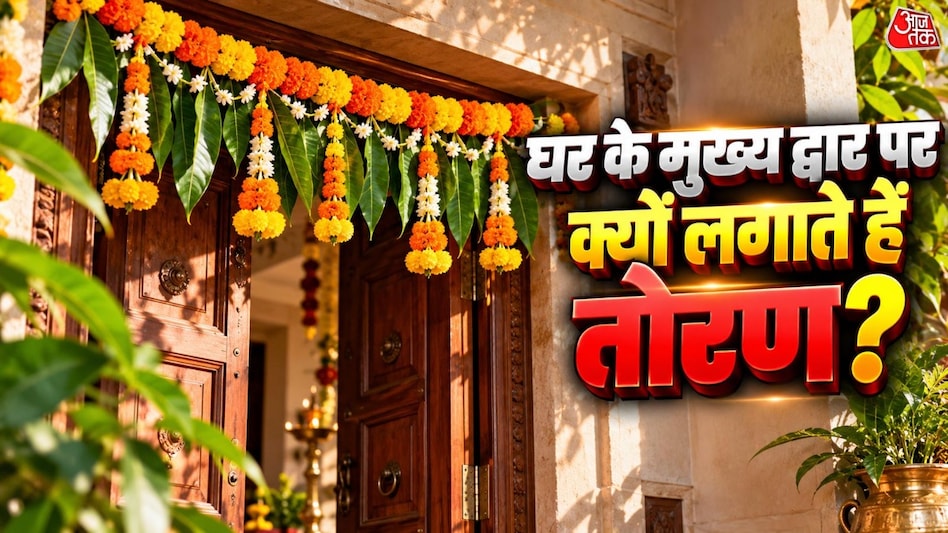
Decorate entrance doors with leaves during festivals to attract Lakshmi
Read more
Aaj Tak
www.aajtak.in

Decorate entrance doors with leaves during festivals to attract Lakshmi

During solemn occasions and festivals, it is customary to place garlands or 'Vandanbaras' at the main entrance of the home. In Indian culture, the significance of a garland extends beyond mere home decoration; it symbolizes prosperity, affluence in the house, and warding off negativity, thereby promoting positivity.

Therefore, during festivals and auspicious events, it is recommended to decorate the main entrance with natural elements such as mango and ashoka leaves, rather than plastic items.

This raises the question of why only mango and ashoka leaves are used to create garlands, instead of leaves from trees like neem, peepal, or banyan. The answer is that garlands are always made from the leaves of fruit-bearing and beneficial trees. Banana leaves are also used in some places.

The main entrance is considered the most important part of the house, through which all family members and guests pass. Thus, the cleanliness and positive energy of the main entrance influence everyone who enters the home. Therefore, great attention is paid to maintaining a positive atmosphere at the entrance.

Mango leaves are used when setting up a Kalash, performing worship, and conducting auspicious rituals. The mango tree provides fruit, shade, and greenery, so it is associated with life, fertility, and abundance. Its green leaves symbolize freshness and a new beginning.

In Indian tradition, the Ashoka tree is linked to well-being and joy. The word 'Ashoka' itself means absence of sorrow. It is precisely because of this symbolic meaning that ashoka leaves are used during ceremonial events.

Marigold flowers are widely used in Indian religious practices and festivals. Their bright yellow and orange colors symbolize enthusiasm, energy, joy, and good wishes. Yellow color in religious traditions is associated with knowledge and well-being, while orange is associated with enthusiasm and spiritual energy.

Furthermore, the yellow color of marigolds reflects the earthly element, indicating stability in life. The yellow color also represents the planetary deity Guru Brihaspati, bringing a surge of energy and optimism into life.
Similar stories

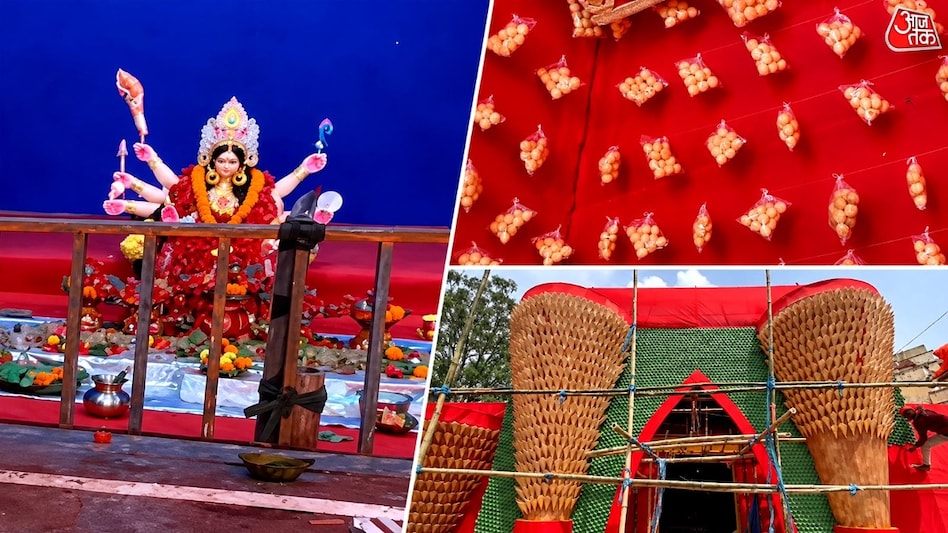
Durga Puja pandal in Ranchi to feature theme using golgappe and jhalmuri
Read more
www.aajtak.in

Durga Puja pandal in Ranchi to feature theme using golgappe and jhalmuri

Attractive pandals are created annually during the Durga Puja celebration in Ranchi. This year, the celebration committee decided to deviate from traditions and apply a new concept. The pavilion dedicated to worshipping Goddess Durga will be decorated with a theme of golgappe and jhalmuri, which promises to be a special spectacle for visitors. Special attention will be paid to the interior decoration of the pavilion, made from golgappe, which, according to organizers, is expected to attract public attention.

Organizers believe that golgappe and jhalmuri are not just food items; they are used to reflect life experiences. It is noted that life has both bitter and sweet moments, and the taste of golgappe evokes similar sensations. Meanwhile, jhalmuri is known for its spicy and tangy flavor. Thus, the pavilion's theme represents different facets of life through tastes.

According to Kundan Singh, an organizer of the committee, the meeting took place in Shukla Colony, Hinu. The discussion focused on what could be done in the pavilion after changing venues to make it a center of attraction for people. It was after this that the idea of decorating the pavilion with a golgappe and jhalmuri theme arose. Artisans from Bengal are also participating in the preparation and decoration.

Jhalmuri is a popular food item in Bengal, and it recently also garnered attention during the Bengal elections. In Ranchi, references to Bengali culture and traditions have always been displayed during Durga Puja. This time, an attempt was made to give this kinship a new resonance through the theme of jhalmuri and golgappe.

Committee member Shambu expresses hope that the pavilion will appeal to devotees this year. The golgappe and jhalmuri theme may interest people of all ages. The committee is confident that the unusual decoration will attract people not only for worshiping Goddess Durga but also to visit the pavilion itself. Ranchi is known for its grand events and beautiful pandals during Durga Puja. The new theme with golgappe and jhalmuri has generated heightened interest. Now it remains to see how much visitors will like this combination of taste and culture.

Popular