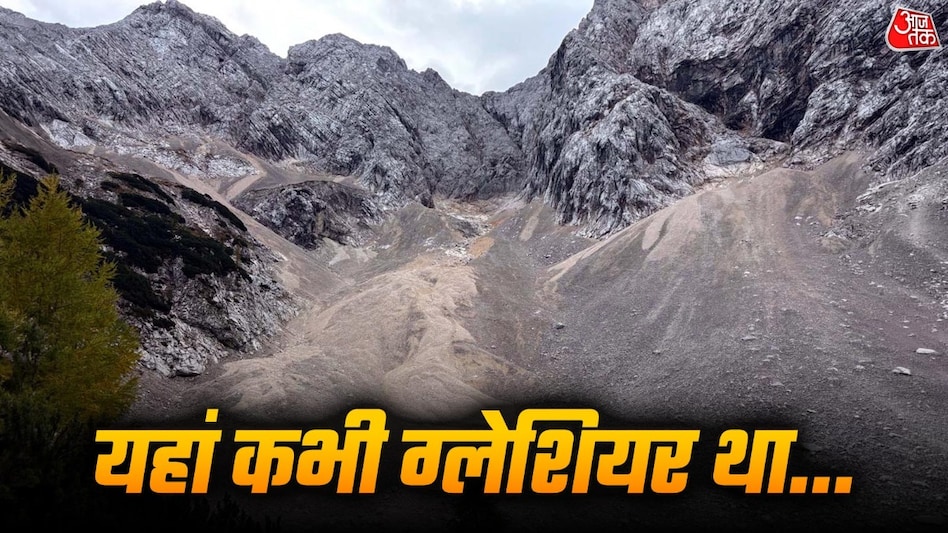
In the European country of Slovenia, glaciers are melting at an accelerated rate due to rising temperatures and decreased snowfall. The glacier located on the highest mountain, Triglav, has completely disappeared. Currently, the last remaining glacier in the country is the Skuta Glacier, which is also rapidly melting. Despite the glacier's snow being covered with gravel and small stones, the melting rate is not slowing down.
Scientists in Slovenia have been monitoring the glaciers for the past eight decades. During this period, the area of the Skuta Glacier has decreased from approximately 2.5–3 hectares to 1.5 hectares. Previously, the Triglav Glacier covered an area of over 14 hectares.
In the capital of Slovenia, Ljubljana, scientists monitor the condition of the glaciers. Monitoring of the Triglav Glacier began in 1946 when it covered an area of over 14 hectares; now its snow cover has completely vanished. The Skuta Glacier is also constantly shrinking. According to scientist Miha Pavoshek, the initial snow depth here reached several tens of meters, while now it is only a few meters, meaning the glacier is becoming not only smaller but also thinner.
Scientists name two main causes of glacial melting: firstly, a lack of winter snowfall, and secondly, rising summer temperatures. When little snow falls on the mountains in winter, less snow remains on the glacier after it melts. This year, the impact of low snowfall and heat was also observed. In Europe, pressure on glaciers has intensified due to heat and drought this year.
A significant part of the Skuta Glacier's snow cover is covered with gravel and small stones. This helps partially protect the ice from direct solar heat. Nevertheless, according to scientists, the glacier continues to melt despite about 80–90 percent of its surface being covered with stones. Local residents visiting the mountains can observe these changes themselves.
Water supplied by glaciers is critically important for rivers and groundwater. In summer, ice melt replenishes rivers, and some of this water seeps into the ground. This water is then used for drinking from wells and pumps. Scientists note that water from glaciers is necessary for rivers such as the Drava and Mura. If the glaciers disappear, the water level in these rivers may decrease in the future, posing a threat to agriculture and access to drinking water.
Temperatures in Europe have been rising over many decades. According to data from the Copernicus Climate Change Service of the European Union, since the 1980s, the temperature in Europe has risen approximately twice as fast as the global average. The acceleration of glacial melting is linked to increased heat and reduced snowfall. If the situation persists, Slovenia's last glacier could completely disappear, damaging unique mountain flora and fauna, and affecting sources of river and drinking water.