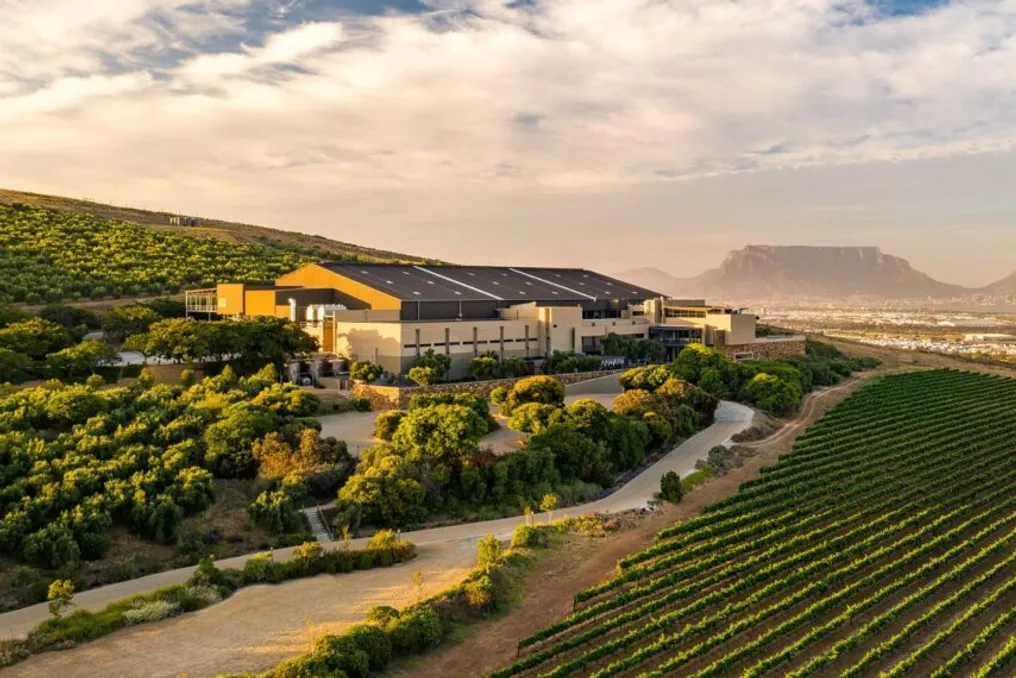
Early conditions in South African vineyards look promising: there is good reserve accumulation, generally sufficient water availability, and prospective fertility, laying a solid foundation for the 2027 grape harvest.
Following the above-average 2026 harvest, preliminary data indicates good production potential for 2027. This is supported by favorable conditions during the start of flowering in 2025 and strong vegetative growth.
However, since much of the growing season is yet to come, the final size and composition of the harvest will depend on conditions during flowering and fruit ripening.
According to South Africa Wine, the post-harvest period was generally favorable. Good rainfall in April and May helped the vineyards replenish reserves before dormancy. This was followed by an unusually dry and warm winter in many regions.
Despite the early winter chill, sufficient cold units accumulated in most areas. Warmer conditions in August caused vineyards in some regions to bud two to three weeks earlier than usual.
South Africa Wine noted: 'Despite the dry winter, water availability for the upcoming season is generally sufficient. September rains provided long-awaited replenishment in many areas, and several large irrigation reservoirs are full or nearly full. However, conditions vary between regions, and water will remain an important management factor as the season progresses.'
Vinpro consulting services manager, Dr. Étienne Terblanche, stated that the early indicators create a solid base for the coming season. He added that the vineyards have generally entered the new season with good reserves, and encouraging budburst and initial growth are observed in many regions.
Terblanche emphasized that favorable conditions during the start of flowering in the previous season provide good potential, but the season is still very early. He concluded that flowering, fruit set, water availability, and weather conditions in the coming months will ultimately determine what goes into the cellar.
South Africa Wine pointed out these encouraging early conditions against the backdrop of a challenging market environment in which the South African wine industry operates. The company noted that following the larger 2026 harvest, increased stock levels and reduced demand in certain segments of the domestic and international market continue to put pressure on parts of the value chain.
South Africa Wine stressed that while these pressures vary depending on regions, producers, and market segments, they underscore the importance of aligning future production with market demand and sustainable value creation.
For South Africa Wine, the priority remains ensuring that grape production supports a value-driven industry. Rico Basson, CEO of South Africa Wine, stated that the early forecast should be viewed in the context of the industry's broader commitment to sustainable value creation.
He explained that a successful harvest is measured not only by volume. It is necessary to produce grapes and wines that meet consumer demands and the prices markets are willing to pay. Given high inventory levels and reduced demand in some markets, the focus must increasingly shift from volume to value, market development, and long-term profitability.
Basson noted that South Africa possesses the quality, diversity, and experience for successful competition, but sustainable growth will depend on the best alignment between what is produced and what can be sold.
Furthermore, Basson added that the ability of South African producers to adapt remains a crucial competitive advantage. He recalled that producers have repeatedly demonstrated their capacity to respond to changing climatic, production, and market conditions. The start of the 2027 season provides a solid foundation, but the harvest is still far off.
He concluded that decisions regarding water, vineyard management, varietal selection, and production will remain critical for building a more sustainable and competitive industry. It was also noted that the early season was not without difficulties: floods in May damaged vineyards and infrastructure along parts of the Breede and Olifants rivers, and further flooding affected Klein Karoo in June. Additionally, the exceptionally dry winter required more careful water resource management in some areas. Despite the unusually early budburst, which extended the potential frost exposure period, no significant frost damage was reported at the time of assessment.