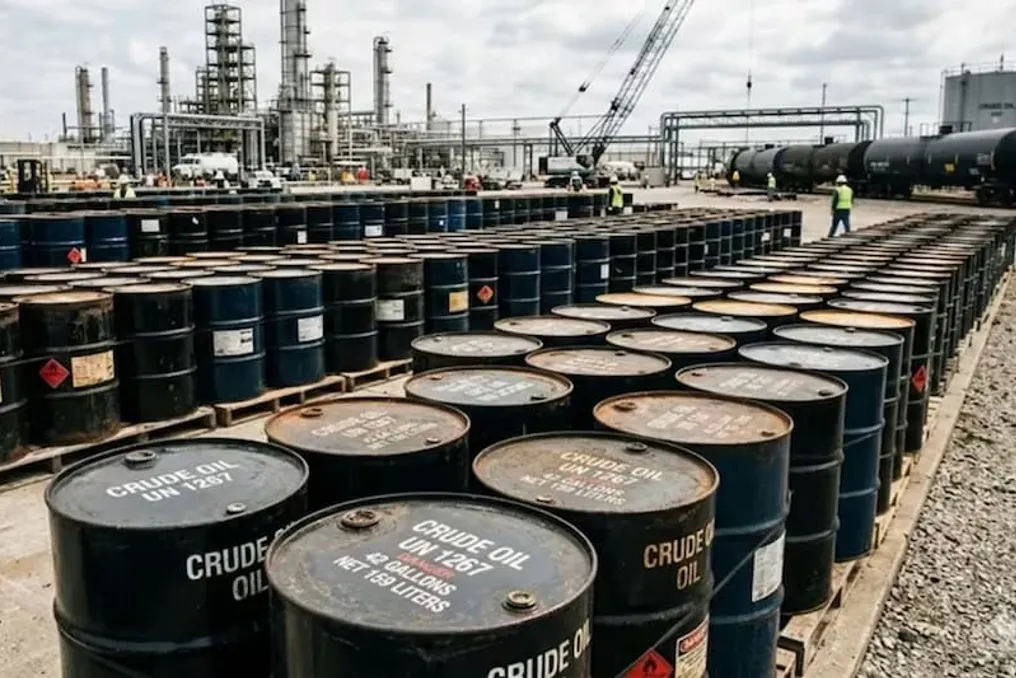
As crude oil prices approach the $110 per barrel mark, the US plans to utilize its emergency oil reserves to reduce pressure on gasoline and diesel fuel prices. Against a backdrop of growing concern over oil supplies in the international energy market, the US government intends to release 17 million barrels of crude oil from its strategic reserve.
On Saturday, WTI rose by 3.51% to $101.4 per barrel, while Brent Crude climbed by 3.72%, reaching around $110 per barrel. The goal of this move is to increase the availability of oil in the global energy market and attempt to curb price increases.
The primary reason for the rise in crude oil prices is growing anxiety about global supplies. This is influenced by military actions between the US and Iran, as well as attacks on vessels in the Persian Gulf. Furthermore, disruptions in the Strait of Hormuz have heightened market concerns, as this strait is one of the world's most vital maritime oil passages.
When the international energy market forecasts an oil shortage in the near future, prices begin to rise. To mitigate this pressure, the US is attempting to release additional oil from its emergency stockpile onto the market. The US Department of Energy has requested proposals from companies regarding a new oil swap scheme, under which companies can take oil from the government now and return it later.
The US Strategic Petroleum Reserve is an emergency stock of crude oil held for use in crisis situations. The government can activate this reserve in the event of wars, oil supply disruptions, or abnormal price increases. This time, the US is preparing to provide 17 million barrels of crude oil from its reserve. This oil will be provided to companies under a swap system: companies receive the oil now but must return it later according to established terms.
The advantage of this system is that it immediately increases oil availability in the market. When companies receive extra oil, they do not have to buy as much on the market to meet their needs, which can help reduce price pressure. However, it is not guaranteed that prices will fall in the international market immediately after oil is withdrawn from reserves; if the war continues, shipping may be disrupted or a serious supply deficit may persist, keeping prices high.
This US initiative is linked to a major international commitment made in March. At that time, the US pledged to provide 17.2 million barrels of oil from its strategic reserve. This was part of a joint plan by about 30 countries of the International Energy Agency (IEA). The goal of this initiative was to mitigate the consequences of oil supply disruptions and stabilize the international market. However, implementing this plan has proven difficult.
The first proposal from the US received a very weak response from companies. In June, companies showed interest only in borrowing about 500,000 barrels of oil. The reason for this was the plan's terms: companies could be required to return an additional amount of crude oil reaching 24% of the borrowed sum. Such terms made the deal unattractive to companies. Now, attention will be focused on the new US proposal; if companies show greater interest in receiving oil, it may help implement the plan to increase market supply.
The US efforts to increase oil availability are not limited to its own reserves. This month, US President Donald Trump and Russian President Vladimir Putin reached an agreement to allow the export of Russian diesel fuel. It is expected that initially, about 300,000 tons of diesel fuel will be released. Increased diesel fuel supplies could ease the situation in markets experiencing shortages. However, this step sparked political controversy. Ukrainian leaders and European countries criticized Russia for assisting it, arguing that easing the export of Russian petroleum products could bring economic benefits to Moscow. This shows that attempts to control oil prices are related not only to economic decisions but also to war, sanctions, and the political interests of countries.
The Group of Seven leading industrial nations, G7, also announced its own oil release plan on October 2. According to this plan, about 100 million barrels of oil will be available on the international market over four months. This initiative will be promoted through the International Energy Agency. The plan also emphasizes the need to increase diesel fuel supplies to eliminate market shortages.