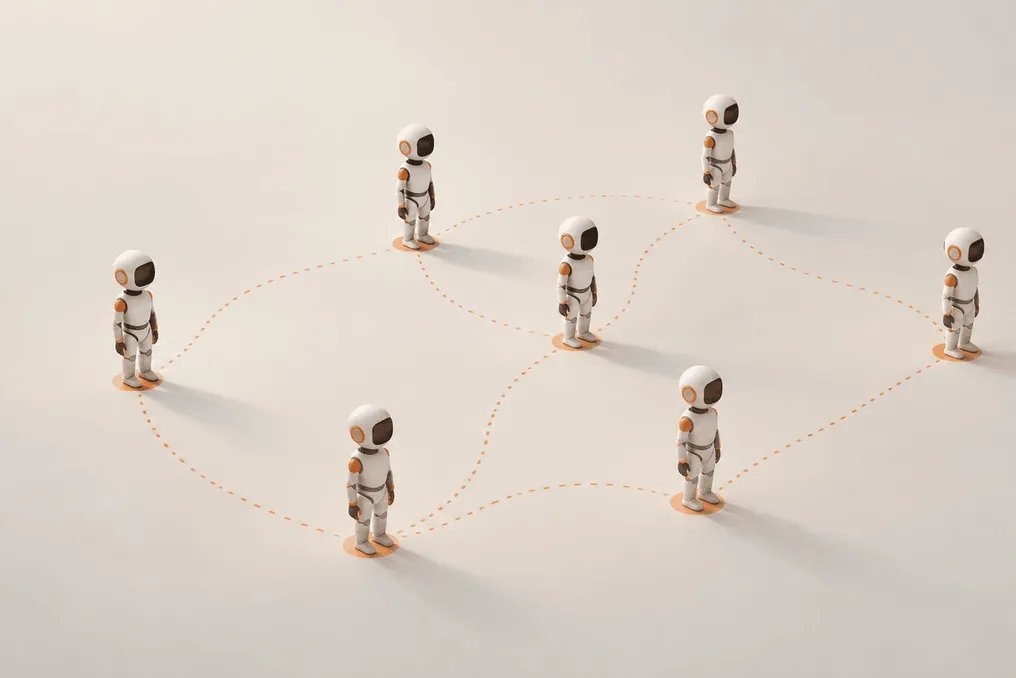
Unitree Robotics has introduced UniUni, a swarm control system designed for setting up and managing groups of its robots. This software is provided free of charge to all Unitree users. At the time of launch, the system supports the humanoid robots H2 and G1.
UniUni is a desktop application compatible with Windows and macOS operating systems. The initial versions released by the company include 1.1.14 for Windows and 1.1.15 for macOS. Unitree claims that this system is designed for rapid planning of movements and positions for multiple robots, as well as for monitoring device status and handling emergency stops in real-time.
Trajectory planning is available in both two-dimensional and three-dimensional views, where users can draw the path each robot must follow. A timeline function with drag-and-drop capability allows for sequential arrangement of the entire group's movements, and an AI-supported tool helps organize full-body movements and synchronize them with music. For positioning determination, users can upload point cloud-based maps, while the robots utilize laser SLAM for localization.
The system setup is designed to be simple. Robots on the same local network are automatically discovered and joined. During operation, operators receive information about the current status of each machine and have the ability to stop the entire group with a single button press.
The release of UniUni transforms group control tools into a product that customers can use independently. Coordinated performances by humanoid robots have become a common way for Chinese robotics manufacturers to demonstrate their machines to the public, and such performances usually require careful planning of timing, placement, and failure behavior. The overall timeline, map, centralized monitoring, and unified stop control directly address these challenges.
Unitree has not yet disclosed the maximum number of robots that UniUni can coordinate simultaneously, nor has it announced which other models will be supported after H2 and G1. Furthermore, the company has not published technical details regarding network requirements or positioning accuracy.
UniUni complements the software layer that Unitree creates around its hardware. Recently, the company opened a project page and provided partial weights of its fundamental humanoid robot model, UnifoLM-WLA-1.0, and also updated the G1 line to G1+.