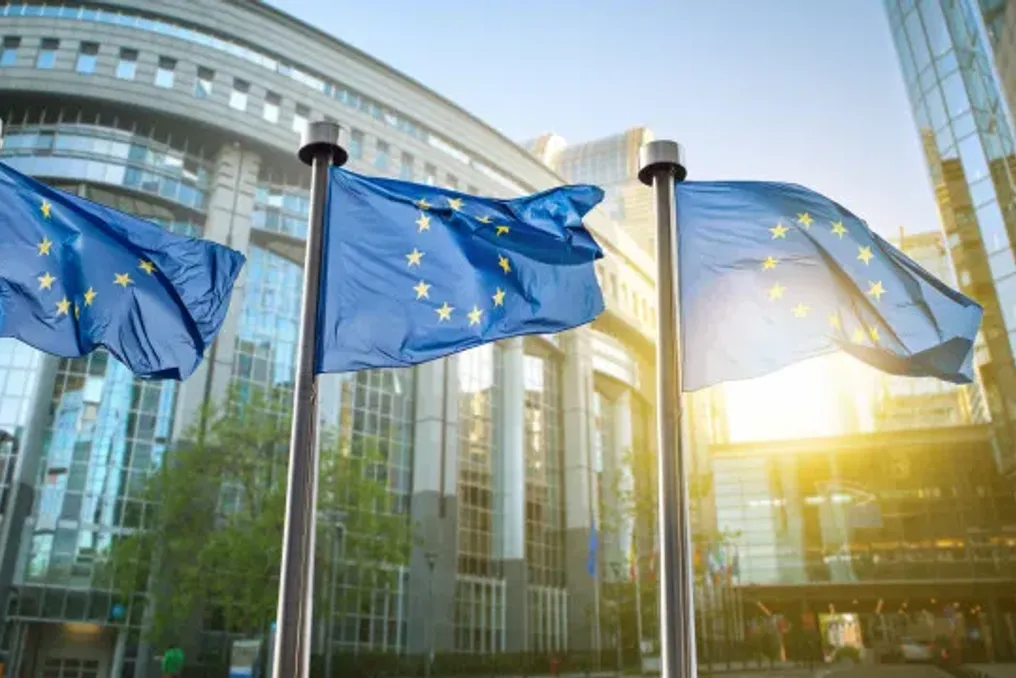
Twenty-seven member states submitted a demand to the President of the European Commission to present concrete and urgent proposals to mitigate rising energy prices. Furthermore, they instructed the President of the Council of Europe to promote reconciliation efforts between those advocating for budget cuts and those who disagree with reducing funds for cohesion and agriculture.
After two days of discussions, the Prime Minister presented the outcomes of the Council of Europe meeting to journalists in Brussels. The energy price situation, especially fuel prices, was one of the topics that captured the attention of heads of state and government. Despite the absence of final decisions, the meeting resulted in a clear mandate for the European Commission to present measures requiring immediate attention.
The Prime Minister stated, 'The Commission is responsible for the current situation we are experiencing, in terms of correcting positions, for example, by extending the possibility for member states to receive direct aid to certain sectors or apply temporary tax measures. This is coordination carried out by the Commission itself, and the Commission has taken on extending this possibility.'
Brussels has already decided to postpone the entry into force of the methane regulation, which could significantly increase fuel prices, but the Prime Minister noted that leaders want more. He emphasized that the Commission recognizes the need for additional support for specific industries vital to the economies of member states and the economy as a whole, and that it has been mandated to present solutions in this area.
The twenty-seven countries insist that the Commission enhance the efficiency of oil refining processes in Europe to avoid market shortages. It was noted that Europe has lost refining capacity in recent years, making such coordination important for everyone to maintain development amid high uncertainty.
The issue of joint procurement was also discussed. The Prime Minister cited examples such as Portugal's procurement markets in Brazil, Algeria, Nigeria, and the USA. He explained that the main problem with price increases lay in the pricing mechanism, where instability in one production component can collectively affect the price. In the case of gas, the Commission is studying ways to maintain significant price growth linked to international stability. Although joint procurement may not be as beneficial in the oil sector, it is very useful in the gas sector.
Now all eyes are on swift action from the President of the European Commission to mitigate energy prices. Regarding the budget, the desire to move forward in terms of ambition, particularly stimulating economic competitiveness, was reiterated, but without compromising cohesion policy or overall agricultural policy, which are also elements of competitiveness and security at various levels.
The Prime Minister also pointed out an omission in the negotiating framework presented by the President of Ireland regarding the lack of funds directly allocated to ultra-peripheral regions, expressing disagreement with the reimbursement mechanism, which he deemed unfair compared to the overall design of the community, which already provides significant funds for competitiveness.
Portugal, together with Friends of Cohesion, reminded that the share of participation of countries like Portugal today is higher relative to their output than that of more frugal countries, and that increasing this ratio would be unfair.
Regarding the long-term financial plan, there is an expectation that under the leadership of the President of the Council of Europe, diverging positions will converge. The Prime Minister expressed confidence that, despite the impossibility of describing everything that happened over these two days, significant progress has been made because positions have become better known to everyone, paving the way for convergence.
Party Leaders in Brussels
On the day of discussions on competitiveness, energy prices, and the upcoming long-term European budget in Brussels, meetings were also held between political groups of the European Socialist Party, Chega, and Iniciativa Liberal. Three leaders—José Luís Carneiro, André Ventura, and Mariana Mortágua—also addressed journalists to share their views on the issues under discussion.
Marine Le Pen visited Brussels to advocate for a sharp reduction in the European budget starting in 2027 and strengthen the intention to lower France's contribution to the EU budget, setting a 'strict limit' of five billion euros.
In response to a question from RTP Antena 1 about agreeing with the leader of his European political group, the Chega leader stated that the new context must be understood. He emphasized that the level of development of countries like Portugal, Spain, Greece, and Italy cannot be compared with northern countries such as France, the Netherlands, Belgium, Germany, regarding cohesion funds. He added that the eastward expansion of Europe, and now the possibility of Ukraine joining, should not come at the expense of Cohesion Development Funds in Portugal, Spain, Italy, and Greece, as this harms cohesion within the European Union itself.
André Ventura stated that cuts should not harm countries that have already adapted their activities thanks to these cohesion funds. However, in response to a persistent question, the Chega president noted that his European group expresses its opinion on many issues, and they are a group of patriots. He categorically rejected any pension cuts, asserting that Portugal lags significantly in the need to increase pensions, and that European funds should help with this, as pensions are one of the main factors in population impoverishment.
José Luís Carneiro, representing the PS, stressed the importance of Cohesion Policy, speaking about funds intended for regional and territorial cohesion, and how these resources will be managed to support local and regional communities, including the Azores and Madeira archipelagos. He named investment in housing and the social pillar as priorities, which must maintain autonomy to ensure support for training and professional retraining, as competitiveness is only possible with social, territorial, and economic cohesion.
Regarding energy prices, the PS Secretary-General noted that they advocated for temporary support to reduce costs for fuel, electricity, and gas, as well as support for sectors most affected by the energy crisis, and assistance with basic foodstuffs. At the European level, he emphasized that Europe can develop many policies, including increasing energy autonomy, strengthening energy storage and supply connectivity, and using Portugal as an energy supply hub to reduce dependence on Eastern Europe and Russia.