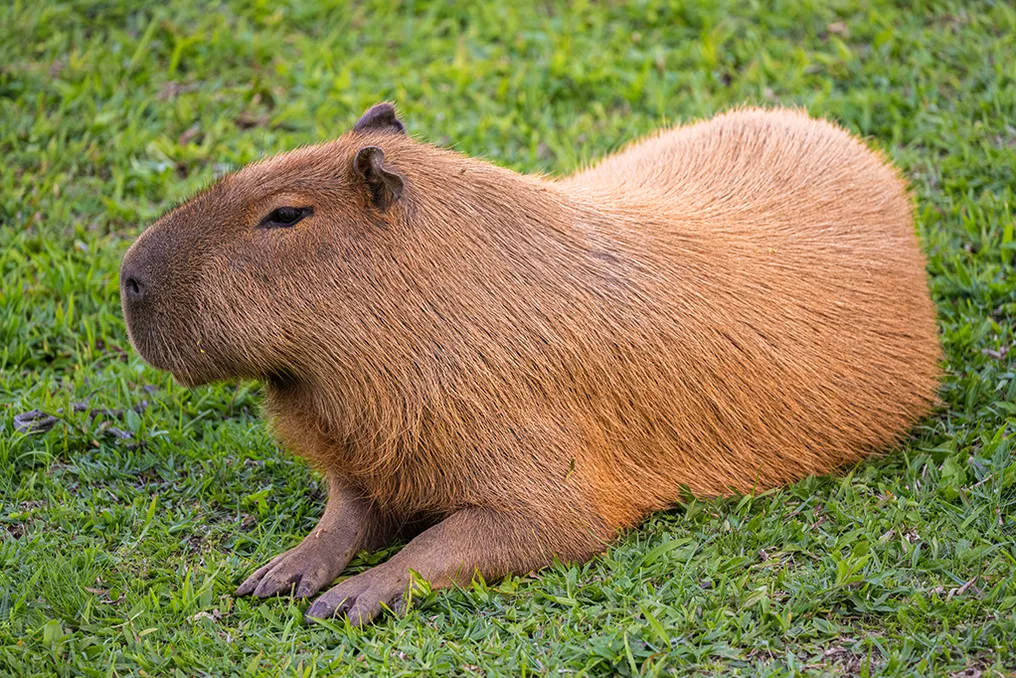
The Atacama Desert, located in northern Chile, is recognized as one of the driest regions on the planet, characterized by a scarcity of rivers, lagoons, or any constant water source. The presence of animals such as the capybara, which are semi-aquatic and depend on water for feeding, reproduction, and resting, would be unexpected in this dry environment. However, evidence has been found indicating that capybaras once inhabited the Atacama.
At a site called El Morro, located in the center of the Atacama, researchers discovered a tooth belonging to an ancestor close to modern capybaras. Subsequent analyses indicated that this individual of the genus Cardiatherium lived approximately nine million years ago and preferred aquatic environments.
This finding directly contradicts the notion that the Chilean desert is the oldest and driest area in the world. The capybara fossil points to a scenario where, during the late Miocene, specifically between five and ten million years ago, the Atacama constituted a humid ecosystem.
Previous studies had estimated that the hyperarid climate of the Atacama began to develop between 33.9 and 47.8 million years ago, during the middle to late Eocene, which is twenty million years before the formation of the Andes Mountains. This chronology suggests that the mountain ranges may not have been the primary cause of desertification, serving, at most, to intensify this process.
It is important to note that currently, the region is bordered by the Coastal Range to the west, which prevents moisture from the Pacific Ocean, and the Andes Mountains to the east, which blocks rainfall from the Atlantic. These geographical barriers, combined with cold ocean currents and high-pressure atmospheric systems, are responsible for preventing precipitation.
In addition to the capybara tooth, two other pieces of evidence support the idea of a wetter Atacama. Researchers located the tooth in a soil layer that contained traces of an ancient shallow marine environment, which supposedly existed between seven and ten million years ago.
Along with this, microscopic fragments of vegetation, called phytoliths, were discovered. These are indicators of the presence of palm trees, grasses, ginger family plants, and other flowering species. This type of flora suggests, once again, that the area could have been a subtropical forest.
Despite the existence of capybaras in South America at that time, researchers do not know the exact method by which they reached the Atacama Desert. The Andes Mountains represented a barrier of 5,500 meters in altitude between their habitats and the location where the tooth was found. For this reason, the hypothesis was formulated that, instead of crossing the mountains, the capybaras of that period migrated along the west coast of South America, following rivers and other water sources in humid areas. The study was published in the journal Scientific Reports. Currently, although capybaras are native to South America, they are not found in Chile.