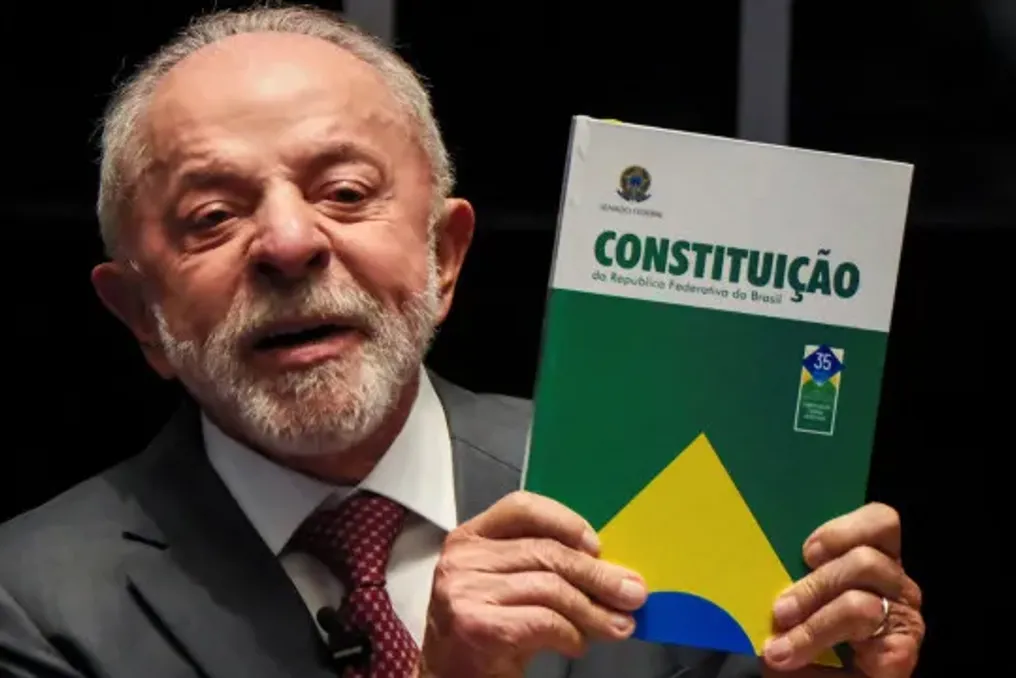
The Brazilian National Congress sanctioned a constitutional amendment aimed at reducing the weekly working hours without causing salary reductions. The promulgation occurred ten days before the second round of elections, in a ceremony attended by the President of Brazil, Lula da Silva.
Following the approval of the Constitutional Amendment Proposal (PEC), President Lula da Silva declared the day historic for Brazilian workers, stating that the measure demonstrates the value of democracy because it obeyed the popular demand of women, men, workers, adolescents, and students who took to the streets to demand the change.
According to Lula da Silva, the Brazilian Constitution becomes more citizen-oriented and grants greater dignity to the national worker, emphasizing that the two weekly days off represent a civilizational advance.
The so-called 'End of the 6x1 Schedule' was approved by the Brazilian Senate by an overwhelming majority on Wednesday, including votes from Flávio Bolsonaro and his Liberal Party (PL), who were initially opposed to the proposal.
In light of public demonstrations, Flávio Bolsonaro decided to support the measure, declaring that he would vote according to the will of the majority of the people. He voted in favor virtually on Wednesday, although he did not attend the session due to campaign commitments in Porto Alegre.
Despite this, the PL, Flávio Bolsonaro's party, expressed an intention to review the working hours after the elections.
During a campaign event in Juiz de Fora, Lula da Silva warned about possible setbacks if Bolsonaro were elected, advising that 'Bolsonaristas will end' the measure and that the 6x1 schedule could return. The left-wing politician emphasized the importance of not allowing this regression, guaranteeing that merchants and entrepreneurs would not suffer losses while the worker would benefit.
The new model established guarantees workers two paid rest days per week, which practically reduces the current workweek from 44 hours to 40 hours. Although this schedule is not universally adopted, the 6x1 schedule is very common in sectors such as services (supermarkets, pharmacies, bars, restaurants, hotels, commerce) and industry.
Large employers' unions in the industry, commerce, and service areas severely criticized the end of the 6x1 schedule, classifying the change as detrimental to the economy, predicting layoffs and the precarization of essential services.
The new rules do not take effect immediately; there will be a gradual adaptation period starting from publication in the Official Gazette of the Union (DOU). Initially, within 60 days, the workweek will transition from 44 to 42 hours. Only after one year of the new rule's validity will the workweek definitively drop to 40 hours.
The amendment's promulgation took place in the National Congress, with the presence of the presidents of the Republic, the Chamber of Deputies (Hugo Motta), and the Senate (Davi Alcolumbre).
In his speech, Lula da Silva defended the approval, arguing that no one desires business collapse, but neither does anyone want a worker to die from lack of rest, advocating for a balance between worker health and business maintenance.
The approval of the amendment is seen as an important political strategy for Lula, aiming to reverse the result of the first round of the elections, where he lagged behind Flávio Bolsonaro by a margin of 2.2 million votes.
Employers will have two months to adjust schedules and hours, negotiating collective agreements and conventions. The PEC preserves differentiated work regimes, ensures the operation of categories that work on Sundays, and allows for other schedules, such as 12x36, common in health and safety.