Before the discovery of anesthesia, surgical interventions were synonymous with unbearable pain. Without pain relief methods, an operation was the last and desperate attempt to save the life of a patient in agony.
Until the mid-19th century, surgical procedures were extremely limited. Doctors performed only superficial manipulations, such as quick amputations or removal of bladder stones. Internal organs of the abdominal cavity, chest, and skull remained inaccessible to medical science.
The success of the operation depended solely on the surgeon's skill. Patients had to be tied up or held by strong people so they would not escape. Many lost consciousness from severe agony, while others died right on the operating table due to crushing traumatic impact.
According to data from the World Federation of Anesthesiology Societies, contemporary reports testify to the panic of patients trying to flee before the first incision. In one case, a man ran down the corridor and locked himself in a bathroom; the surgeon had to break down the door to bring him back to the operating room.
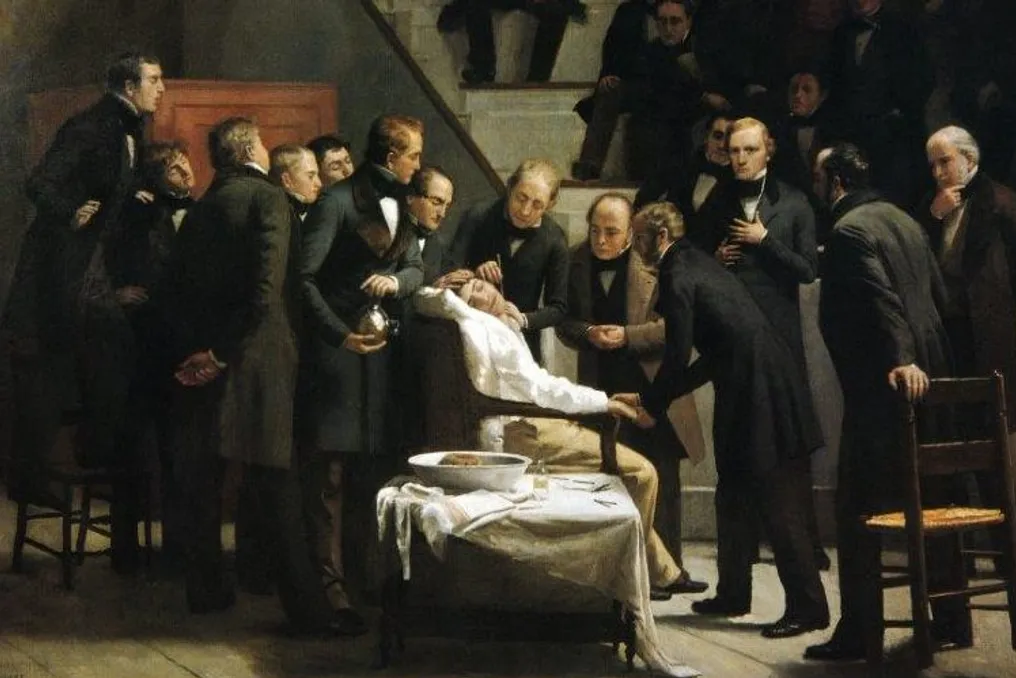
This tragic picture began to change exactly 180 years ago, on October 16, 1846, when the first public demonstration of anesthesia took place. This historic event occurred at Massachusetts General Hospital in Boston, United States.
At that time, dentist William Morton used ether to calm the patient Gilbert Abbott, allowing surgeon John Warren to remove a neck lump without causing pain. This official presentation proved to the medical world the possibility of performing operations without suffering.
News of the success in Boston crossed the Atlantic on a mail ship. Just a few weeks later, in December 1846, European doctors were already performing the first tooth extractions and amputations using inhaled ether with complete success.
The advent of anesthesia revolutionized medicine, paving the way for modern surgery. Doctors were able to work calmly and precisely, finally examining previously forbidden internal organs, which was further enhanced by the introduction of hygienic and antiseptic methods.
The search for more effective compounds continued in the 19th century. In 1847, chloroform began to be used because it was easier to administer than ether, although it carried higher risks of cardiac complications and serious liver damage.
In 1877, the discovery of cocaine's action opened the door to local anesthesia. From this moment, nerve blocks, as well as spinal and epidural anesthesia, appeared, which allowed the patient's abdominal cavity to relax without the need for deep narcosis.
At the beginning of the 20th century, medicine developed tubes for controlling patient breathing during procedures. Soon after, drugs administered directly into the vein appeared, providing a fast, gentle, and much more pleasant sedation compared to inhalational gases.
In the 1940s, the use of curare-based muscle relaxants was introduced, a compound originally used by indigenous peoples of South America in their arrows. In the following decade, the creation of halothane made inhalational anesthesia even safer and easier to apply.
The evolution continued, transforming practice into a complex science. In an interview with Olhar Digital, anesthesiologist Leonardo Vanzato, coordinator of Albert Sabine Hospital (HAS/SP), explained that the role of the specialist has expanded. He emphasized that the body continues to react to surgical trauma even while asleep, requiring constant monitoring of metabolic and inflammatory responses.