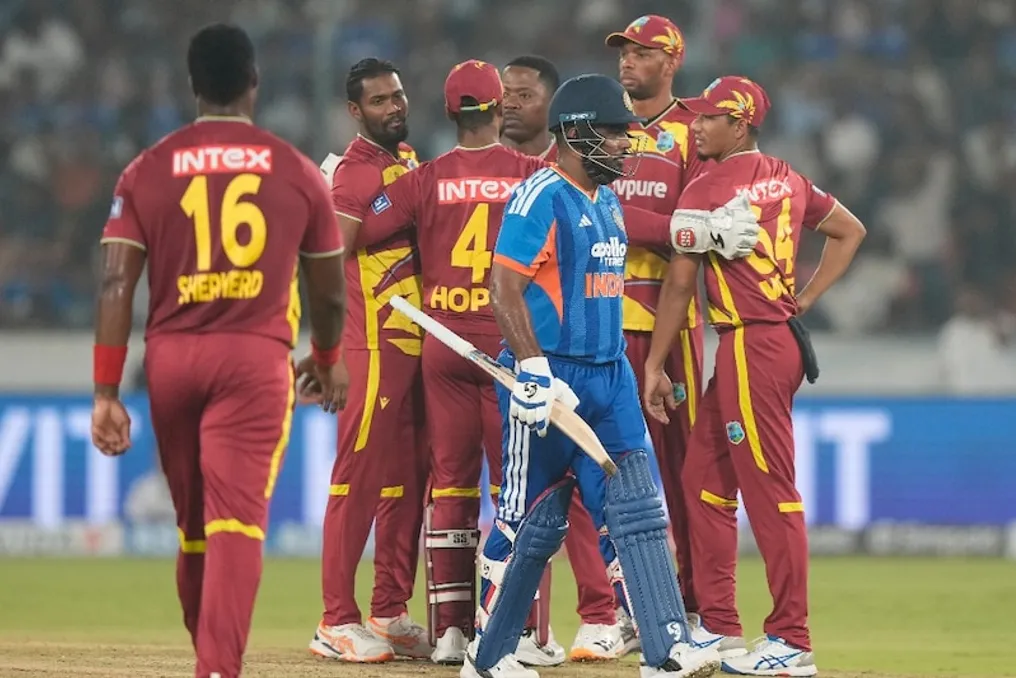
The Chief Executive Officer of Cricket West Indies (CWI), Chris Dehairing, has raised a serious issue regarding the revenues from bilateral series against India. He asserts that the existing financial system generates enormous income from matches against India, yet Cricket West Indies receives no share of these proceeds.
Dehairing described this system as a major discrepancy in world cricket, noting that the current model creates significant economic difficulties for smaller cricket boards. During an interview on Wisden Cricket's Inside Scoop program, he emphasized that the commercial value of series between India and the West Indies is very high.
According to him, a series held in India can generate revenue of around $2-3 billion, but the Caribbean board receives nothing from it. Dehairing stated: 'This is one of the biggest discrepancies in world cricket. Wherever we play against India, Cricket West Indies gets nothing. In this case, the series is held in India, and one series in India can bring in $2-3 billion, but we get nothing.'
Chris Dehairing's statement intensified the discussion about revenue sharing in international cricket. Dehairing believes that larger cricket boards receive substantial income due to their extensive domestic markets, while smaller boards do not receive proportional economic benefits.
Dehairing traces the roots of this system to a decision made by the ICC (International Cricket Council) in 1997. At that time, member nations voted to change the international cricket revenue model. Previously, when the West Indies team toured abroad, it received a tour fee, which was crucial for the board and helped in managing cricket.
He recalled that at that period, the West Indies team was considered one of the most attractive in the world. The funds received from visits to countries like Australia, India, and England provided economic support to Caribbean cricket. However, after the change in the financial model, the nations decided to retain the revenue from television rights independently, as members realized the huge income potential from TV rights in the future.
According to Chris Dehairing, they moved away from sharing revenues derived from the domestic market with other boards. Dehairing also highlighted the financial gap between India and the West Indies.
Chris Dehairing noted that India has the opportunity to earn from a market of about one and a half billion people, whereas the population of many Caribbean countries is significantly smaller. He cited the example of Antigua, with a population of about one hundred thousand, and St. Kitts, with a population of approximately 30 thousand. In his view, revenues from such small markets cannot be compared with the revenues from a giant market like India. This is why Dehairing considers the current model detrimental to smaller cricket boards.
He asserted that when the decision to change the revenue model was made in 1997, the council members adopted the proposal by a vote of nine to one. Dehairing warned at the time that this decision could seriously damage the financial standing of West Indies cricket, as income from overseas tours was its main source of earnings.
According to Chris Dehairing, after the changes to the system, it became more difficult for boards like the West Indies to cover the costs of their programs and operational activities. Dehairing's central demand is a fairer distribution of revenues in international cricket. His statement raises the question of whether the current revenue model gives an excessive advantage to countries with large markets, leaving smaller cricket boards behind.