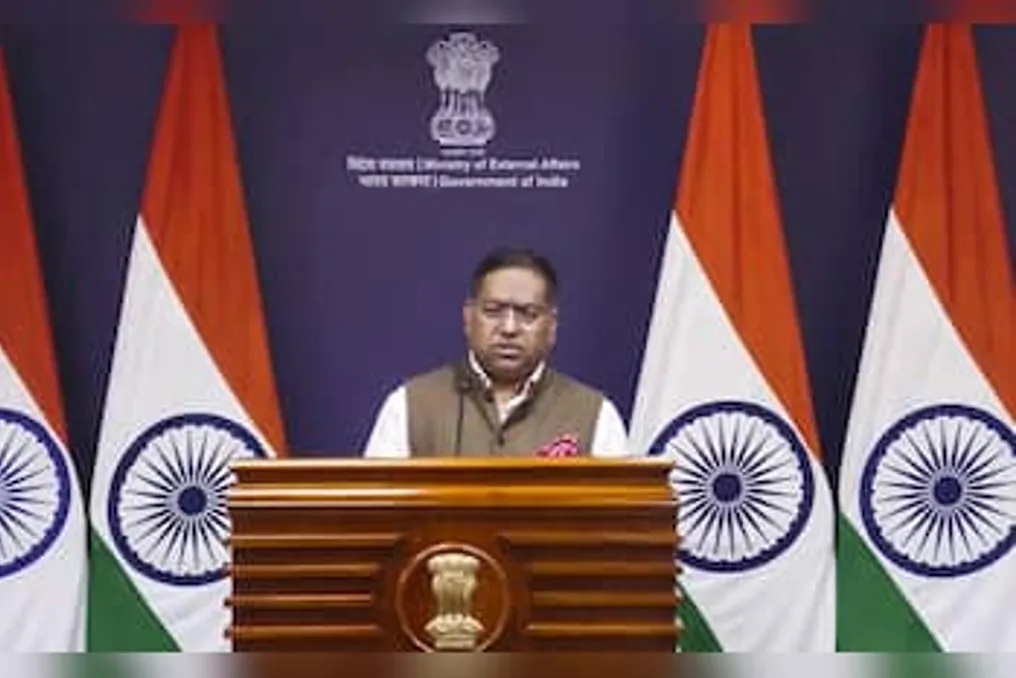
Ministry of External Affairs reports on Jaishankar and Rubio meetings in Mumbai on October 20
Read more
Business Standard
business-standard.com

Ministry of External Affairs reports on Jaishankar and Rubio meetings in Mumbai on October 20

The Ministry of External Affairs (MEA) announced that External Affairs Minister S. Jaishankar will hold talks with US Secretary of State Marco Rubio in Mumbai on October 20.

It is expected that these discussions will cover important aspects of bilateral cooperation, including energy issues, critical energy challenges, as well as regional and global events, according to the MEA.

Furthermore, during his visit to India, Marco Rubio plans to meet with Mukesh Ambani, Chairman of Reliance Industries Ltd (RIL), in Jamnagar, Gujarat state.

The American Ambassador to India, Sergio Gor, previously stated that Rubio would travel to Jamnagar, home to RIL's world's largest refinery complex, to meet with company representatives. Gor mentioned this at the Bloomberg New Economy Forum in New Delhi.

Jaishankar and Rubio talks to focus on bilateral ties

During a two-week press briefing conducted by MEA representative Randhir Jaiswal, it was announced that Jaishankar would receive the UAE Deputy Prime Minister and Foreign Minister in Mumbai on October 19 and 20. On October 20, he will meet with Rubio and attend the celebrations marking the 250th anniversary of the United States as a guest of honor.

Jaiswal noted that this meeting will provide an opportunity to analyze relations between the US and India, as well as discuss ways to further strengthen cooperation and global strategic partnership, allowing both sides to advance common priorities.

He added that the discussions are expected to cover key areas of bilateral interaction, such as energy, critical energy issues, and development at regional and global levels.

Earlier this week, the US Department of State stated that Rubio would meet with high-ranking Indian government officials during his visit from October 17 to 22. These conversations are expected to aim at enhancing energy cooperation and strengthening the partnership between the two nations.

MEA explains the choice of Mumbai for the meeting

When asked why the meeting would take place in Mumbai instead of New Delhi, Jaiswal explained that India has repeatedly hosted foreign dignitaries outside the national capital over the past decade.

He cited examples such as the meeting between the Prime Minister and the Spanish Prime Minister in Vadodara, German Chancellor Friedrich Merz in Ahmedabad, and the Mauritian Prime Minister in Varanasi. He also mentioned the SCO Foreign Ministers' Summit in Goa, which Jaishankar hosted, and the 'Heart of Asia' conference in Amritsar.
Similar stories

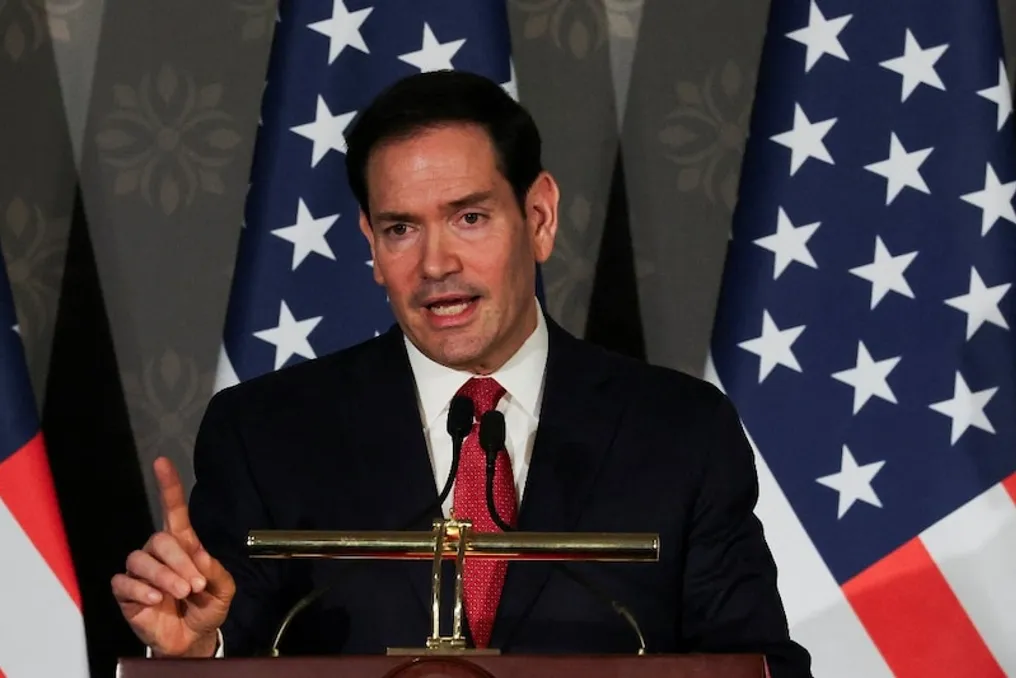
US Secretary of State Rubio's Visit to India to Discuss Trade Agreement
Read more
www.aajtak.in

US Secretary of State Rubio's Visit to India to Discuss Trade Agreement

As part of ongoing negotiations on a trade agreement between India and the United States, US Secretary of State Marco Rubio plans to visit India from October 17 to 22. During his visit, he will visit Mumbai and Jamnagar. According to a statement from the US Department of State, the purpose of the trip is to strengthen the strategic partnership between the two countries, as well as expand cooperation in the fields of trade, energy, and regional and global issues.

This visit comes amid active discussions about the trade deal between India and the United States. Indian Foreign Minister S. Jaishankar indicated on Tuesday that negotiations are approaching some result, although he did not specify whether a final agreement had been reached.

During the Bloomberg New Economy forum in New Delhi, when answering a question regarding the trade agreement, Jaishankar expressed the view that this issue is moving towards completion. According to Jaishankar, the US is trying to change conditions to strengthen its own industrial base and provide access to its markets to other countries. In this regard, India will also have to re-evaluate the terms of its economic relations with America. He noted that America has changed its strategy, and other countries have to revise their relations with it.

According to the US Department of State announcement, before traveling to India, Rubio will go to Samarkand, Uzbekistan. There, he will participate in a meeting of C5+1 ministers with five Central Asian states. After that, he will travel to India. This will be his second official visit to India this year.

In India, Marco Rubio will meet with high-ranking government officials. Discussions will cover bilateral strategic partnership, regional and global events, as well as increased energy cooperation. He will also meet with representatives of the business community to promote investment and economic ties.

Previously, Marco Rubio visited India in May on a four-day trip, where he met with Prime Minister Narendra Modi and Foreign Minister Jaishankar. At that time, Rubio conveyed an invitation from President Donald Trump to PM Modi to visit the White House. During the meeting with Jaishankar, Rubio expressed confidence that both countries could reach a sustainable trade agreement. He stated that the negotiations were successful, and America is interested in an agreement beneficial to both sides.

During the May talks, issues such as energy source diversification, nuclear cooperation, critical minerals, technology, and visa issues for Indian citizens were also discussed. During the meeting with Prime Minister Modi, Rubio discussed trade and energy cooperation. He also brought an invitation from President Donald Trump for Modi to visit the White House.

Despite the talks held in May, uncertainty remains in trade negotiations regarding US tariff policy and market access. Finance Minister Nirmala Sitharaman stated on October 5 that negotiations have reached an impasse, and it is becoming increasingly difficult to make concessions to both sides.

The US seeks to eliminate its trade imbalance and gain greater access to the Indian market. At the same time, India insists that the terms of the agreement protect the interests of sensitive domestic sectors and do not undermine the competitiveness of Indian exporters.

Popular