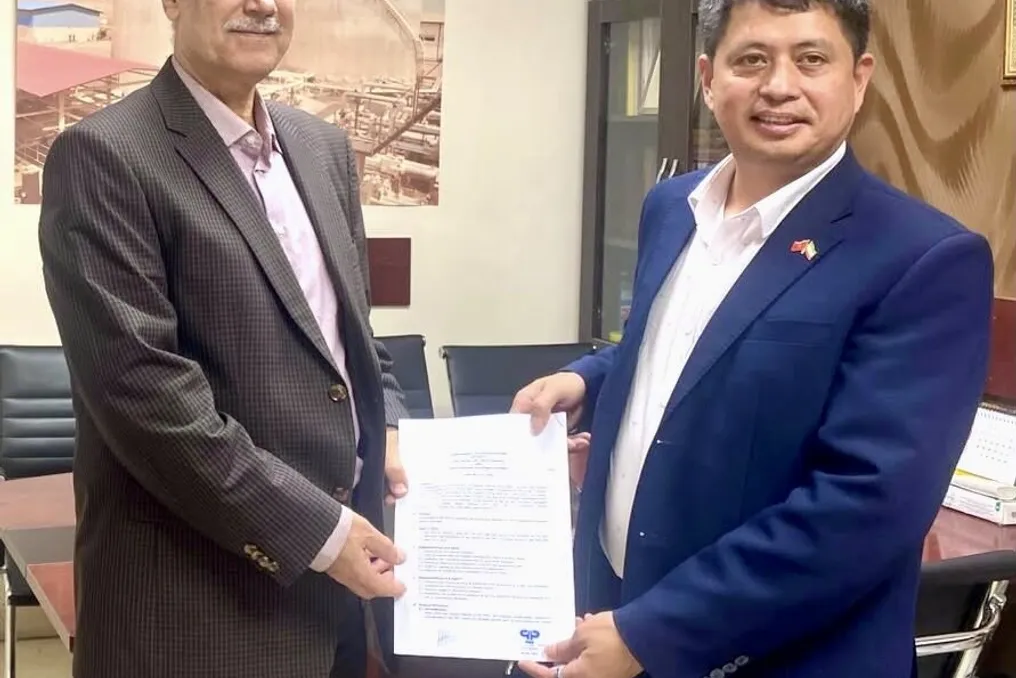
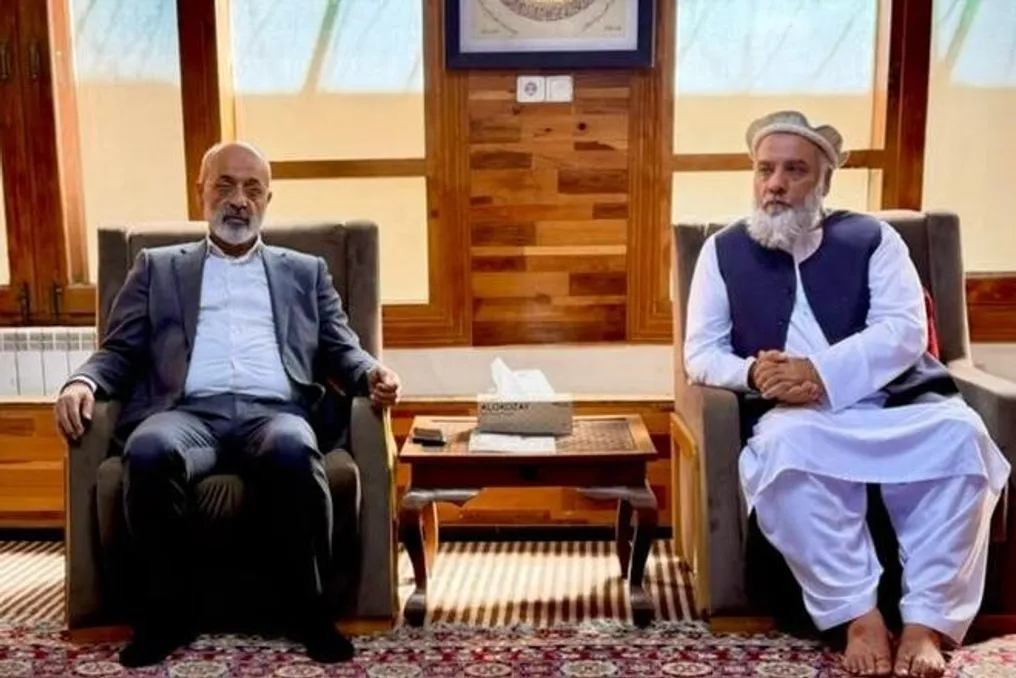
During the visit of a trade delegation from the Iranian Chamber of Commerce for Trade, Industry, Mining, and Agriculture (ICCIMA) to Kabul, led by Vice President of the Chamber, Ghadir Kiyafeh, opportunities to strengthen economic interaction between Iran and Afghanistan were examined.
Areas of cooperation discussed included mining and mineral industry, agriculture, and processing industries, as well as technology transfer and the creation of production and processing chains.
The main focuses of the trip were meetings with Afghanistan's Minister of Industry and Trade, Nuruddin Azizi, and the First Deputy Chairman of the Afghan Chamber of Agriculture and Livestock Production, Haji Akhtar Mohammad Mohammadi, as well as participation in the Fifth Abu Hanifa International Exhibition and bilateral negotiations between Iranian and Afghan traders.
Emphasis on Cooperation in the Mining and Mineral Industries of Iran and Afghanistan
Ghadir Kiyafeh, Vice President of ICCIMA, emphasized the potential of Afghanistan's mineral resources and the necessity of developing partnership in the field of mineral extraction during his meeting with Nuruddin Azizi, Minister of Industry and Trade of Afghanistan. Azizi, in turn, welcomed the expansion of economic ties and cooperation with Iran, touching upon the issue of mining equipment.
Representatives from organizations such as Mahmoud Omati, Deputy for International Affairs of the Iranian Chamber of Commerce, Hossein Beikzadeh, Vice President of the Mashad Chamber, Arash Alavi, Member of the Council of Representatives of the Iranian Chamber and Kermanshah, and Mohsen Amini, Member of the Food Industry Committee and Council of Representatives of the Iranian Chamber of Commerce, participated in this meeting. Opportunities for economic interaction between the two countries were reviewed.
Kiyafeh noted that Afghanistan's existing mineral resources could form the basis for expanding economic cooperation, insisting on strengthening interaction between the economic entities of the two countries in the mining sector. Nuruddin Azizi also highlighted the importance of such cooperation and welcomed deepening economic relations, paying special attention to the development of the private sector in mining.
Discussion of Agricultural and Livestock Cooperation
During the meeting between the Vice President of the Iranian Chamber of Commerce and the First Deputy Chairman of the Afghan Chamber of Agriculture and Livestock Production, Ghadir Kiyafeh and Haji Akhtar Mohammad Mohammadi, prospects for developing economic and agricultural partnership were discussed. Figures present included Mahmoud Sayyadat, President of the Joint Iran-Afghanistan Chamber, Kamaluddin Tawhid, President of the Joint Afghanistan-Iran Chamber of Commerce, Mohsen Amini, Ali Asgar Beygi, Vice President of the Yazd Chamber, as well as representatives of the Iranian parliament and members of the Afghan chamber.
Kiyafeh stressed the readiness of the Iranian private sector for cooperation, technology transfer, and utilizing joint capacities, considering Afghanistan's needs for technologies and raw materials for agriculture and livestock. The head of the Afghan chamber also emphasized the importance of developing trade with Iran and expanding cooperation between the chambers, utilizing the potential of both countries' private sectors.
Mahmoud Sayyadat, President of the Joint Iran-Afghanistan Chamber, proposed developing technical cooperation, technology transfer, and creating production chains, citing Afghanistan's high potential in agriculture. He also called for increasing imports from Afghanistan, focusing on goods needed by Iran, such as oilseeds, animal feed, and legumes.
The President of the Joint Chamber noted broad opportunities for cooperation in areas such as industrial livestock farming, poultry farming, and agricultural production and processing, and stressed the need for greater support to activate these opportunities.
Need to Develop Processing and Manufacturing Industries in Afghanistan
At the Fifth Abu Hanifa International Exhibition and the B2B negotiation ceremony, Ghadir Kiyafeh stated that Iran's attitude towards Afghanistan should transform from merely a market for Iranian products to an area of joint investment. He noted a significant increase in the number of Iranian companies at the exhibition compared to last year, thanks to the efforts of Iranian chambers and the Afghan Chamber of Trade and Investment.
Kiyafeh thanked the Afghan side for the organization and added that besides historical, civilizational, and cultural ties, there are serious areas for joint investment and trade exchange. He also pointed out that Iranian industrial products, including goods for energy, petrochemicals, and processing industries, are already used in Afghanistan.
One of the obstacles to developing relations was named the problem of financial, monetary, and banking operations. Kiyafeh expressed hope for the opening of Iranian bank branches in the capital of Afghanistan and vice versa to facilitate financial exchange.
The Vice President of ICCIMA reiterated that the view of the relationship should be directed towards joint investments, as this can secure the future of exports. He considered Afghanistan's potential in processing, especially agricultural processing, to be very significant, as much of the economy depends on agriculture. Kiyafeh also mentioned the development of Afghanistan's steel industry, noting that there is a vast field for technical and industrial cooperation.
He called the mining industry one of the attractive areas, emphasizing Afghanistan's extensive mineral potential. Iranian companies with many years of experience can participate in this sector, from exploration to final product manufacturing. However, Kiyafeh warned that infrastructure, such as new roads, railway lines, and power plants, including solar, hydro, wind, and thermal, is necessary for the development of the mining industry.
Stressing that the mineral resources in Afghanistan belong to the people, just like in Iran, he suggested conducting primary mineral processing within the country and using the resulting profits to develop processing facilities. He concluded that without planning the development of the value chain and domestic processing, serious changes in the mining sector cannot be expected in the near future.
Readiness of Iranian Companies for Investment
Ghadir Kiyafeh reported that among the Iranian companies present at the exhibition, more than ten groups are interested and ready to invest in Afghanistan, some of which have already announced their readiness to invest in processing industries.
Mahmoud Sayyadat, President of the Joint Iran-Afghanistan Chamber, stated that the current conditions in Afghanistan, including security stability and industrial growth, create a favorable environment for a new stage of economic partnership. Speaking at the event jointly organized by the chambers, he emphasized the sustainability of security and the continuation of Afghanistan's industrial growth, as well as the readiness for a new stage of trade and investment.