ChatGPT denies link between post and elections in Brazil after controversy
Read more
Tecnoblog
tecnoblog.net

ChatGPT denies link between post and elections in Brazil after controversy

A publication made on the official ChatGPT profile generated significant repercussion among Brazilian citizens because the content, presented in English, instructed on how to distinguish between left and right political spectrums. Given the proximity of the second round of the election, the timing of the post ignited intense debates in the comments.

In an exclusive response to Tecnoblog, the artificial intelligence company stated for the first time that there is no connection between this publication and the political campaign held in Brazil.

According to OpenAI, the post was broadcast on a global ChatGPT account with the objective of demonstrating one of the platform's most recent functionalities and illustrating how answers can be presented with greater visual support.

Subsequently, OpenAI formally clarified that such material has no link to the elections or any political campaigns taking place in Brazilian territory.

On Saturday, several Brazilians reacted to the post, using the expression 'fez o L,' a reference to the gesture adopted by supporters of President Luiz Inácio Lula da Silva, who seeks re-election against Flávio Bolsonaro.

Furthermore, major technology companies have become frequent participants in electoral news. Recently, Meta was criticized for allowing the creation of images with an electoral bias directed at candidate Flávio Bolsonaro, but not at candidate Lula.

Tecnoblog investigated that this situation is being treated internally by Meta as an error in the settings of the AI limits, and not as an intentional action. Meta justified that its restriction follows Brazilian electoral norms and, after the incident gained visibility, announced that it implemented complementary actions to prevent commands that used only the candidates' first names.

Similar stories

SpaceX spacecraft successfully delivered about 3 tons of cargo to the International Space Station
Read more
uza.uz

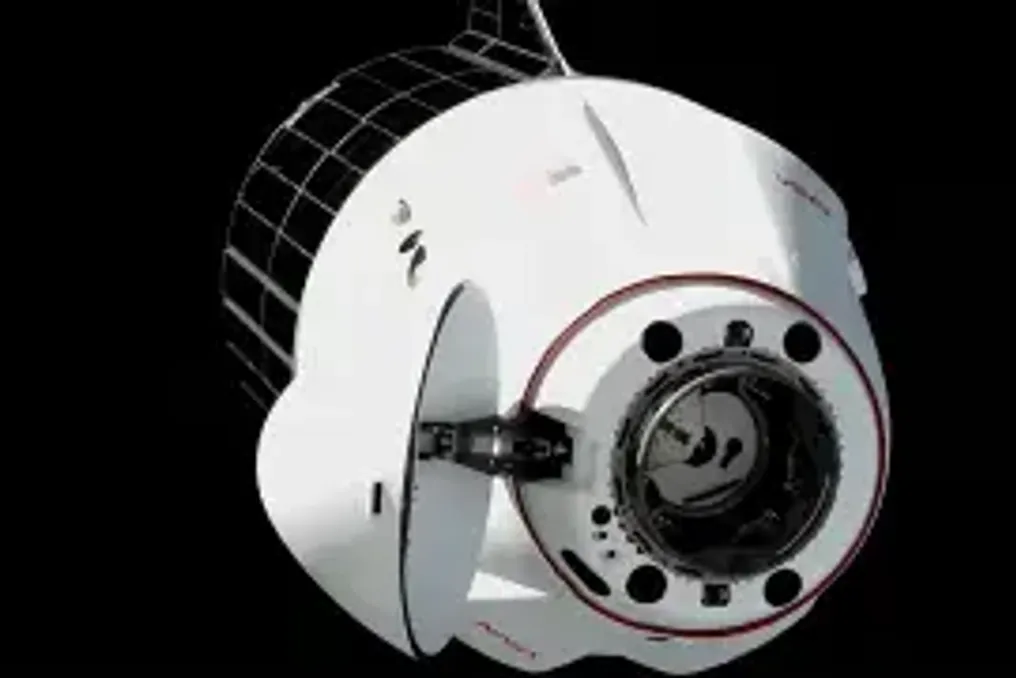
SpaceX spacecraft successfully delivered about 3 tons of cargo to the International Space Station

According to a report from the Kazinform news agency, the 'Dragon' spacecraft from 'SpaceX' successfully completed its mission to deliver cargo to the International Space Station.

Scientists approve the end of the 'leap second' and change the method of global timekeeping
Read more
olhardigital.com.br

Scientists approve the end of the 'leap second' and change the method of global timekeeping

Scientists and representatives from various nations agreed to discontinue the use of the so-called 'leap second,' an adjustment used to keep official time aligned with the Earth's rotation. This decision was formalized on Thursday, the 15th, during the 28th General Conference on Weights and Measures, held in the Versailles region, France.

The modification will take effect on May 20, 2027. With this change, the divergence between official time and time dictated by Earth's rotation could grow up to one hour, eliminating the need for one-second corrections. The main objective of this measure is to mitigate the risks inherent in these adjustments within critical systems such as communication networks, financial services, satellite navigation, and computers.

This mechanism, used for decades, will be discontinued, impacting how humanity manages temporal measurement. As reported by Nature, the decision also considers the possibility of applying a negative leap second, which is unprecedented. In this hypothetical scenario, it would be necessary to subtract a second from the clock instead of adding it, which could generate additional complications in digital environments.

Coordinated Universal Time (UTC) functions as the primary international reference for synchronizing clocks and systems, serving as the basis for applications ranging from telecommunications and satellite navigation to financial transactions and digital infrastructure.

Since 1972, the system has used leap seconds to keep UTC close to the time determined by Earth's rotation, known as UT1. When the difference between these two references approaches the pre-established limit, a second is added to UTC, causing the sequence of clocks to go from 23:59:59 to 23:59:60, instead of jumping directly to midnight.

The last leap second addition occurred on December 31, 2016, and no further adjustments have been made since. However, computer systems do not always process this change well, potentially interpreting the extra second in different ways, which causes synchronization inconsistencies and operational failures.

The situation would be even more complex if an inverse adjustment were required, removing a second. This would require systems accustomed to uninterrupted temporal progression to handle a correction never before implemented.

Concerns about technological dangers were already a subject of international debate. In 2022, the General Conference on Weights and Measures decided to extend the acceptable limit for the disparity between UTC and Earth's rotational time until 2035. The decision made in October 2026 anticipated this transition.

The new directive allows this difference to reach 3,600 seconds, equivalent to one hour, without the need for inserting leap seconds. UTC will operate continuously starting from May 20, 2027. According to the International Bureau of Weights and Measures (BIPM), international time coordination is vital to ensure that navigation systems, telecommunications, digital infrastructure, and financial transactions function under a common standard.

This change specifically aims to decrease dependence on irregular adjustments that can induce unforeseen behaviors in technologies. It is important to note that this does not imply the shutdown of atomic clocks or the loss of the scientific ability to monitor Earth's rotation; it only changes the methodology for reconciling the two references in the international time standard.

Another relevant factor that reignited the debate is the observation of periods of acceleration in Earth's rotation in recent years. Historically, the influence of lunar tides tends to slow down the Earth, but measurements since 2020 have pointed to phases where the planet rotated faster than expected.

The Time and Space Laboratory of the Paris Observatory points out that the exact reasons for this behavior are not yet fully known, with one possible theory being the internal movements of the Earth's core, whose dynamics are poorly understood.

If the trend of acceleration continues, there may be a need for a negative leap second between 2030 and 2035, which would involve subtracting a second from UTC, a practice never executed. This possibility intensified concerns about the impacts of an unprecedented correction on time-sensitive infrastructures.

For most of the population, the change will not bring noticeable alterations to daily routines, as mobile phone, computer, and wristwatches will continue to display the hours normally. The effect is felt primarily in global infrastructure that requires a constant temporal reference. Banking systems, computer networks, satellite navigation services, and scientific facilities depend on this precise synchronization.

Despite this, the need to track Earth's rotation persists. Astronomers and researchers will continue to use specific measurements to define planetary position and movement. The distinction lies in the fact that UTC can gradually diverge from astronomical time without requiring one-second corrections.

The BIPM states that the one-hour limit will ensure the continuity of the international standard for several centuries, transferring the discussion about the accumulation of differences between atomic time and Earth's rotation to the future. Thus, the decision represents a significant advance in metrology: instead of constantly correcting the official clock to keep up with the planet's minuscule variations, the international system will adopt a continuous reference, more compatible with the demands of modern technology.

Meta confirms flaw in Ray-Ban Meta glasses that allowed recording conversations without a command
Read more
tecnoblog.net

Meta confirms flaw in Ray-Ban Meta glasses that allowed recording conversations without a command

Meta acknowledged a vulnerability in its Ray-Ban Meta smart glasses, which allowed the recording of conversations even without issuing the activation command 'Hey Meta'. The captured audio was subsequently made available in the Meta AI application, along with its respective textual transcriptions.

These reports began circulating on the Reddit platform following a recent firmware update to the glasses, as reported by TechSpot. Although the company did not detail the cause of this flaw, it assured that the issue has been resolved.

The company stated: 'This issue has been resolved. People can manage, review, and delete voice recordings from their interactions with Meta AI through the settings at any time.'

The Ray-Ban Meta models are available for sale in Brazil starting at R$ 3,699.

One user reported finding recorded conversations even when the 'Respond without Hey Meta' feature, which allows certain interactions to continue without repeating the activation phrase, was disabled. This individual mentioned that the white indicator light illuminated during some of these recordings, making this LED a crucial point in the company's security mechanisms for signaling the operation of capture features.

The owner claimed to have received guidance from Meta support, suggesting the deactivation of camera and microphone permissions, detection of glasses usage, deletion of command history, and temporary suspension of automatic updates. However, he observed that such actions could impact essential device functionalities and informed that he is consulting lawyers about the possibility of filing a class action lawsuit against Meta.

This incident adds to other privacy concerns related to Meta's camera and microphone-equipped glasses. There have been cases where users exploited the camera's discretion to film other people on social media without proper consent.

Additionally, information from third-party workers responsible for analyzing the AI-generated recordings from the devices indicated that the camera could be capturing consumers in private moments, including scenes of a sexual nature. According to TechSpot, this material was reviewed during the training of Meta's artificial intelligence system.

The controversies have forced the company to constantly improve its security systems, particularly regarding the LED that signals an ongoing recording. The glasses now prevent recording when the system detects that the light is obstructed or damaged. In September, the company informed Tecnoblog that it had deactivated 0.1% of sold glasses that presented tampering.

Despite this, the glasses continue to be the subject of global debates on regulations and legislation, especially concerning their introduction in certain environments. In Brazil, the Superior Electoral Court (TSE) has already listed them among the items prohibited in voting booths, while the Consumer Defense Institute (Idec) filed a complaint with the Federal Public Ministry to initiate an investigation into the risks of these devices.

Popular