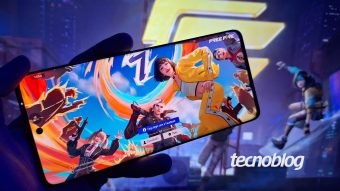
How to get free diamonds in Free Fire: methods and tips
Read more
Tecnoblog
tecnoblog.net

How to get free diamonds in Free Fire: methods and tips

Diamonds in Free Fire function as the game's in-game currency, allowing players to purchase exclusive skins, characters, and elite passes. This resource is crucial for those who wish to customize their avatar's appearance and fully utilize all new features released by Garena.

There are several ways to obtain free diamonds: participating in official events, community tournaments, and using valid promo codes. Another popular method is accumulating balance in the virtual store through the official Google rewards application.

Tecnoblog presents five safe ways to get diamonds in Free Fire. The most reliable are considered to be official in-game events, rewards for ranked matches, or credits from the Google Play Store. Let's look at how this works.

You can receive free diamonds by completing tasks directly within the game. This simply requires finishing daily missions, weekly challenges, and special quests to earn corresponding rewards. You should also monitor the 'Events' section, where temporary campaigns often distribute vouchers with diamonds and unique items among players, allowing you to quickly top up your inventory without spending real money.

Climbing ranks and achieving higher standings in Free Fire seasons is another path to getting free diamonds. As you advance in the rankings, the player accumulates chests and reward coupons directly in their profile. Although diamond distribution changes every season, participating in ranked matches brings valuable seasonal prizes that replenish the inventory and help save diamonds.

Another way to earn diamonds in Free Fire for free is by participating in tournaments organized by Garena or its partner streamers. Players who perform best in competitions receive direct prizes and redeemable codes in their account.

In addition to competitions, following official social media pages allows you to participate in verified giveaways and free distributions. This is a safe alternative for increasing your in-game balance and preventing online fraud.

Answering surveys in the Google Recompensa Sua Opinião app accumulates credits on your account. This digital wallet safely stores the earned balance in the Google Play Store. This accumulated balance can be used for microtransactions to top up directly in the app, which is a smart strategy for getting free diamonds in Free Fire without financial cost.

Garena periodically provides a known Free Fire promo code—codes consisting of combinations of characters. These sequences grant official rewards and valid coupons for obtaining free FF diamonds or cosmetic items. To enter codes, you need to go to reward.ff.garena.com and log into your account. Then, you must enter the numbers on the official page to confirm the prizes and receive them directly in the game vault.

There is no official way to get an infinite amount of diamonds in Free Fire because the balance is stored on Garena's servers. This centralization of data excludes external modifications and invalidates any promises of unlimited virtual currency. Applications and generators named like 'Free Fire infinite diamond' engage in cloning legitimate websites (phishing) and lead to bans. The best alternative for getting free diamonds remains participating in official in-game missions, events, and promotions. When looking for free diamonds in Free Fire, protecting your account from digital fraud should be the priority.
Similar stories

The functioning of virtual currency top-ups in Brazil and its integration into the gaming economy
Read more
olhardigital.com.br

The functioning of virtual currency top-ups in Brazil and its integration into the gaming economy

Virtual currencies, such as diamonds, credits, and points, have become crucial elements in the video game economy. They allow users to acquire content like characters, passes, and skins without needing to buy a new game, significantly altering how companies monetize titles that remain active for long periods.

In the Brazilian context, this market has developed its own particularities due to the popularization of digital payment methods and the increase in free-to-play games, especially on mobile devices. Currently, top-ups can be made directly within the game, through platform stores, or via external partners and services.

Behind what seems like a simple purchase lies significant competition over who will mediate the interaction between the player and the game at the moment of spending. Although the traditional method of making a transaction within the game itself still exists, it is no longer the only available route.

Game developers (Publishers) have begun collaborating with proprietary stores and partner distributors, while retailers and specialized platforms have started offering gift cards, credits, and top-ups. This allows companies to expand their points of contact with the consumer while offering the player more options on where and how to make their purchases.

The result is a market where the same virtual currency can be obtained through various channels, each presenting its own payment offers, promotions, or advantages.

The way Brazilians make payments also shapes this ecosystem. Top-up services can integrate common daily consumer methods, such as Pix, instead of relying solely on credit cards. This aspect is particularly notable in free-to-play games, where the user can start without cost and subsequently invest small amounts in items or currency.

In this scenario, reducing the barriers between the intent to purchase and the act of paying is part of the monetization strategy. The more aligned the process is with local financial habits, the easier it becomes to convert in-game interest into an effective transaction.

When an individual acquires, for example, R$ 50 in diamonds, these amounts are not always fully received by the publisher responsible for the game. Depending on the chosen channel, the operation may involve payment processing companies, distribution companies, and the platform where the purchase occurred; each involved party may have distinct commercial terms.

It is this supply chain that explains the publishers' interest in creating proprietary stores or forming external partnerships. The issue transcends merely facilitating the player experience; it also involves tighter control over the commercial relationship with the consumer and the management of revenue generated by the title.

Thus, for corporations, top-up has evolved into a strategic component of the business, surpassing the function of a mere final button in a virtual store.

Another change occurs outside the scope of conventional purchasing. In-game credits have begun to be incorporated into loyalty programs and brand campaigns. In this model, virtual currency ceases to be just an item sought for buying a skin, starting to serve as a reward to encourage frequency and keep the consumer engaged in a specific environment.

This logic is familiar in other segments, such as using airline miles or bank points. In games, virtual items and currency can play a similar role, with the distinction that the reward is directly linked to the consumption the public already performs in their entertainment.

It is in this context of transformation that models like Gamin PLUS emerge, a membership club aimed at the gaming audience. Unlike being a store focused solely on selling currency, this service uses its own system called G-Coins, which can be exchanged for benefits from a rotating catalog.

This catalog can include PC games, as well as credits and currency from titles such as PUBG Mobile, EA SPORTS FC Mobile, Honor of Kings, Arena Breakout, and New State Mobile. The standard monthly fee for this service is R$ 40.

The most relevant aspect of this format, from a market perspective, is not just providing another way to obtain credits. It is the attempt to convert an usually sporadic purchase into a continuous relationship. Clubs like this seek to maintain a constant connection with the player through benefits, community, and other experiences, rather than competing only at the moment they decide to buy diamonds or a skin.

This evolution demonstrates how the economy surrounding virtual currencies is being reconfigured. The path between real money and diamonds persists, but increasingly, companies show interest in occupying this space, whether by processing the purchase, distributing credits, or integrating the top-up into a larger ecosystem of player relationship.

Popular