New pedestrian bridge connects Dubai Metro with Etihad Railway
Read more
Khaleej Times
www.khaleejtimes.com

New pedestrian bridge connects Dubai Metro with Etihad Railway

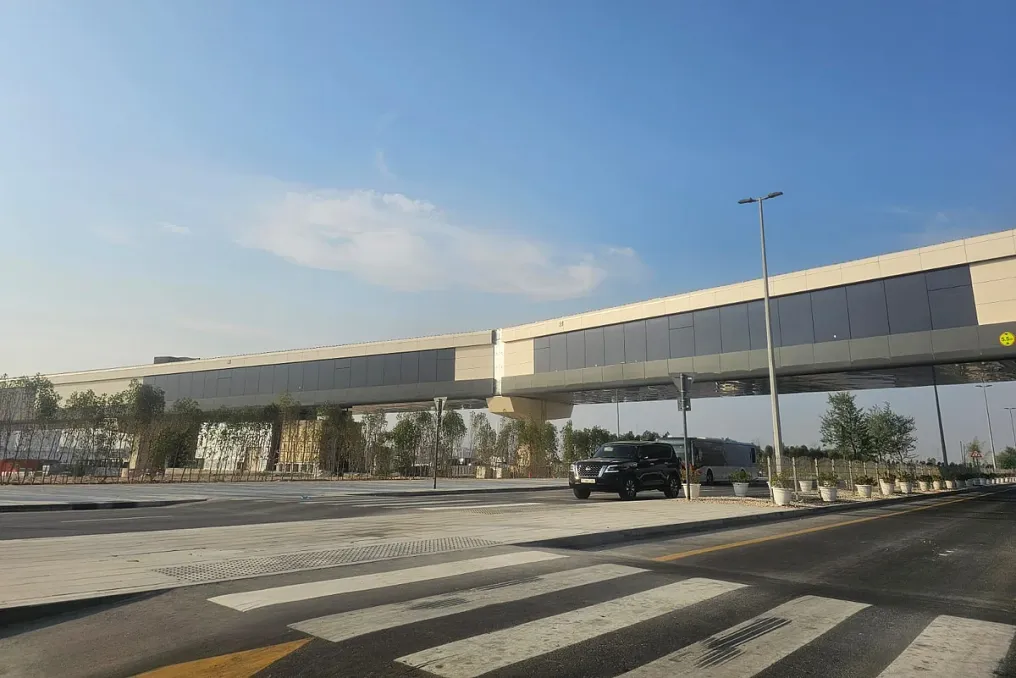
Passengers of the Dubai Metro can now walk directly to the Etihad Railway Dubai Al Jalaliys station via a new pedestrian bridge located at the Jumeirah Golf Estates metro station.

The bridge opened on Thursday, allowing passengers on the Red Line metro to reach Etihad Rail services heading to Abu Dhabi and Fujairah without using cars. Previously, passengers had to use the Etihad Rail shuttle bus, which was located near the metro station, to travel between these two stations.

This new route does not cancel the shuttle service; instead, it gives passengers a choice: walk across the bridge or take the bus, which is especially convenient for those carrying luggage, traveling with children, or simply preferring to avoid walking.

Access to the bridge is available through Exits 1 and 2 of the Jumeirah Golf Estates metro station. Clear signs direct visitors to the Etihad Rail Passenger Station. The enclosed route is equipped with escalators and moving walkways. The full transfer from the metro station to Al Jalaliys station takes about five to seven minutes.

Thanks to the bridge, passengers no longer need to go out onto adjacent roads, call a taxi, or change platforms outdoors. It also unites three modes of public transport in one location: the Dubai Metro, RTA buses, and Etihad Rail.

The RTA bus stop, located outside the metro station, remains part of the interchange hub, allowing bus passengers to exit near the bridge and continue to Etihad Rail. Meanwhile, those arriving by train from Abu Dhabi or Fujairah can cross the bridge to Jumeirah Golf Estates and continue their journey on the Red Line.

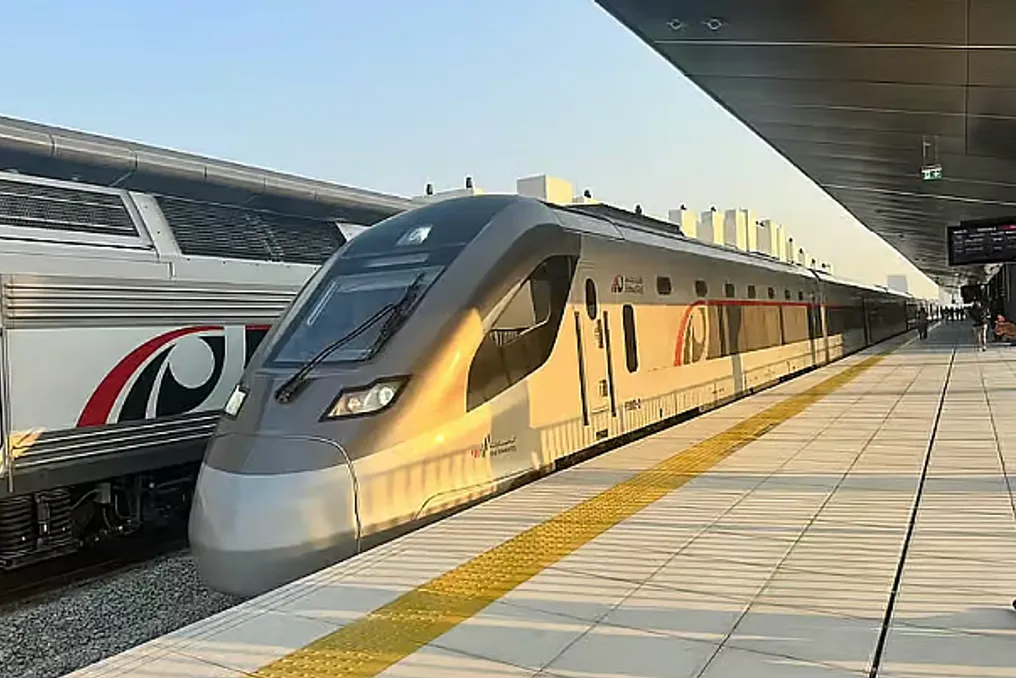
The Dubai Al Jalaliys station began passenger service on September 30, connecting Dubai with the inter-emirate Etihad Rail sector. However, the pedestrian bridge was the missing element for direct connection to the station.

Now that the bridge is open, the journey has become easier: metro passengers can exit through Exit 1 or 2, follow the signs, use the covered passage, and arrive at the Dubai Al Jalaliys station without using a car.

Similar stories

Passengers Choose Longer Routes Between Dubai and Riyadh Due to Airport Disruptions
Read more
www.khaleejtimes.com

Passengers Choose Longer Routes Between Dubai and Riyadh Due to Airport Disruptions

Residents traveling between the United Arab Emirates (UAE) and Riyadh are forced to spend more time planning trips, undertake longer journeys, and use additional ground transfers as some passengers seek alternatives to their usual air routes.

Due to the temporary suspension of direct flights, residents are exploring various ways to reach the capital of Saudi Arabia, including landing in other cities and then continuing the journey by land transport. For some, this means traveling through Dammam in KSA, while others use Bahrain as a transit point before further travel to Riyadh.

These changes in travel occurred against the backdrop of recent attacks on Saudi airports and energy infrastructure, which disrupted flight operations, including at Riyadh Airport. As a result, passengers are weighing options for flights, ground transportation, and subsequent connections when moving between the UAE and the Kingdom of Saudi Arabia.

For those with work commitments in Riyadh, finding an alternative route has become a practical necessity. Others in Dubai remain flexible with their plans, hoping to return by air once regular flights resume.

A 59-year-old British specialist residing in Riyadh, who wished to remain unnamed, is one of those using a longer route to return to Saudi Arabia after visiting family in the UK. After the trip to Dubai, she plans to fly to Manama in Bahrain and then continue to Riyadh by land transport, which will take another five to six hours.

She noted: 'I went to the UK to meet my family, but due to airport closures, I had to find another way to get back to Riyadh, where I live. Now I have reached Dubai and will fly from here to Manama in Bahrain. From there, I will drive to Riyadh, which is expected to take about five to six hours. It's a longer route than usual, but it's the route I must take to get back to work in Riyadh.'

A 46-year-old marketer, Vidjan R., was also forced to travel to Riyadh due to professional obligations. He flew from Dubai to Dammam on Sunday to attend the World Oil and Gas Congress 2026, and then continued by land transport.

He reported: 'It was a big event on the Riyadh calendar, so I still had to go to Riyadh. I flew from Dubai to Dammam in Saudi Arabia, and then drove to Riyadh, which takes about four hours.' After completing the event, Vidjan intends to partially make his way back before returning to the UAE. His return journey will include a drive from Riyadh to Dammam, followed by another drive to Bahrain.

He added: 'But now I am finished and plan to drive back to Dammam, and then by car to Bahrain, which takes about an hour. After that, I will fly from Bahrain back to the UAE.'

Not everyone is prepared for additional ground transfers. For some residents, staying in Dubai and waiting for more convenient flight options remains the preferred option.

Rishi Joshi (name changed), who holds dual citizenship, arrived in Dubai on Friday to meet his family. He is currently trying to figure out the best way to return to Riyadh but is keeping his plans open. He stated: 'I am trying to find a way to get back to Riyadh after the closures of the airports in the Kingdom. This is a temporary closure, and I hope everything will reopen soon, and I can return by plane to at least one of the Saudi Arabian airports from the UAE. I am here for now. It's just a matter of 'waiting and watching'. '

Dubai public transport passengers can use QR codes instead of Nol card
Read more
www.khaleejtimes.com

Dubai public transport passengers can use QR codes instead of Nol card

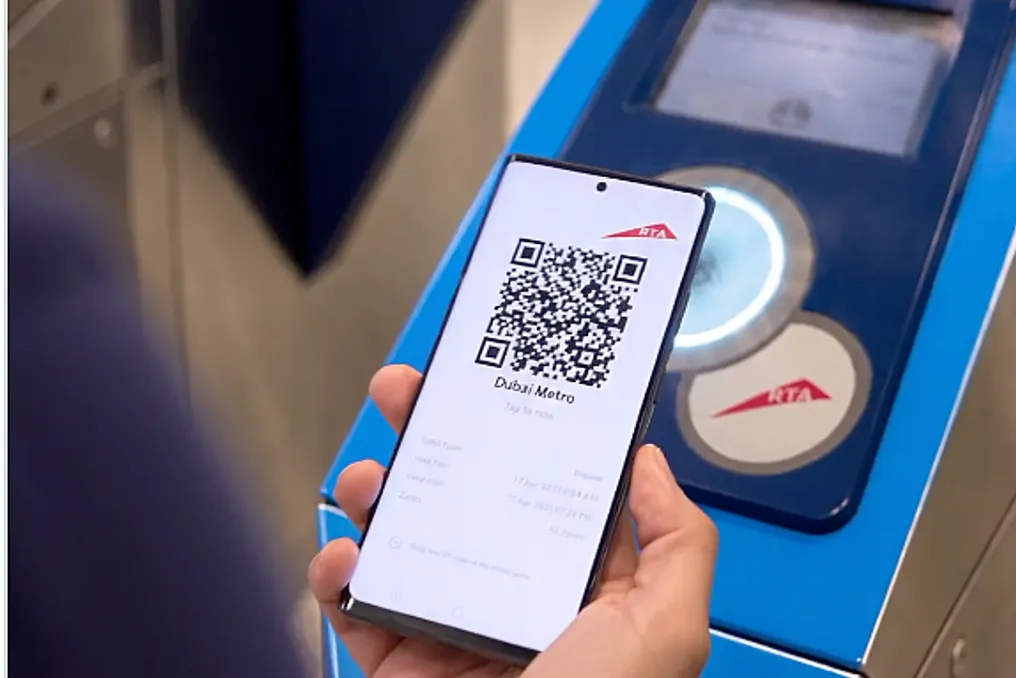
Public transport passengers in Dubai can now use QR codes on their phones to access the metro, trams, and buses, eliminating the need for paper tickets. This was announced by the Roads and Transport Authority (RTA) on Friday, October 9th.

To start a journey, passengers can obtain their QR code through the Nol Pay or S’hail applications and scan it on the blue entry turnstiles. The RTA advised users to obtain the QR code in advance through one of these applications and scan it at the gates before heading to their destination.

The new payment method applies to the red Nol ticket, which is intended for single and occasional trips, with the fare depending on the number of zones crossed. This change provides rare users and visitors with a digital option, simplifying the payment for individual routes within the Dubai public transport network.

Comparison of travel costs from Dubai to Abu Dhabi by train, bus, car, and taxi
Read more
www.khaleejtimes.com

Comparison of travel costs from Dubai to Abu Dhabi by train, bus, car, and taxi

Traveling from Dubai to Abu Dhabi is possible in several ways, including the Etihad Rail train. The train ticket costs about 39 dirhams, but the total trip cost depends on the expenses for reaching the departure station and the final destination upon arrival.

Etihad Rail began offering public services from Al Jalais Station in Dubai on Wednesday, providing passengers with an additional route between the emirates. The train journey itself takes one hour and four minutes, but the overall travel time is determined by the starting and ending points.

For the comparison, the Union Metro station in Deira was chosen as the departure point, and the Hamdan Street World Trade Centre in Abu Dhabi was selected as the final destination. Calculations are provided for one adult traveling one way. When using the rail option, the Silver Nol card, Comfort class ticket, and bus connections in Abu Dhabi are applied. Driving costs are based on the October fuel price effective from October 1st. The total travel time is an approximate estimate, including transfers, and not the result of travel time testing.

From Union, passengers can take the Red Line towards Expo 2020 and alight at Jumeirah Golf Estates station. The fare on the Silver Nol card is 7.50 dirhams, and the metro ride itself is estimated to take about 53 minutes. Passengers then use a pedestrian crossing to Al Jalais Station. Time for walking and boarding the scheduled train must be taken into account.

The Comfort tariff from Dubai to Abu Dhabi starts from 39 dirhams, increasing to 46.50 dirhams when further travel in Abu Dhabi is included. The train arrives at Mohammed bin Zayed City Station, from where a transfer is required to reach the city center. Etihad Rail previously reported shuttle connections to the ADNOC headquarters at Corniche, ADNEC, and Reem Mall for 10 dirhams. This shuttle must be booked through the railway booking system.

For this route, one should take the shuttle to the ADNOC headquarters, then a local bus towards the Hamdan Street area, and complete the journey on foot. Approximately 2–4 dirhams should be allocated for walking and waiting for the local bus. The estimated cost breakdown is as follows: Dubai Metro: 7.50 dirhams; Etihad Rail: from 39 dirhams; Abu Dhabi Shuttle: 10 dirhams; Local Bus: approximately 2 to 4 dirhams; Total: from 58.50 to 60.50 dirhams. With timely transfers, the entire trip should take about three and a half hours. This calculation uses the previously stated shuttle cost; check its price and availability before booking.

Another train option is estimated at 37–38 dirhams, with a total travel time of about 3 hours to 3 hours and 15 minutes. From Union, one can take the Green Line to Al Ghubaiba and walk to the bus station. The metro ride itself takes about eight minutes, excluding waiting and walking. Bus E100 goes to the Central Bus Station in Abu Dhabi. The RTA planner shows a travel time of about two hours and 10 minutes, although traffic conditions may increase this time.

Using the intercity fare of 30 dirhams, 5 dirhams for the Dubai metro connection, and approximately 2–3 dirhams for the final bus in Abu Dhabi, the total trip cost will be around 37–38 dirhams. Route 102 in Abu Dhabi includes the Central Bus Station and several stops on Hamdan Street. One should choose the stop closest to the destination and account for the final walk.

The distance from Union Metro Station to WTC road is approximately 150 km. A car consuming eight liters per 100 km would require about 12 liters of fuel for this trip. Premium gasoline 95 costs 4.28 dirhams per liter from October 1st, compared to 3.69 dirhams in September. Thus, the one-way fuel bill increases from 44.28 to 51.36 dirhams, an increase of 7.08 dirhams.

In addition to this, there are travel charges. An approximate route via Al Gharhoud and Sheikh Zayed Road involves four Salik tolls. Although drivers pass both Safa gates, they pay only once when crossing the pair in one direction within an hour. Including VAT, the four tolls amount to 16.80 dirhams during off-peak hours or 25.20 dirhams during peak hours. Adding the Darb fee of 4 dirhams and the entry fee to Abu Dhabi Island of 4 dirhams results in a total estimated sum of 72.16–84.56 dirhams before parking fees.

The amount varies depending on the chosen route, travel time, and vehicle fuel consumption. Standard city parking in Abu Dhabi costs 2 dirhams per hour or 15 dirhams per day. These figures cover only fuel and travel charges, excluding insurance, maintenance, and depreciation. If two people share the car, the one-way travel cost will be approximately 36–42 dirhams per person before parking fees.

A taxi called on the street in Dubai starts from 5 dirhams and costs 2.45 dirhams per kilometer. Over a distance of more than 150 km, this amounts to 372.50 dirhams before accounting for travel charges and waiting time. Adding four Salik tolls brings the cost to approximately 389–398 dirhams before accounting for Darb fees and waiting time. The starting fare may differ when ordering through an application. Taxis offer a direct route without the need for parking or transfers, but for a solo traveler, it is significantly more expensive than other options. Heavy traffic can increase both travel time and meter fares.

In summary, the intercity bus offers the lowest estimated cost, around 37–38 dirhams. The combination of metro, Etihad Rail, and buses will cost approximately 59–61 dirhams but will require more time for transfers. Driving provides a shorter estimated travel time and may be cheaper per person when sharing. At the current October fuel price, a solo driver will spend about 72–85 dirhams on fuel and travel charges before parking. For passengers starting in Deira and heading to central Abu Dhabi, the decision depends on the overall travel experience: its cost, the time required for transfers, and the desire to avoid driving.

_
Popular