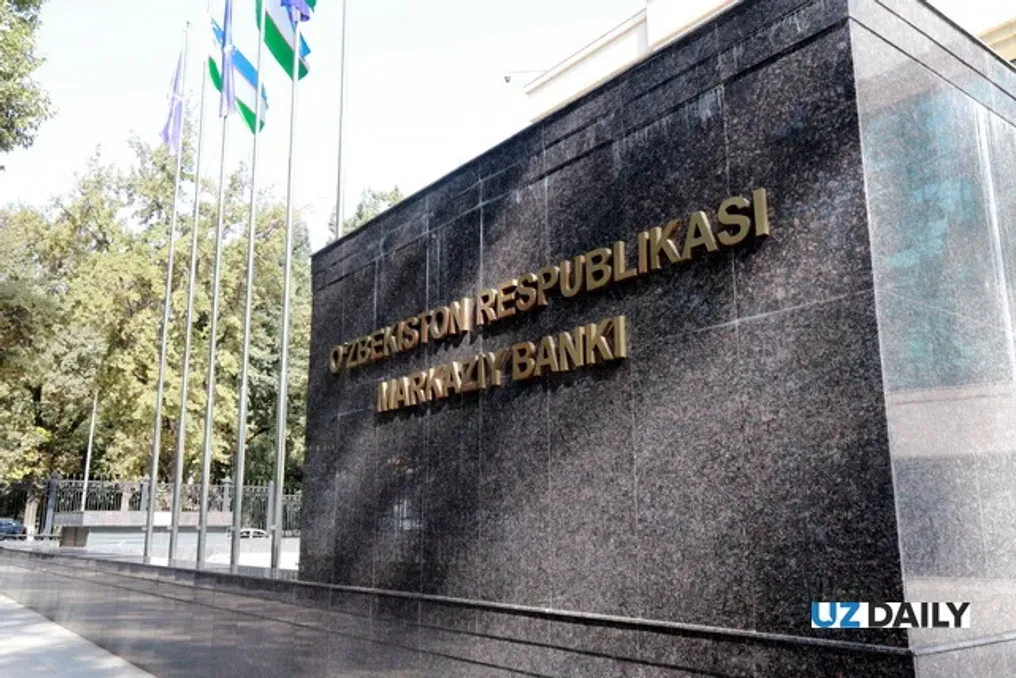
Register of Companies Socially Significant to the Economy Updated in Uzbekistan
Read more
Podrobno.uz [uz]
podrobno.uz

Register of Companies Socially Significant to the Economy Updated in Uzbekistan

The inclusion of enterprises in the register of socially significant organizations has been updated in Uzbekistan. 449 companies that meet specific criteria regarding assets, revenue, and staff have been included in this register.

There is a special status for Public Interest Entities (PIE), which is assigned to companies that have a significant impact on society and the economy, as well as are important to a large number of stakeholders. This status was established by a presidential decree.

The formation of this register is carried out by the Ministry of Economy and Finance based on data provided by the Tax Committee and other state structures. The list includes organizations whose shares are listed on the stock exchange, commercial banks, payment and microfinance institutions, investment funds, exchanges, as well as large state-participating enterprises.

Additional companies can be included in the list if their assets and net revenue exceeded 440 billion soms during the two previous calendar years, and the average number of employees was at least 500.

Information from financial statements submitted to tax authorities was used when compiling the register for 2024 and 2025. According to the Ministry of Economy and Finance, 449 enterprises meet the established parameters. Furthermore, the companies Yandex, Wildberries, UzIMEI, and Turon were not included in the list because their average number of employees over the last two years did not reach the threshold of 500 people.

The register of socially significant organizations will be subject to regular updates. It should be noted that the register of socially significant organizations of Uzbekistan was published for the first time in June of this year, listing 425 organizations.

Similar stories

Business support mechanism introduced in Uzbekistan for companies created at universities and scientific organizations
Read more
podrobno.uz

Business support mechanism introduced in Uzbekistan for companies created at universities and scientific organizations

Rules regulating the creation of commercial companies involving universities and scientific institutions have been approved in Uzbekistan. These enterprises will engage in producing goods and providing services based on the results of scientific research.

These new structures will be eligible to apply for various types of support, including tax incentives, financial assistance, and the use of existing university infrastructure. The goal of this mechanism is to assist scientists in bringing their developments to the market in the form of finished products.

For an organization to be included in the relevant register and benefit from assistance, the university or scientific institution must own at least 25% of the company's charter capital. Furthermore, a detailed business plan must be provided, and it must be documented that the proposed product is based on their own developments. The necessary capital can be formed by attracting investors, venture funds, or using non-budgetary funds.

Enterprises whose developments are protected by patents will enjoy special benefits. For companies using non-patented solutions, the profit tax rate is reduced by half until May 2029. Universities can also lease land and buildings to their subsidiary companies and provide them with financial support.

The application process is carried out through a specialized electronic platform. Expert review will be conducted by the Agency for Innovation Development within ten days, after which a special council makes the final decision. The certificate of inclusion in the register is issued within three days and is valid for five years.

During the five-year investment period, the state's share in these enterprises cannot be privatized. After this period, the state will be offered the opportunity to sell its share to other participants, or if it declines, it will be put up for auction. The Agency for Innovation Development also plans to regularly organize competitions to finance projects that contribute to turning scientific ideas into commercial products.

Previously, a decree was adopted in Uzbekistan aimed at accelerating the integration of scientific achievements into the real economic sector. This document provided for mechanisms for creating 'spin-off' companies and established tax incentives and additional support measures for both scientists and entrepreneurs.

Uzbekistan enterprises received 415.7 billion soums through the digital lending platform TadbirCore
Read more
uzdaily.uz

Uzbekistan enterprises received 415.7 billion soums through the digital lending platform TadbirCore

Small and medium-sized enterprises in Uzbekistan collectively received 1005 loans totaling 415.7 billion soums using the digital lending platform TadbirCore. These results were recorded by the platform between June 1 and September 17, 2026.

During this period, entrepreneurs submitted 3262 applications to banks via TadbirCore, with nearly one in three applications resulting in a loan disbursement, according to the Central Bank of Uzbekistan.

TadbirCore operates in beta mode under the supervision of the Central Bank. The platform's concept is that instead of approaching individual banks, an entrepreneur submits a single application that is simultaneously sent to a number of credit institutions.

The platform is currently integrated with 23 banks, including Agrobank, Asakabank, Aloqabank, Poytaxt Bank, InfinBank, Kapitalbank, Universalbank, Anorbank, Hamkorbank, Davr Bank, Turonbank, Asia Alliance Bank, Trustbank, Tenge Bank, Ipak Yuli Bank, Xalq Bank, Uzpromstroybank, Orient Finance Bank, Microcreditbank, BRB, Garant bank, TBC Bank, and National Bank.

The platform's creators explain the problem it aims to solve using the example of a typical entrepreneur: when applying to three banks, one has to collect documents, fill out questionnaires, and wait for a response three times. Since each bank has its own requirements, it only becomes clear after submitting the documents whether the applicant meets them. Furthermore, a bank may not have a branch in the entrepreneur's area, interest rates may seem similar at first glance, but the final payments differ, and a rejection may come without explanation.

The average interest rate for loans in national currency issued through the platform was 23.9%, and the average loan term was 37.4 months. The peak demand occurred in July, when 1465 applications were submitted and 420 loans totaling 169.7 billion soums were issued. In June, 954 applications and 266 loans worth 126.8 billion soums were registered. In August, entrepreneurs submitted 596 applications and received 224 loans amounting to 88.8 billion soums. Between September 1 and 17, 247 applications were received and 95 loans totaling 30.3 billion soums were issued.

The entire application process takes place online. Users log into the platform using an electronic digital signature, select one of four available products—a microloan up to 100 million soums, a current expenses loan, a long-term business development loan, or a new enterprise loan—and specify the amount, term, and purpose.

The system suggests suitable banks, whose responses are then displayed in the applicant's personal account. The entrepreneur sees the approved amount, interest rate, term, and grace period offered by each bank, chooses the preferred offer, and receives the manager's contact details. If the bank rejects the application, the platform indicates the reason, allowing the entrepreneur to improve their profile and reapply. Processing time is monitored using Service Level Agreements (SLAs) and a timer.

Banks maintain their independence: they formulate offers according to their own credit policies, set their own stop factors, and only receive applications that meet their requirements. Data is presented in a standardized format, which reduces the need for manual checks, while the analysis of rejected applications helps understand at what stage the bank loses potential borrowers.

The platform also provides access to clients in regions where maintaining branches is costly. According to the creators, competition in small business lending is shifting from the question of the number of bank branches to which conditions, speed, and quality of service are offered better.

Personal data processing is regulated by the Personal Data Law of July 2, 2019. Users decide who to grant access to their information, can withdraw their consent, and see who has accessed their documents. The platform does not request passwords for banking applications and does not have access to bank accounts. Loans through TadbirCore are available only to existing legal entities and individual entrepreneurs.

TadbirCore plans to launch a mobile application and a Telegram bot, and will also add microfinance organizations to the platform. For entrepreneurs who do not pass the initial screening, the system will ultimately provide recommendations on the criteria they did not meet and notify them about the possibility of future access.


Annual audit of state enterprises for privatization introduced in Uzbekistan
Read more
podrobno.uz

Annual audit of state enterprises for privatization introduced in Uzbekistan

Uzbekistan is introducing a new procedure for assessing state-owned enterprises, according to which it will be determined annually which ones need to be maintained, privatized, reorganized, or liquidated.

This new regulation was officially approved by a decree of the Cabinet of Ministers. The annual inventory of state enterprise activities will be conducted through the joint efforts of state bodies, the State Assets Management Agency, and other relevant departments. Based on the results of this inspection, a list of organizations with recommendations regarding their future existence is formed and then submitted to the government for approval.

Furthermore, before privatizing a state share, it is mandatory to obtain a conclusion from the Competition Development Committee regarding the level of competition in that industry.

Mechanism for working with state institutions

A separate mechanism has been developed for state institutions. Annually, before May 1st, the Competition Development Committee, together with relevant ministries and agencies, will analyze their activities and submit proposals to the State Assets Agency regarding possible cessation of operations or privatization.

Previously, a state complex intended for refueling aircraft with aviation fuel was put up for public auction in Tashkent. For the privatization process, the State Assets Agency engaged the international consulting company Ernst & Young.

Popular