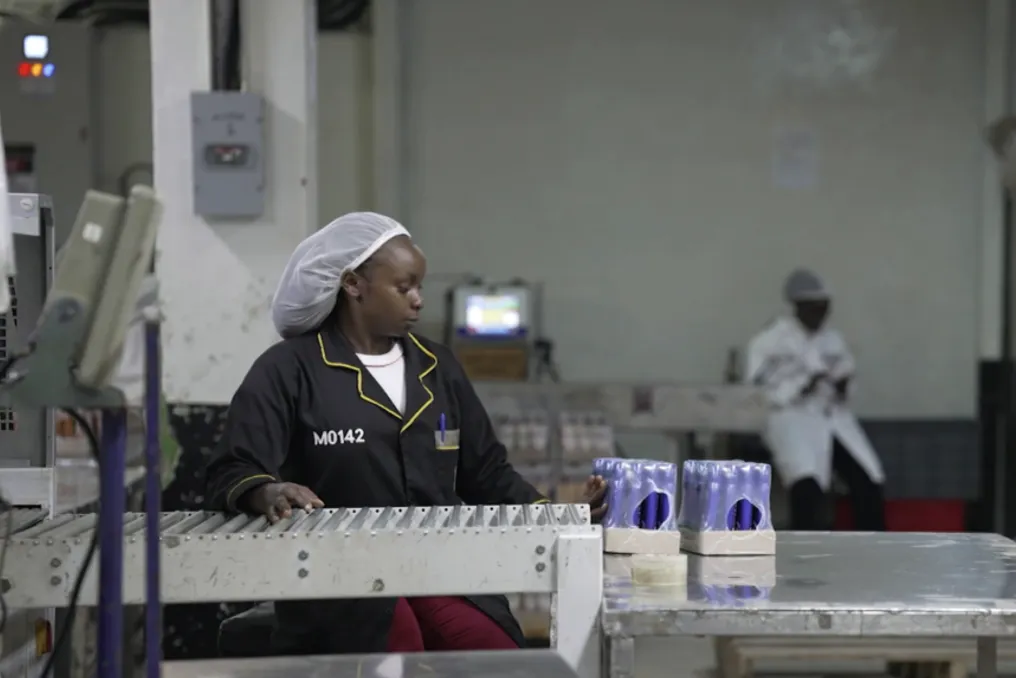
At a factory in central Nairobi, products for home, hair, and skincare are continuously coming off the production line. HACO Industries produces about 90 items specifically designed for African consumers. Its brands are available to over 3 million families across the continent, and raw materials are sourced from more than 500 African farmers.
For Mary-Ann Musangi, whose family founded HACO over 50 years ago, the opportunity lies in manufacturing products on the continent itself to meet the needs of people that the business recognizes. She emphasized the importance of creating products that are needed and desired by African consumers and which are produced by a company that understands them—understanding African skin, hair, and needs.
Currently, HACO exports its products to eight African countries. Kenya is the company's largest market, but it is also present in Uganda, Rwanda, the Democratic Republic of Congo, and Zambia. Musangi noted that logistics in Africa presents one of the key challenges in penetrating the entire continent, besides distance issues.
The company's production director, Peter Ndichu, reported that HACO's plastic factory, which produces packaging, is capable of outputting 5 million components monthly. A separate plant has the capacity to process and package 1,365 metric tons of product per month. HACO aims to strengthen its supply chain by increasing ingredient procurement within Africa. The company collaborates with small and medium suppliers of natural oils, providing them with technical support to meet quality standards.
Previously, the company imported shea butter from the United States at a price of 5,000 Kenyan shillings ($38.50 USD) per kilogram. Now, shea butter is purchased in Uganda or Ghana at a significantly lower price—1,000 shillings ($7.70 USD) per kilogram.
HACO plans to automate more of its operations. Ndichu stated that the current packing speed is 3,000 units per hour, but with automated equipment, this figure can be quadrupled, reaching approximately 12,000 units per hour. Furthermore, HACO intends to build a new factory to house these upgrades.
To achieve the goal of exporting to 30 African countries by 2030, HACO plans to establish five regional hubs across Africa. Ghana is set to become the company's production base in West Africa, from where products can be supplied to neighboring markets. Musangi believes that collaboration with local enterprises is vital for expansion.
She explained that Africa is highly fragmented in many aspects: countries, borders, tax legislation, politics, culture, language, and currency. In her view, the only way to overcome these barriers is through partnerships and working with local populations.
In Ghana, HACO collaborates with Ayewa Labs, a firm specializing in developing and producing goods from African ingredients. Founder Nanaa Bates noted that the African Continental Free Trade Area, which came into effect in 2019 and is the world's largest free trade zone by number of countries, helps the company attract clients from other African nations. HACO supplies raw materials to Ayewa, which then manufactures goods for other companies outside of Ghana. Bates reported that thanks to this partnership, Ayewa's production capacity has increased tenfold.
Although manufacturing is viewed as an important path to economic growth and job creation in Africa, in 2023, it accounted for less than 15% of the gross domestic product in many countries. Musangi asserts that African nations must retain the majority of the value generated by their raw materials. She stated that it is unacceptable to continue simply exporting raw materials from Africa to be manufactured in the West and then receive the finished product at much higher prices. Musangi added that Africans possess the necessary technical skills, and the youth are highly qualified and educated; therefore, the manufacturing sector must be developed and continued to be developed to add value to raw materials.