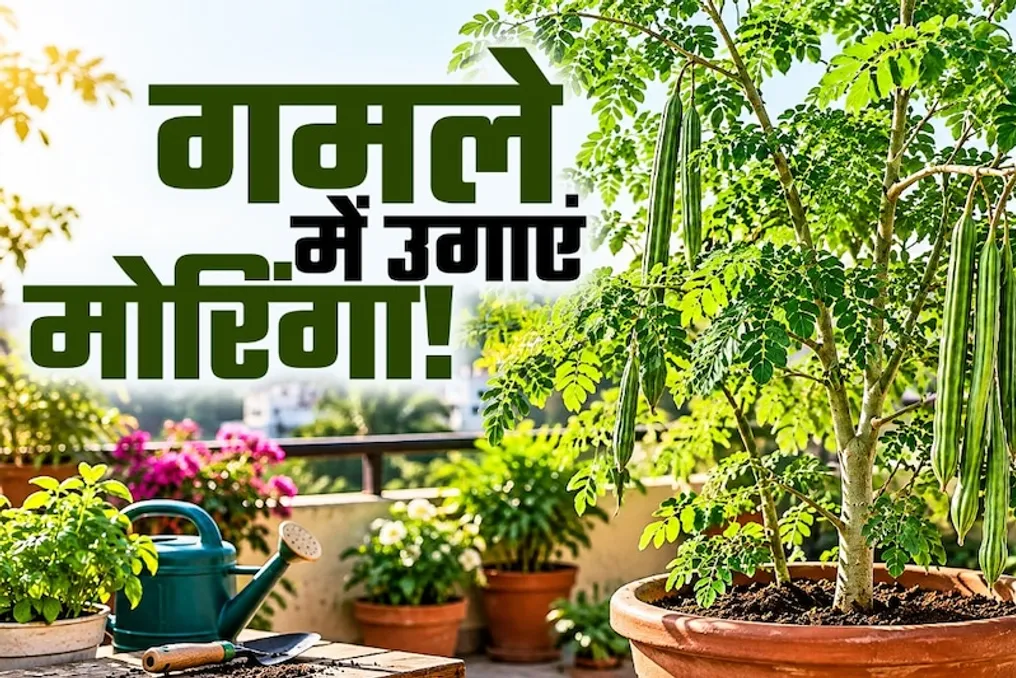
If you enjoy gardening on a balcony or rooftop, it is worth considering growing not only flowering plants but also those that can be useful in the kitchen. This refers to the Sajen tree, also known as Moringa or Drumstick, whose leaves and pods are edible. Although you may have tried dishes made from Sajen pods, many do not know that it can be successfully grown in a pot at home.
Growing the Sajen tree does not require a large farm or garden; it can be cultivated on a sunny roof or balcony. However, for the plant to grow well and bear fruit, a proper pot, soil, sufficient sunlight, and regular care are necessary. Below is the correct method for planting Moringa at home and important aspects of its care.
How to Grow Moringa:
Choosing the Right Pot
If you wish to plant Sajen at home, the first task is to choose the correct container. You must use a pot with a depth of at least 12 inches, as a larger and deeper pot better promotes free root development. It is important to ensure that there are drainage holes in the bottom of the pot so that water can flow out. Water stagnation in the pot can damage the plant's roots. Since the Sajen tree can become quite large, it should be placed in a location where it has enough space to grow.
Ensuring Adequate Sunlight Daily
For the good development of the Sajen plant, sunlight exposure is critical. It requires about 6–8 hours of direct sunlight daily. Therefore, the pot should be placed on a balcony, roof, or near a window that receives a lot of sun. If natural light indoors is insufficient, grow lights suitable for the plant's needs can be used. Good lighting promotes growth.
Mistake in Soil Selection
People often plant the plant but neglect the choice of soil. Sajen requires soil that ensures easy drainage. This can be achieved by adding some sand or perlite to standard potting mix. This approach reduces the likelihood of moisture buildup in the soil. The optimal pH level for the soil is considered to be 6–7. Water the plant only when the top layer of the soil begins to dry, avoiding overwatering.
Regular Pruning for Bushiness
As the Sajen tree grows, it can become tall. In such cases, periodic pruning is extremely important, especially when growing in a pot. Overly long or weak branches can be cut according to need. This helps shape the plant correctly and stimulates active new leaf growth. When pruning, use clean tools and do not remove too many branches at once.
Pest Control and Fertilization
It is necessary to regularly inspect the leaves and young shoots of the plant. Small insects, such as aphids, can appear on Sajen. If pests are noticed on the leaves, you should first try to remove them manually and clean the plant. If necessary, insecticidal soap can be used according to instructions. Additionally, fertilizers are needed to stimulate plant growth. A light dose of fertilizer can be applied every four weeks, strictly following the instructions on the package. Excessive fertilization should be avoided, as it can harm the plant.
What Are the Benefits of Growing Sajen at Home?
The specialty of the Sajen tree is that both its leaves and pods can be used in cooking. The leaves can be added to salads and other dishes, and delicious vegetable dishes can be made from the pods. Sajen leaves are a good source of nutrients.