Emirates stated that Navi Mumbai airport lacks necessary auxiliary facilities, such as cargo warehouses and catering capabilities. Meanwhile, the operator of Mumbai International Airport (MIAL) assured the airline that international flights will continue to be based in Mumbai at least until the end of March.
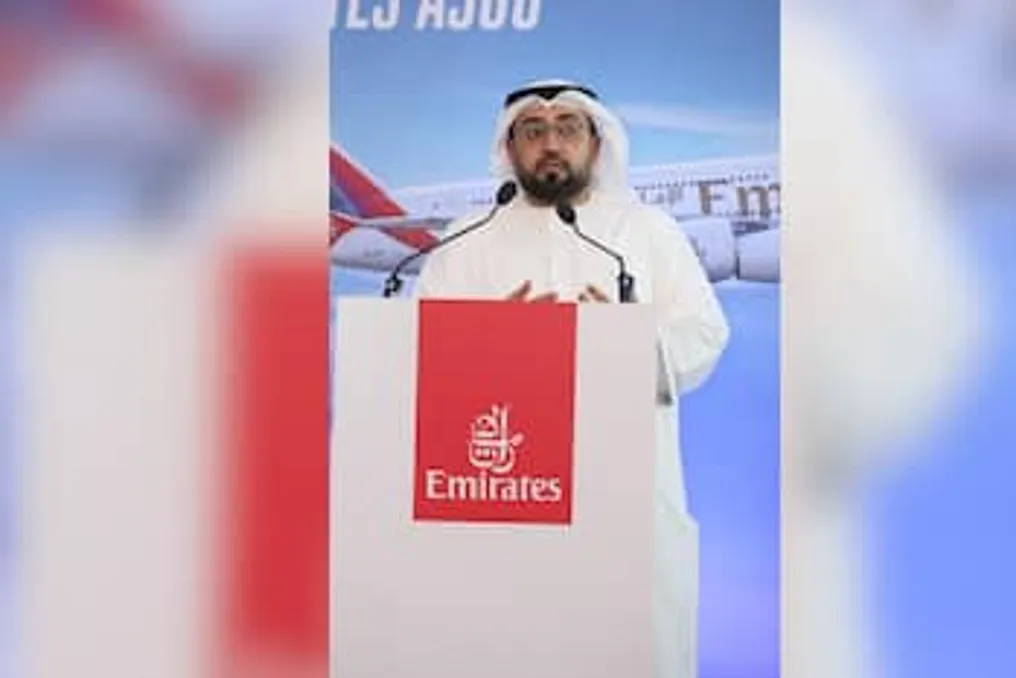
Essa Sulaiman Ahmad, Senior Vice President of Commercial Operations (West Asia and Indian Ocean) at Emirates Airline, announced on Wednesday that Navi Mumbai International Airport is not ready to handle international flights due to the absence of support facilities like cargo storage and catering services. He added that it would be difficult for airlines to relocate their operations to this airport until it transforms into a fully functional aviation ecosystem.
A few weeks ago, Mumbai International Airport (MIAL), operated by the Adani group, proposed to airlines to shift 265 out of 770 weekly international flights to Navi Mumbai by October 25, as MIAL was planning the reconstruction of Terminal 1 in Mumbai. Airlines strongly opposed this proposal, and the matter was referred to the Ministry of Civil Aviation.
On Tuesday, MIAL held a meeting with airlines and guaranteed them that no international flights would be transferred before the end of March. When asked if Emirates plans to move 33 percent of its flights from Mumbai to Navi Mumbai if the airport operator resumes its offer, Ahmad replied to journalists: 'The airport is not ready.'
Clarifying his position, Ahmad pointed to the essential elements required for airlines to operate. He noted that the airport requires a catering facility, such as a cargo storage facility, and other similar elements. In his view, until the airport becomes a fully formed ecosystem, it will be difficult for any airline to move there.
Furthermore, on Wednesday, Emirates conducted a static demonstration of its A380 aircraft at Delhi airport ahead of the launch of the Delhi-Dubai route starting October 26. Speaking to journalists at the event, Ahmad emphasized that Delhi is an important market for the airline, and it will continue to operate four daily flights from Dubai to the city. One flight will be on the A380, and the other three on modernized Boeing 777s. He also stated that the updated aircraft will offer classes of service: first class, business class, premium economy, and economy.
Ahmad stated that Emirates is willing to consider operating in new airports, including Navi Mumbai and Noida, provided that additional flight permissions and seat allocations are obtained under the air service agreement between India and the United Arab Emirates. He specified that the airline is operating at full capacity permitted by existing rights. Although Navi Mumbai may provide access to a new market closer to Pune, Emirates will require additional permission before considering operations there.
Bilateral air service rights are agreements between two states that determine the number of flights and seats that designated airlines can offer, as well as the routes and airports they can serve. These restrictions mean that an airline cannot simply add an unlimited number of flights or start operating from a new airport, even with high passenger traffic. Ahmad mentioned that the quota related to Dubai is about 67,000 seats per week in each direction. Any increase would require an agreement between the two governments.
Ahmad also reported that passenger load factors on Indian destinations initially suffered due to the Middle East conflict but are now recovering and approaching pre-conflict levels. He declined to state the exact load factor figure before the announcement of the airline's half-year results in November. Separately, he noted that Emirates is operating at 96 percent of its global network capacity before the conflict, and passenger traffic has recovered to approximately 93 percent of the pre-conflict level globally.
According to the analytical firm Cirium, Emirates operates 167 flights per week to nine Indian destinations from Dubai. Mumbai has the highest frequency with 35 flights per week, followed by Delhi with 28 flights. Bengaluru, Chennai, and Hyderabad have 21 flights per week each, while Kochi has 14, Kolkata has 11, Ahmedabad has 9, and Thiruvananthapuram has 7. The total weekly frequency remains unchanged compared to October 2025.