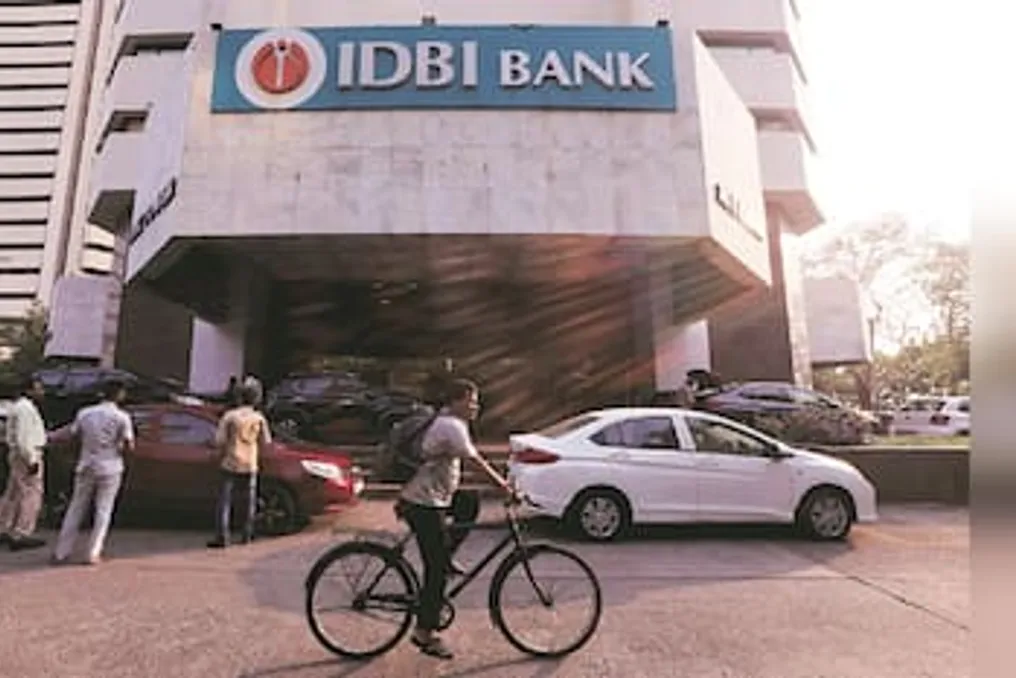
The decision to sell the controlling stake of IDBI Bank Ltd to Canadian billionaire Prem Wats, through Fairfax Financial Holdings Ltd, reflects the strengthening relationship between India and Canada over the past year and a half. These improvements occurred after a tense period during Justin Trudeau's tenure as Prime Minister.
Mark Carney, who succeeded Trudeau in March 2025, made efforts to restore and strengthen bilateral ties. As part of these measures, he visited India in February-March of last year—becoming the first Canadian Prime Minister to make such a trip since 2018. This visit contributed to attracting Fairfax to the process.
After the government finally approved the sale of 60.72 percent of IDBI Bank to Canada Inc, the parent company of Fairfax Financial Holdings Ltd, for a substantial sum of 52,878 crore rupees, this deal marks a turning point for the institution, whose history parallels the changing priorities of India's financial sector.
IDBI Bank's path has been non-linear: it began by financing industrial development after gaining independence, then faced a prolonged bad loan crisis and subsequent recovery, which paved the way for a change of ownership. Its legacy represents a story of two contrasting phases: its initial role in supporting India's industrialization and the subsequent task of correcting the balance damaged by bad loans.
The institution was founded on July 1, 1964, as the Industrial Development Bank of India with the aim of supporting the country's industrialization. It functioned as a Development Finance Institution (DFI), providing long-term financing for industrial projects, modernization, and expansion, while also helping to develop capital markets and support industrial growth in less developed regions.
As India's financial system evolved, the bank's role changed. As commercial banks expanded their industrial lending offerings and the distinction between development finance and commercial banking became less pronounced, IDBI was converted into a banking company on October 1, 2004.
In 2005, IDBI Bank merged with IDBI Ltd, and in 2008, the institution adopted the new name—IDBI Bank Ltd. The merger with the financially burdened United Western Bank in 2006 increased its operational scope but also presented it with the challenge of integrating a troubled lender.
The bank's difficulties became particularly evident during the period of aggressive corporate lending in the mid-to-late 2000s. Several large borrowers subsequently defaulted, leading to significant losses for IDBI and other consortium lenders. Notable examples included Kingfisher Airlines Ltd.
The deterioration of IDBI's assets became serious: more than a third of its loan portfolio was classified as non-performing, and gross non-performing assets (NPA) rose to 31.78 percent of issued loans in September 2018, with net NPA standing at 17.30 percent.
The Reserve Bank of India (RBI) placed the bank under its Priority Sector Lending (PCA) framework, restricting its ability to expand certain activities while it worked to improve its capital position and asset quality.
The recovery required substantial government support, which invested around 25,000 crore rupees in the bank between 2010 and 2020, while the Life Insurance Corporation of India (LIC) acquired a controlling stake.
The bank's latest financial figures demonstrate the scale of its recovery. Gross NPA decreased to 2.32 percent in March 2026 compared to 31.78 percent in September 2018, and net NPA fell to 0.15 percent from 17.30 percent over the same period. The capital adequacy ratio recovered to 26.65 percent in March 2026.
IDBI Bank reported a record net profit of 9,513 crore rupees for the fiscal year ending March 2026, which is 27 percent higher than the 7,515 crore rupees in the previous year. Total deposits grew by 12 percent year-on-year to 3.47 trillion rupees, and net loans increased by 16 percent to 2.54 trillion rupees.
The improvement is also reflected in the bank's business expansion. According to the bank, its total business volume exceeded 6.27 trillion rupees as of September 30, representing an 18 percent year-on-year growth.
The improved balance sheet has changed the question facing the bank: instead of limiting losses and rebuilding capital, the task now is how to sustain growth under a new ownership structure.
The government granted preliminary approval for a strategic divestment from IDBI Bank in May 2021 to transfer management control and reduce the bank's dependence on government and LIC support. The proposed deal with Fairfax, therefore, is not just a change in shareholding; it is an attempt to transition the bank, which once needed state capital support, to a model where a strategic investor takes over management and provides the resources and expertise necessary for the next stage of growth.
The bank will continue to be regulated and supervised by the RBI, and the change of owner itself does not alter the terms of existing deposits or loans. Deposit insurance will continue to operate according to existing rules, including coverage up to 5 lakh per depositor in the bank under the Deposit Insurance and Credit Guarantee Corporation structure.