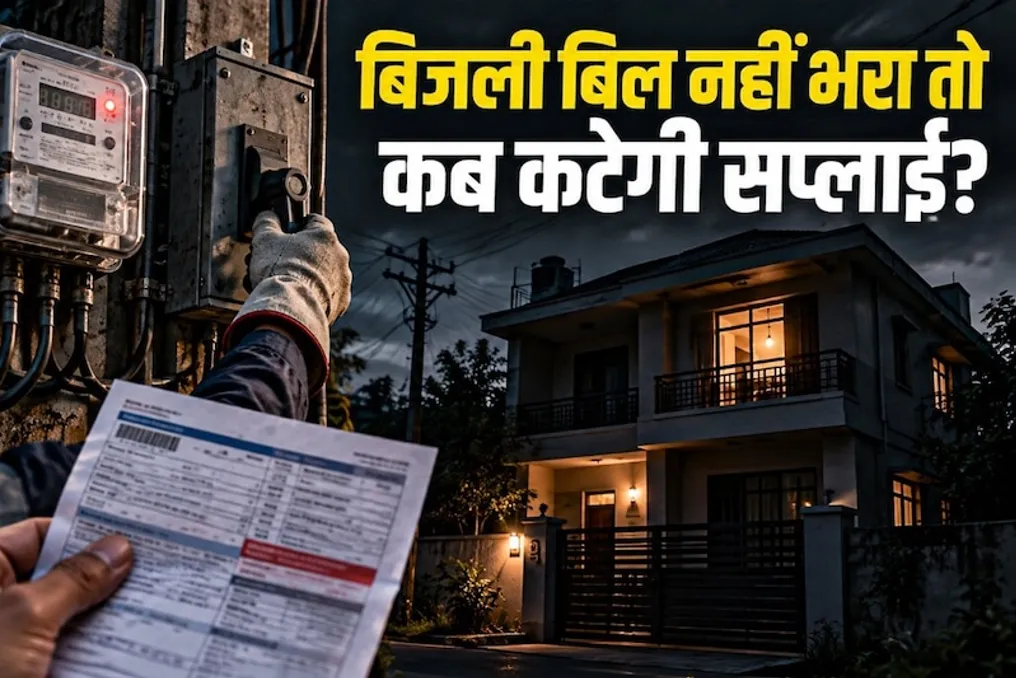
After using electricity in the home, the bill must be paid monthly. However, due to financial difficulties, exceeding the bill amount, or other reasons, people sometimes fail to make the payment on time. In such situations, the question arises: how many days can electricity supply be disconnected if the bill is unpaid? Does the power utility need to issue a notice first before cutting off the electricity supply, even if the monthly bill is overdue?
If you have also not paid your electricity bill, knowing these rules is crucial. It will help you understand what actions the power utility can take in case of delayed payment and what you should do to avoid disconnection.
The utility may disconnect the connection for late payment of the electricity bill, but there are specific rules. According to Section 56 of the 2003 Law on Electric Power, if a consumer does not repay the debt on the bill, the electric company can only cease the supply of electricity after issuing a written notice of at least 15 days. This means that the power utility cannot arbitrarily and immediately disconnect the connection upon non-payment; it must follow the established legal procedure. Nevertheless, the actual date of disconnection may depend on your account, the notice, and the current regulations in the region.
For example, if the electricity bill payment deadline was the 10th, and you did not make the payment, the power utility will send you a written notice requiring you to settle the debt. Actions may be taken according to the deadlines specified in the notice and applicable rules. Therefore, one cannot assume that the disconnection will occur exactly 15 days after the payment deadline.
This question often arises with people. The answer is not determined solely by the number of months overdue. That is, there is no general rule that electricity supply must be overdue for two or three months before it can be disconnected. If the payment has not been made, the power utility may take measures in accordance with current rules and the mandatory notification procedure. Therefore, even with a one-month delay, it is important to take the notice or communication sent by the utility seriously.
If you do not pay the bill by the set deadline, according to the company's rules, a late payment fee or surcharge may be applied to the outstanding amount. The size of this fee depends on your state, the electricity distribution company, and applicable tariff rules. For instance, if your debt is 2000 rupees and the payment is delayed, the next bill may include not only 2000 rupees but also applicable surcharges or other legal fees. Therefore, you should carefully study the information provided on the bill.
Sometimes the amount may be inflated due to incorrect meter readings, accrual of old debts, or other errors in the bill. If you believe your bill is incorrect, instead of ignoring it, you must file a complaint with the power utility. Take a photo of the current meter reading. Compare the amounts of the old and new bills. File a complaint with the power utility office, on the official website, or via the hotline. Keep a copy of the complaint receipt or reference number. Clarify with the utility what rules apply regarding debt and electricity supply during the complaint review. Keep in mind that simply filing a complaint does not automatically cancel the bill. It is important to receive clear information from the utility regarding the resolution of the complaint and payment.
If the electricity supply was disconnected due to an unpaid bill, the consumer will generally have to pay the entire debt and applicable fees. After this, the connection is restored according to the electric company's procedure. Be sure to keep the payment receipt and clarify with the utility the information regarding the reconnection of electricity. If you have made the payment but the electricity is not connected, you can file a complaint by providing proof of payment.
If you have an outstanding balance on your electricity bill, first check the due date, the total debt amount, and any notices sent by the utility. If paying the full amount at once is difficult, contact the electricity distribution company and ask if installment payments or other payment methods are available. According to Section 56 of the Law on Electric Power, the possibility of receiving a written notice at least 15 days before disconnection is provided, but to know the procedure applicable to your situation, be sure to familiarize yourself with the rules and notices of the relevant electricity distribution company.