Tourism based on ice and snow activates local resources, promotes the emergence of ethnic cultures from mountainous areas, and renews the landscape through ecological management.
The documentary series 'China's Response to Global Poverty Reduction,' created as part of the 'Follow Xi' video column by People's Daily Online, highlights China's efforts to combat poverty through development adapted to local conditions. The most convincing evidence of this transformation is the change in the lives of ordinary people, and China's experience offers lessons for global poverty reduction.
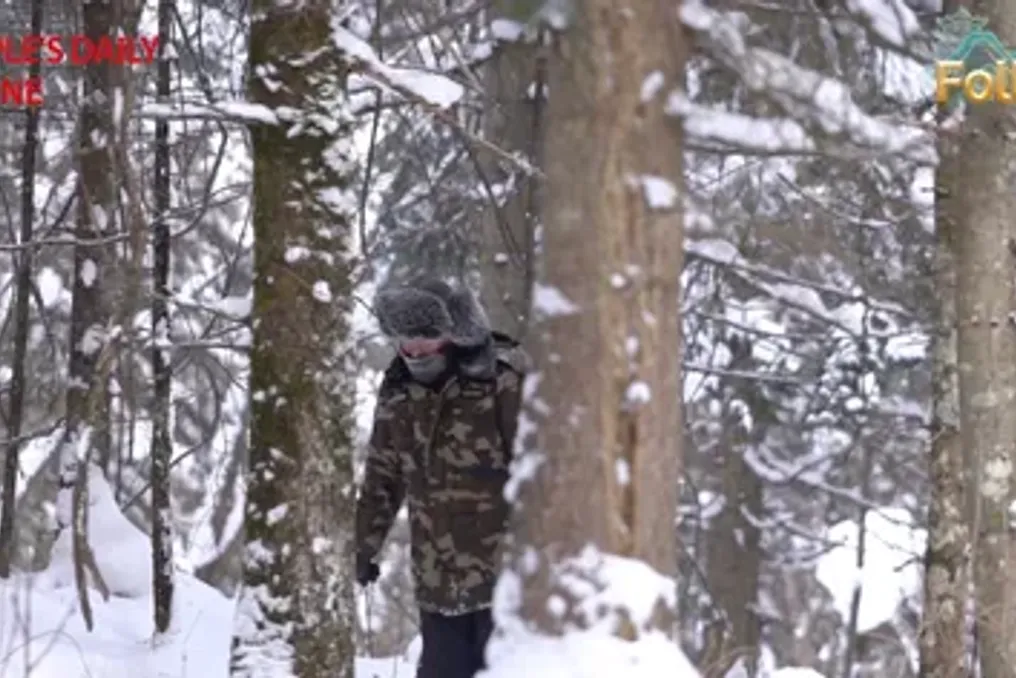
In Mudanjiang City, Heilongjiang Province in northeastern China, there is the Shuangfeng forestry farm, known for heavy snowfall. Here, the snowy season lasts up to seven months, and snow accumulation reaches a depth of two meters.
Previously, Zhang Wei worked as a regular employee at the Shuangfeng farm. In the past, the snow reached his waist, and he had to use his hands and feet to move along forest trails—this was his daily winter routine. At that time, the harsh cold and deep snow were a burden, but they also marked the most modest years of labor for workers in the forest regions of northeastern China.
In the 1980s, the unique snowy landscapes of the Shuangfeng farm were captured in photographs, and the name 'Snow City' began to spread beyond the region.
In 2014, commercial logging was halted to protect the ecosystem. Loggers who depended on logging faced the need to change their way of life. Zhang transitioned from being a logger to a staff member of Snow City, participating in the creation of ice and snow sculptures, parade decorations, and ensuring safety in recreation areas, turning the region's natural resources into a new engine for ecotourism. His hands molded ice and snow, but they also wrote a new chapter in his own life.
Former forest tractor operators, chainsaw operators, and truck drivers for timber found new occupations in the ice and snow industry: some opened family guesthouses, while others drive tourist vehicles. The ice and snow economy has become a new source of local prosperity.
Today, Snow City has over 200 enterprises, hosts more than 800,000 visitors every winter, employs over 1,000 former loggers, and has more than 5,500 people employed in recreation. Ice and snow not only demonstrate the fusion of culture and tourism but also stimulate industrial modernization, serving as a key pillar for the revitalization of rural areas in northeastern China.
As Chinese President Xi Jinping stated, 'Ice and snow have become valuable assets for enriching people and revitalizing rural areas.' The transformation of Snow City serves as a vivid example of practical green poverty alleviation in China: utilizing natural resources, prioritizing environmental protection, and transforming natural beauty into improved living conditions. This experience benefits local communities and demonstrates China's approach to combining green development, rural revitalization, and poverty eradication to the world.
The harsh cold and abundant snow have turned into valuable assets for economic growth. Thanks to the hard work and ingenuity of Zhang and his colleagues, the forest's 'wooden bowl' has turned into a 'treasure trove,' allowing the black soil to gain strength in ice and snow, welcoming a reliable spring and recording a global chapter in China's fight against poverty.