Mozambique President Insists on Listing Over 480 Projects on Stock Exchange for Citizen Participation
Read more
Noticias ao Minuto
noticiasaominuto.com

Mozambique President Insists on Listing Over 480 Projects on Stock Exchange for Citizen Participation

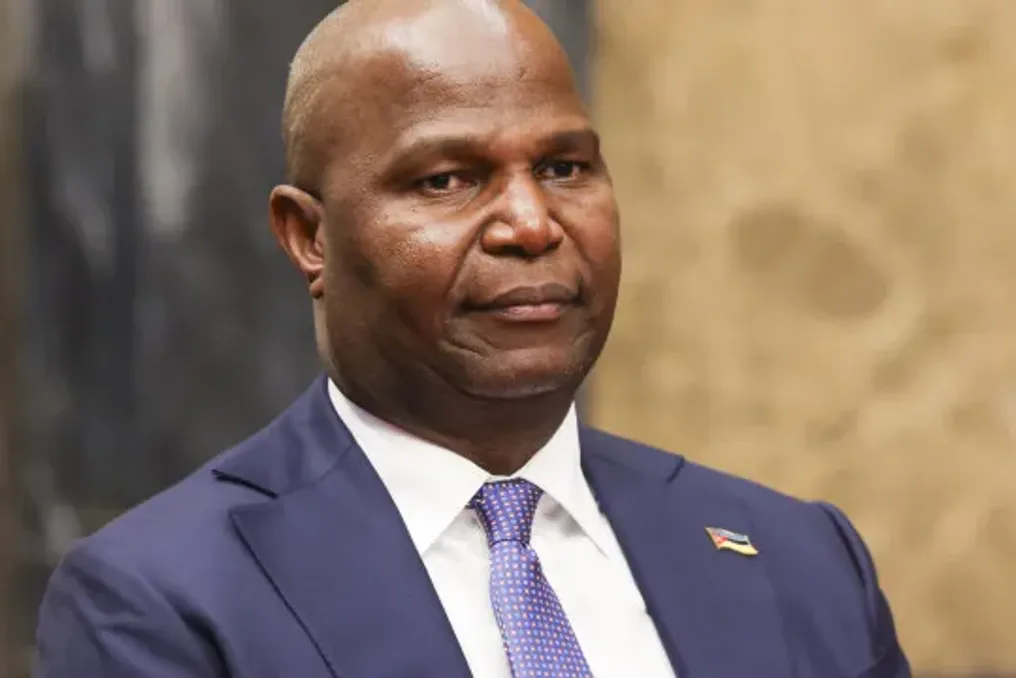
The President of Mozambique spoke today in support of expanding citizen participation in the economy by listing over 480 enterprises covered by public-private partnerships (PPPs), major projects, and corporate concessions on the Mozambique Stock Exchange (BVM).

The head of state, Daniel Chapo, stated that according to the law, these 487 enterprises involved in PPPs, major projects, and concessions must be part of the BVM, and Mozambicans must have the opportunity to participate in these companies.

These statements were made during a ceremony marking the 28th anniversary of the BVM and the initial listing of MECTS, the first PPP company to enter the national stock market.

According to Chapo, the listing of this company signifies a change in the application of legislation regulating PPPs and major projects. He emphasized that MECTS should be the first, but not the only or last company allowed to be quoted on the BVM.

The Chairman of the BVM Board of Directors, Pedro Costa, supported this position, calling the listing of MECTS a landmark event for the national capital market. He noted that the listing of MECTS is an innovative step because it is the first PPP company accepted for listing on the Exchange.

In the manager's view, this operation opens the way for other companies falling under PPP legislation to follow the same path. He added that the significance of this act goes beyond the mere listing of one company, as it expands the range of issuers and allows other projects to do the same.

Chapo recalled that the Public-Private Partnership Law provides for reserving a portion of the charter capital of these enterprises for sale through the stock market, preferably to Mozambican citizens, but he expressed regret over the delay in implementing this measure.

He noted that 15 years have passed since this legislation was adopted and 28 years since the founding of the BVM, and only now is the initial listing of the first company under the PPP regime taking place. The President reiterated the need to eliminate laws that create opportunities for Mozambicans but whose implementation is postponed 'indefinitely.'

For the country, the President stated, it must transition to a phase where citizens are not merely indirect beneficiaries of investments on national territory. He said: 'We do not want an economy where Mozambicans are only workers and consumers, but rather an economy where they are also entrepreneurs, investors, shareholders, and owners of productive assets.'

Daniel Chapo advocated the idea that revenues from major projects should transform into real opportunities for citizens to participate in company capital and accumulate assets. He stated that young Mozambicans—entrepreneurs, working women, civil servants, farmers, and small business owners—should find opportunities in the capital market to enrich themselves and participate in economic growth.

The head of state also addressed companies covered by PPP legislation, asserting that compliance with national participation obligations should not depend on the individual initiative of each operator. He stressed: 'Fulfilling legal obligations for national participation is not optional. Compliance with the law cannot depend on the goodwill of companies.'

MECTS is a Mozambican technology company that manages the Electronic System for Sealing and Tracking Goods in Transit (SEERC), implemented in partnership with the Tax Authority, and is also involved in developing and managing digital platforms for modernizing institutional and business processes.
Similar stories

IMF projects solid growth in Lusophone economies, highlighting Angola, Cape Verde, and Timor-Leste
Read more
noticiasaominuto.com

IMF projects solid growth in Lusophone economies, highlighting Angola, Cape Verde, and Timor-Leste

The International Monetary Fund (IMF) released its World Economic Outlook report, forecasting robust growth in most Portuguese-speaking economies until 2027. Among these, Angola shows acceleration, while Cape Verde and Timor-Leste maintain a strong expansion pace.

Regarding Sub-Saharan Africa, the IMF estimates that Angola will register 4.4% growth in 2026, surpassing the 3.1% projected for 2025, before moderating to 3.3% in 2027. Despite this, inflation is expected to remain high, falling from 20.2% this year to 10.6% in 2026 and 10.2% in 2027.

Cape Verde is pointed out as one of the best-performing African Lusophone economies, with growth projections of 5% for both 2026 and 2027, following an expected expansion of 6.3% in 2025. In this archipelago, inflation is expected to remain under control, reaching 1.2% this year and 2.8% in 2027, with a stable unemployment rate of 8.5% over the three analyzed years.

In Guinea-Bissau, a slight deceleration in growth is expected, moving from 5.8% in 2025 to 4.7% in 2026, and recovering to 4.9% in 2027. Inflation should remain between 2.1% and 2.5%, but the current account deficit is expected to remain high, ranging between 5.7% and 7% of GDP.

Mozambique is expected to experience a gradual recovery after the estimated contraction of 0.2% in 2025. The IMF forecasts 1% growth in 2026 and 2% in 2027. However, the external deficit remains very significant, corresponding to 41% of GDP in 2026 and 37.8% in 2027. São Tomé and Príncipe anticipates a more modest expansion, of only 0.4% in 2026, accelerating to 1.9% in 2027, although inflation is expected to rise to 11% this year, reducing to 9.6% in 2027.

Outside of Africa, the IMF forecasts a slowdown in Brazil's economic growth, from 2.2% in 2026 to 1.9% in 2027, due to restrictive monetary conditions, reduced budgetary stimulus, and global economic uncertainty. Timor-Leste's economy is expected to grow by 4% in 2026 and 3.7% in 2027, after 4.5% in 2025, keeping inflation contained at 2.1% and 2.2% in the following years, despite a very high current account deficit, at 38.5% of GDP in 2026 and 38.4% in 2027.

Additionally, the growth of the Portuguese economy was revised to 2.1% this year and 1.9% in 2027. The IMF highlighted that world economic activity demonstrates resilience, driven by the technology sector, financial reserves, and the capacity to adapt to geopolitical tensions.

In the global scenario, the institution predicts a slowdown in growth to 3.1% in 2026, followed by a recovery to 3.4% in 2027. Global inflation is expected to rise to 4.7% in 2026 and fall to 4.1% the following year, with energy-importing economies not participating in the technological value chain facing the most challenging prospects.

Bank of Mozambique extends export revenue conversion regime for another six months
Read more
noticiasaominuto.com

Bank of Mozambique extends export revenue conversion regime for another six months

The Bank of Mozambique has extended by another six months the exceptional regime that requires exporters to convert half of the income obtained in foreign currency into meticals. This measure aims to strengthen the availability of foreign exchange within the national financial system.

The decision is formalized in Notice No. 7/GBM/2026, where the central bank extends the validity of the previously established regime. This regime was initially approved in April 2025 for a transitional period of 18 months and is now being extended for another six months, starting on October 9th.

In April 2025, the central bank raised the mandatory percentage for converting export revenues from goods, services, and foreign investment profits from 30% to 50%. This change was justified by the need to create an 'exceptional and transitional foreign exchange mechanism aimed at minimizing the effects of the current socioeconomic scenario.'

In practical application, an exporter receiving funds in foreign currency can retain part of these funds in foreign currency but is obliged to commercialize half of the amount in the Mozambican banking system, receiving the equivalent in meticals.

The main purpose of this policy is to increase the supply of foreign currency in the domestic exchange market, which facilitates access to foreign currency for companies and economic agents who need foreign currency to make imports and other international transactions.

This new determination constitutes a temporary tightening of the previous regime, which was defined by Notice No. 5/GBM/2024, which established the compulsory conversion rate at 30% of export revenues.

The Bank of Mozambique did not provide a detailed justification for the extension of the deadline in the new notice, limiting itself to mentioning the 'need to extend this period.'

The Government of Mozambique acknowledged that the 'scarcity' of foreign currency affected economic performance during the first semester, directly impacting revenue collection. The Ministry of Finance's budget execution report indicates that performance fell below expectations due to various internal and external obstacles, including difficulty in obtaining foreign currency.

This report states that performance was 'negatively influenced' by the 'non-realization of offshore service payments made by non-resident entities, due to foreign currency scarcity.'

The Government's view on the lack of foreign currency differs from the stance of the central bank governor, Felisberto Navalha, who refuted the existence of a generalized shortage of foreign currency in September. He stated that, up to August, the banking system 'managed to buy significant volumes' of foreign currency in the market, from its exporters and other economic agents, totaling 5.73 billion dollars (equivalent to 4.928 billion euros), in addition to 724 million dollars (623 million euros) compared to the same period last year.

In the same period, the sales of foreign currency by banks to clients grew by 593 million dollars (510 million euros), reaching a total of 5.65 billion dollars (4.86 billion euros).

For the governor, this data indicates that any analysis of supposed foreign currency deficits must be conducted 'with caution,' adding that the central bank held recent meetings with banking institutions to identify possible bottlenecks in the exchange circuit. However, he admitted the occurrence of isolated problems of foreign currency insufficiency in certain financial institutions: 'It may be in one institution and not in the market as a whole.'

Several business sectors have issued warnings about increasing difficulties in accessing foreign currency for import purposes, international payments, and remittances abroad. Álvaro Massingue, president of the Confederation of Economic Associations of Mozambique (CTA), the main representative body of the Mozambican private sector, previously described the situation as an 'economic emergency.'

Popular