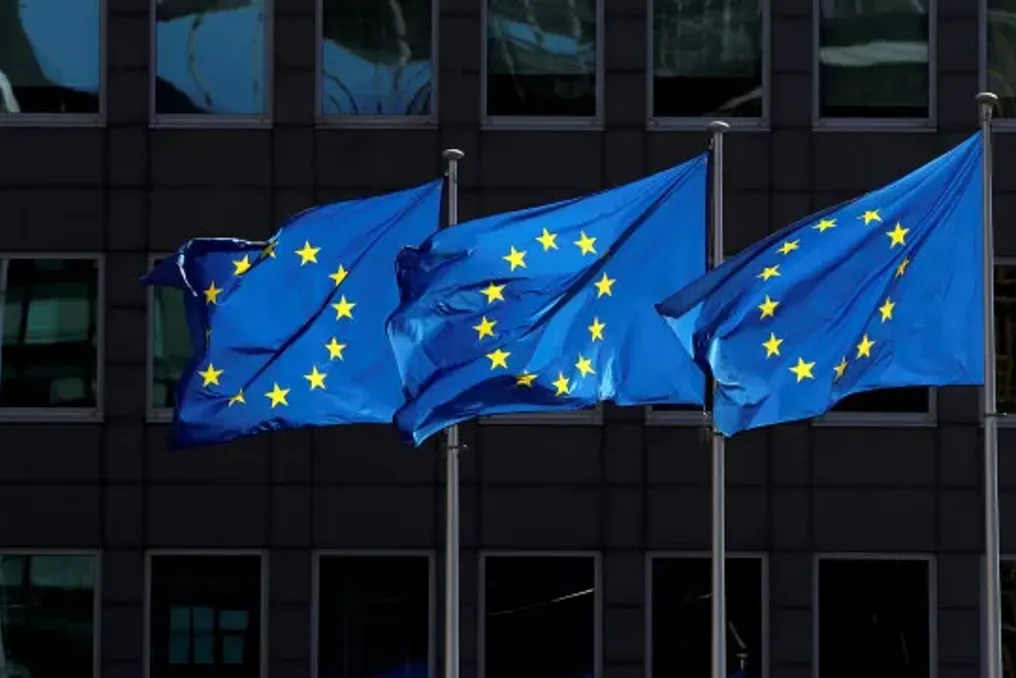
Leaders of the European Union (EU), who gathered on Thursday and Friday, plan to request new measures to stabilize energy price growth and prepare for the decisive stage of negotiations on the next European budget, which is currently overseen by the President of the Council of Europe.
Among the main topics of the meeting of the heads of state and government of the 27 EU countries, which began on Thursday morning and will last until Friday evening in Brussels, are the energy crisis, the Multi-annual Financial Framework for the period 2028–2034, support for Ukraine in connection with the Russian invasion, disagreements with the United States (US), and the management of migration flows.
In the energy sector, a high-ranking European official stated that the Council of Europe will ask the Commission to present additional measures to respond to the energy crisis.
EU leaders will have to discuss ways to counteract rising fuel and energy prices amid concerns about the crisis's impact on European competitiveness. According to public sources, this is one of the main political problems for EU leaders, but they acknowledge that there is no 'magic solution' to reduce energy prices for consumers and businesses.
Another high-ranking official noted that there is now an awareness of the need to act at the European level, which was not previously observed.
Among the measures being prepared in the EU are the optimization of capacities of European oil refineries, the pooling of energy demand, and increased coordination in fuel supplies.
Another item for discussion will be the next multi-annual EU budget until 2034, based on the proposal presented last weekend by the Irish Presidency in the EU Council, which calls for an 8% reduction compared to the EU Commission's document.
A high-ranking European official reported that 'the President of the Council of Europe [António Costa] will now lead this negotiation process from this moment until the end of the year, and we will see what can be achieved.'
The institution bringing together the heads of state and government of the EU aims to reach a political agreement as early as 2026. This same official added that 'the deadline we mean is December.'
Another source in the EU indicated that 'elections in 2027 [in some member states] make an agreement unlikely' that year, so there are high expectations to advance this year.
Portugal provided national funding of 35.1 billion euros in the Irish Presidency's EU proposal but requires an additional almost 1 billion euros for ultra-peripheral regions—the Azores and Madeira. Portugal has already threatened to block the agreement if it does not receive this amount stipulated by EU treaties. As stated by the Portuguese diplomatic body, 'for Portugal, there is no agreement without funds for ultra-peripheral regions.'
According to EU sources polled by the Lusa agency, a 'more concrete stage' of budget negotiations is now beginning, although they stressed that this high-level meeting will not present long and detailed written conclusions on this matter.
The discussion is focused on balancing traditional priorities, such as cohesion and agriculture, with strengthening areas such as competitiveness, defense, and research.
New sources of revenue to finance the European budget will also be a central issue, as several member states demand smaller national contributions.
On Friday, leaders will meet with Ukrainian President Volodymyr Zelensky in Brussels to discuss support for Kyiv against the backdrop of new tensions surrounding the diplomatic initiatives of US President Donald Trump. Trump announced an energy truce between Russia and Ukraine last week, but Kyiv condemned new Russian attacks on energy facilities, casting doubt on the application of this agreement.
Tensions have also increased due to the deal announced by Trump on purchasing Russian diesel fuel, which European officials called 'regrettable' because it contradicts the EU strategy to reduce energy dependence on Moscow and limit revenues financing the war. Despite disagreements with Washington, European sources rejected the idea that Brussels is being ignored by the US and supported the continuation of dialogue.
Leaders will also have to discuss financing Ukraine's needs after 2026 and the European response to hybrid threats attributed to Russia.
Migration will be another central topic, as EU heads of state and government discuss reactions to crises such as the situation in the Spanish enclave of Ceuta, where the mass influx of migrants in the summer revealed weaknesses in external border management.
Prime Minister Luís Montenegro will represent Portugal at the high-level meeting.