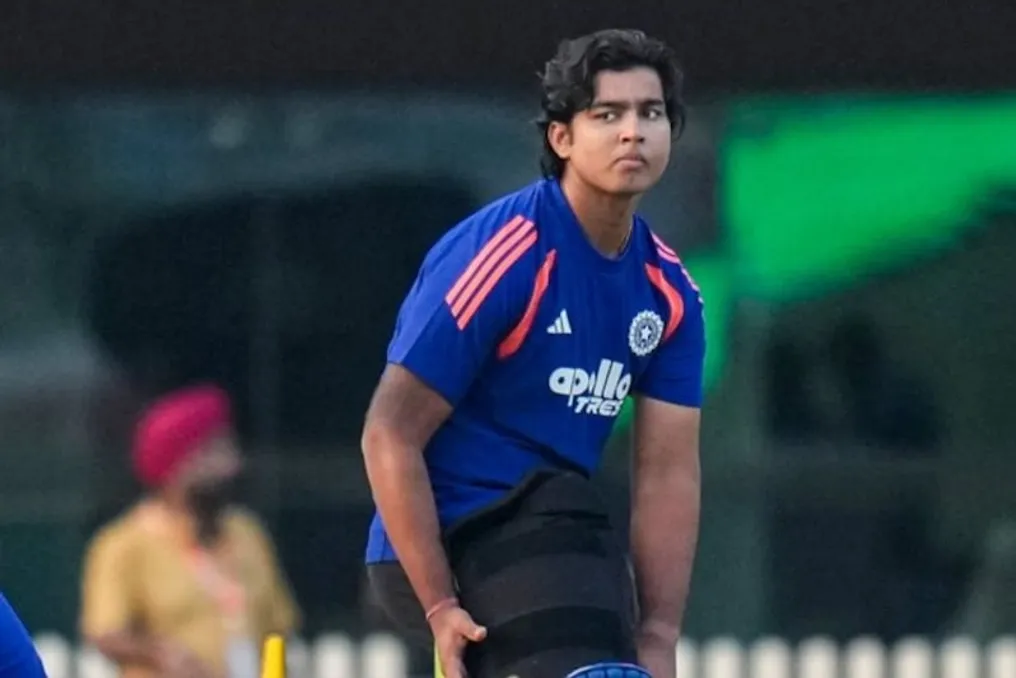
Former Indian Team Player Shrikant Criticizes Team Management for Lack of Playing Time for Vaibha Suryavanshi
Read more
Aaj Tak
www.aajtak.in

Former Indian Team Player Shrikant Criticizes Team Management for Lack of Playing Time for Vaibha Suryavanshi

Former Indian opener Krishnamachari Shrikant expressed doubts regarding the team management under Gautam Gambhir. He believes that the constant exclusion of young batsman Vaibha Suryavanshi from the starting lineup could negatively affect his self-confidence.

Vaibha Suryavanshi, who is 15 years old, has attracted the attention of the cricket world due to his performances. He debuted internationally against England, won the series player title in Zimbabwe, and was part of the Indian team at the Asian Games. However, the current discussion is not about his play, but about the opportunities he is being given in the Indian team.

During the five-match T20 series against West Indies, Vaibha did not feature in the starting XI in any of the four matches. Previously, he was also on the bench during the T20 series against Afghanistan. Supporting this young batsman, Shrikant strongly criticized the team's management decisions, stating that India has completely undermined Vaibha Suryavanshi's confidence.

In Shrikant's opinion, the team management constantly makes changes instead of regularly giving players chances. This, according to him, affects the athletes' self-esteem. Citing Sandeep Samson as an example, he noted that the Indian team has damaged not only Sandeep but also Vaibha's confidence.

Previously, in a YouTube video, Shrikant stated: 'They (the team management) have not only ruined Sandeep Samson's confidence but have completely destroyed Vaibha Suryavanshi's confidence.' The former Indian opener questioned why Vaibha Suryavanshi was not getting regular playing time against the West Indies. He directly advised head coach Gautam Gambhir to rest Abhishek Sharma to give a chance to Vaibha and Sandeep Samson to start the match.

He added that Abhishek Sharma has already received enough opportunities and could be rested. In such a situation, Vaibha Suryavanshi and Sandeep Samson should have been given the opportunity to start the game.

The current situation surrounding Vaibha Suryavanshi is sparking debate, considering the impressive play he demonstrated in the previous T20 series. During his visit to Zimbabwe, he impressed with his aggressive style and received the series player award. After this, he was included in the Indian squad for the T20 series against Afghanistan, the Asian Games 2026, and the T20 series against the West Indies. However, excluding the Asian Games, he had to spend a long time on the bench.

Fans expect a lot from Vaibha, who began his international cricket career at the age of 15. His ability to hit powerful shots from the first delivery is the reason for constant demands for his inclusion in the Indian squad. Nevertheless, the long wait between selection and taking the field casts doubt on the current situation.

It is acknowledged that the decision to include a player in the starting XI depends on strategy, circumstances, and team composition. Despite this, Shrikant argues that talented young players who make it into the team must be given chances to showcase their potential.

Shrikant expressed dissatisfaction not only with the lack of chances for Vaibha but also raised questions about Sandeep Samson's game. He believes that the lack of consistency in Sandeep's game has been noticeable for a long time. Although Sandeep attracted attention by playing three brilliant innings at the 2026 T20 World Cup, subsequent series have not gone as well as expected. In Shrikant's view, Sandeep's game is often volatile: he either plays incredibly well or struggles for every run.

He observed: 'Sandeep's game has always been inconsistent. Questions about his consistency have always been raised. He suddenly plays brilliant innings, like in the World Cup, and then suddenly fails in many matches. Players like Abhishek Sharma do not show such sharp fluctuations in their game. Now Sandeep needs to score runs again in the next match.'

Shrikant's comments came at a time when discussions about spots in the Indian team's starting XI were intensifying. On one hand, Abhishek Sharma is receiving consistent opportunities, while on the other hand, despite the ups and downs in Sandeep Samson's game, Vaibha Suryavanshi cannot make the starting lineup.
Similar stories

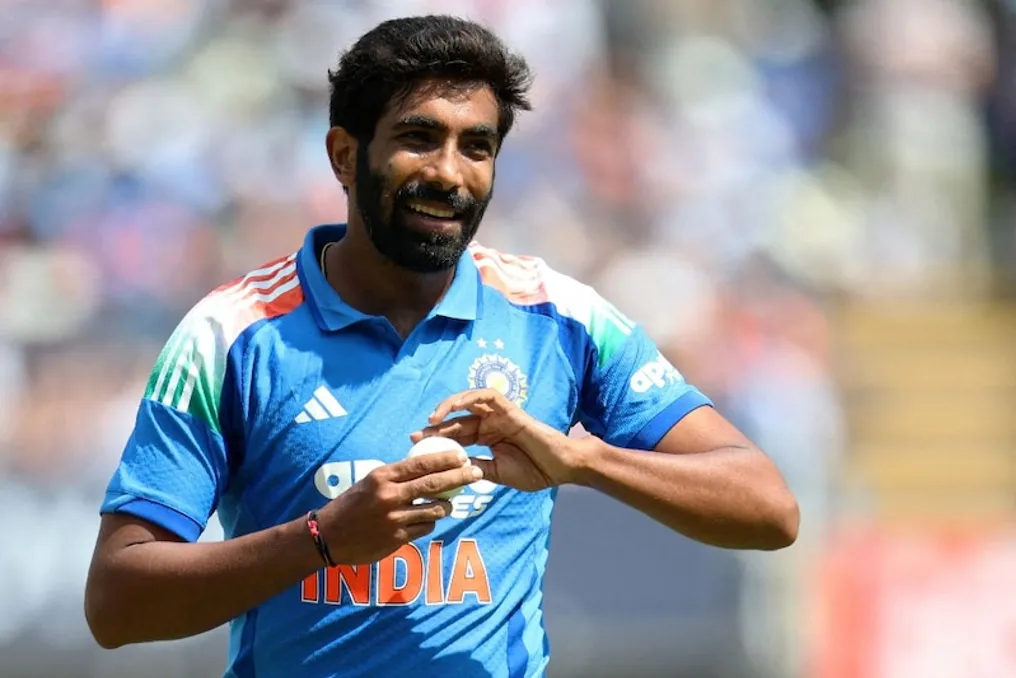
Experts discuss India's reliance on Jasprit Bumrah in the squad
Read more
www.aajtak.in

Experts discuss India's reliance on Jasprit Bumrah in the squad

A Doha by Rahim is cited, which states: 'Without water, everything is empty,' where the word 'water' is used in three meanings: humility towards a person, brilliance for a pearl, and water itself for flour. Rahim asserts that just as the existence of the world depends on flour, and the value of a pearl depends on its luster, so too does a person's worth depend on their modesty, and therefore a person should always maintain humility in their behavior.

The meaning of this Doha can be transformed into the phrase: 'Without Bumrah in the Indian team, everything is empty.' This thought completely aligns with reality, as the absence of Jasprit Bumrah in the Indian squad obviously creates a vacuum in the bowling attack group.

Jasprit Bumrah is a bowler in the Indian squad capable of changing the course of a match even in the most difficult circumstances. Regardless of whether the pitch is flat, whether the batter plays aggressively, or whether runs are scored quickly, Bumrah troubles opponents with his precise line, length, and various variations of delivery.

The recent ODI series against West Indies once again raised this issue. Other fast bowlers, such as Gurunoor Barar and Akib Nabi, struggled with containing the run rate. Furthermore, despite a huge score of 250 runs in the second T20 International, the Indian team failed to defend it; after a good batting performance, the bowlers could not make an impact at a critical moment.

Statistics also confirm the problems without Bumrah. During this year in T20 Internationals, Bumrah took 23 wickets in 17 matches, becoming India's most successful bowler. With his participation, the team took 128 wickets in 17 matches, with an average bowling figure of 21.49 and an economy rate of 8.62.

Conversely, in 16 matches without Bumrah, Indian bowlers took 90 wickets. During this period, the average bowling figure rose to 27.84, and the economy rate was 9.16. The situation in ODIs is also worrying: in 10 matches played without Bumrah this year, Indian bowlers took 66 wickets, with an average of 44.83 and an economy rate of 6.43. These figures cast doubt on whether the fast bowling attack of India is overly dependent on one player.

Questions about bowling quality are also troubling A R Ashwin, a former Indian spinner. After the team failed to defend 250 runs in the second T20 against West Indies, he expressed concern over the quality of bowling in the country. He believes that insufficient attention is paid to the preparation of high-class bowlers in the country.

Ashwin noted that Rohit Sharma and Suryakumar Yadav have benefited from Bumrah having a bowler who can stop the scoring when necessary and deceive batters with slower balls. In Ashwin's opinion, not every bowler possesses such talent, and he is concerned about the future of Indian bowling.

Former coach of the Indian team's bowling, Bharat Arun, analyzed this problem for 'India Today'. According to him, this challenge has two important aspects: workload management and the ability to utilize skills correctly under pressure. Injuries to India's fast bowlers question the management of their physical fitness. Bumrah himself faced fitness-related issues. Questions also arose about how to manage young fast bowlers like Harshit Rana and Mayank Yadav in the High Performance Centre. There is a fear that some players might return to the field before full recovery, leading to re-injury.

However, according to Arun, workload management does not simply mean keeping bowlers away from matches. It is important that they are fully prepared and fit when they play. Arun emphasized that physiotherapists, strength and conditioning coaches, bowling coaches, and team management are all involved in this process. They must work together to ensure that the bowler takes the field fully ready and energetic.

Arun disagreed with the assertion about a lack of talent among India's fast bowlers. He cited bowlers such as Zaheer Khan, Ashish Nehra, Venkatesh Prasad, Javagal Srinath, and Irfan Pathan, arguing that India has always had good fast bowlers. In his view, physical condition plays a decisive role in a fast bowler's skills, and maintaining long-term fitness is a major challenge for the team. Thus, the problem lies not only in preparing new bowlers but also in maintaining their physical form and ensuring a consistently high level of play.

The Indian team must find solutions before the World Cup, considering that they have effective bowlers like Arshdeep Singh, but the presence of several good names is not enough to build a strong bowling attack; the other fast bowlers must also take responsibility.

Popular