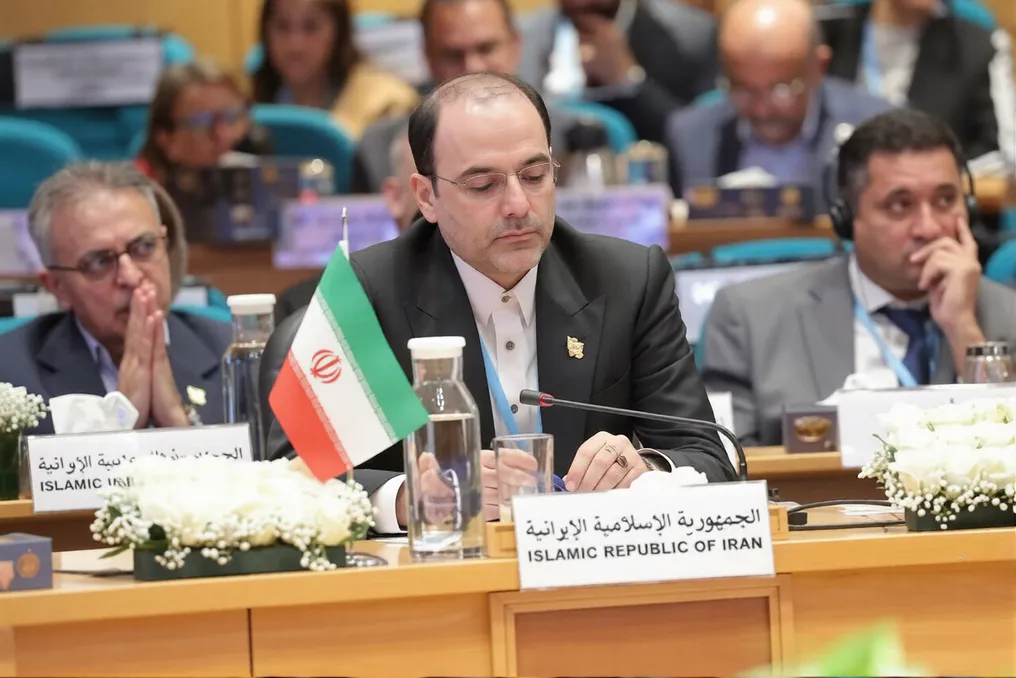
The Iranian delegation, led by Ali Jafarian, Senior Advisor to the Minister of Health, is participating in the 73rd session of the World Health Organization's Regional Committee for the Eastern Mediterranean (RC73). The event takes place from October 13 to 15 in Cairo, Egypt.
Ministers of Health and high-ranking delegates from 22 countries and territories have gathered at this meeting to determine regional health priorities and guide the work of the WHO with member states. The Iranian official plans to deliver a speech on various healthcare issues, including the impact of sanctions and wars on the healthcare system, as well as issues related to medical equipment and supplies supply chains.
According to the Ministry of Health, the Iranian delegation intends to discuss strengthening preparedness and response to public health emergencies, expanding technical and regional cooperation, and utilizing the potential of the WHO to support national health systems. Furthermore, Jafarian will hold meetings with officials from the Eastern Mediterranean Office and region.
During the opening ceremony, outstanding achievements in regional healthcare were recognized. The Kuwait State Award for control over cancer, cardiovascular diseases, and diabetes in the Eastern Mediterranean Region was presented to three laureates from Iran, Egypt, and the United Arab Emirates.
Amir Ali Hamidiyeh, an Iranian professor from Tehran University of Medical Sciences, received this award for his innovative work in pediatric hematology, oncology, and stem cell transplantation. Hamidiyeh obtained his medical degree from Islamic Azad University in Tehran and subsequently pursued postgraduate studies in pediatrics and pediatric hematology/oncology at Shahid Beheshti Medical University. He completed advanced fellowships in hematopoietic stem cell transplantation at the University of Texas MD Anderson Cancer Center and Baylor College of Medicine in Texas, USA.
Hamidiyeh currently serves as a Professor of Pediatric Hematology/Oncology and Stem Cell Transplantation at Tehran University of Medical Sciences, where he also heads the Center for Pediatric Cell and Gene Therapy Research. He is the founder of the Iranian stem cell transplantation program for children and the national stem cell donor network, which established the country's first Human Leukocyte Antigen (HLA) registry.
He chairs the National Council for the Development of Stem Cell Sciences and Technologies under the Vice Presidency for Science and Technology and is a member of the Executive Boards of the Asia-Pacific Blood and Bone Marrow Transplant Group and the Iranian Food and Drug Administration. His leadership has contributed to the establishment of seven pediatric transplant centers across the Islamic Republic of Iran and the successful completion of over 2,100 stem cell transplants for children.
Hamidiyeh has authored over 100 peer-reviewed research articles covering regenerative medicine, gene therapy, immunodeficiencies, and pediatric oncological diseases. He has also led clinical innovations in CAR-T cell therapy and photopheresis in several countries. Through his academic leadership, clinical excellence, and commitment to equitable care, Hamidiyeh has significantly advanced the field of pediatric stem cell transplantation in Iran and the broader Eastern Mediterranean region.
RC73 at a Critical Juncture for Health
The opening of RC73 occurs during a critical period for health in the region. Ongoing and escalating emergencies continue to disrupt healthcare systems, putting millions of lives at risk, while countries face disease outbreaks, persistent inequalities, the growing burden of non-communicable diseases, and increasing financial pressure.
In his opening remarks, Adham Rashid Ismail, WHO staff responsible for the Regional Office for the Eastern Mediterranean, emphasized the enormous humanitarian and financial burdens facing the region. This official affirmed WHO's commitment to maintaining essential health services and assisting countries amid ongoing crises: 'WHO must continue to support populations affected by conflicts and crises, protect essential health services, and advocate for uninterrupted humanitarian access and funding. People dependent on medical services in Afghanistan, Gaza Strip, Sudan, Yemen, and elsewhere cannot bear the consequences of resource cuts.'
Following the opening ceremony, member states will discuss the Regional Director's Annual Report for 2025/2026. This report provides a regional assessment of health achievements, persistent challenges, and WHO's work with countries over the past year, helping to identify areas where progress needs to be sustained or accelerated.
The Committee will review two technical documents: 'Improving Health Financing for Greater Financial Protection in the Eastern Mediterranean: Pathways to Equity and Sustainability,' which focuses on ways to build equity and sustainability in health financing and enhance population financial protection across the region; and 'Architecture for Eliminating Multiple Infectious Diseases in the Eastern Mediterranean,' which outlines joint strategies for simultaneously addressing and eradicating multiple infectious diseases.
Discussions will also cover public health emergencies and polio eradication, while a panel discussion on artificial intelligence in healthcare will explore the opportunities provided by rapidly evolving technologies. Member states will conduct a regional consultation on the Program Budget for 2028–2029 and consider governance and regional resolutions adopted by the World Health Assembly and the WHO Executive Board.
The discussions and decisions made at RC73 will guide collective action across the Eastern Mediterranean region—from protecting health in emergencies and completing the final phase of polio eradication to strengthening health financing, accelerating disease elimination, and preparing health systems for the future.