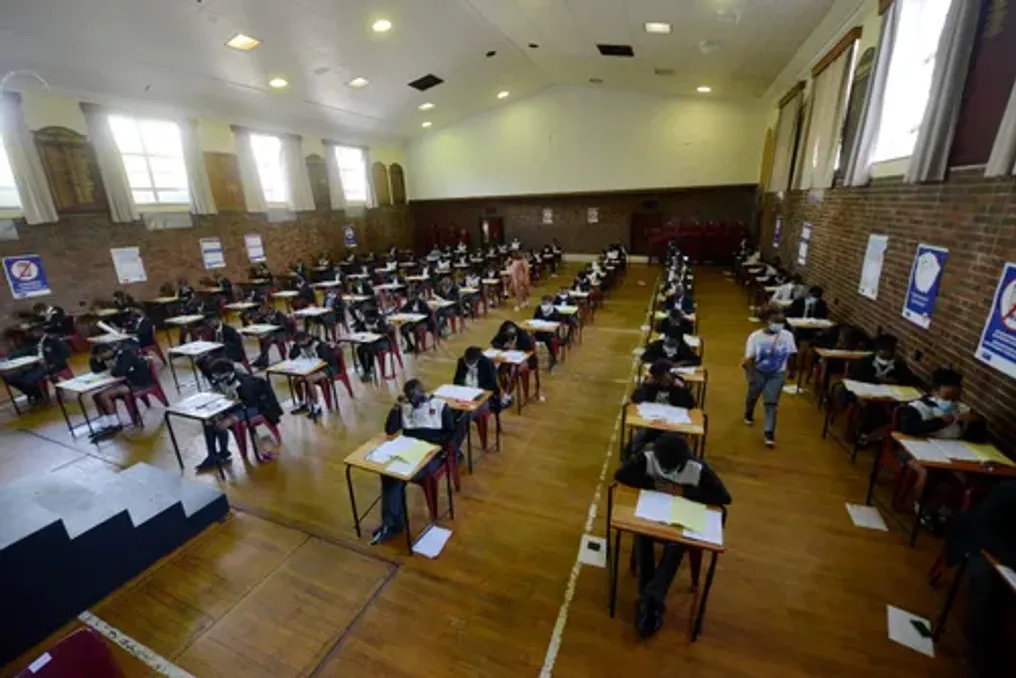
Minister of Basic Education, Sihive Gwarube, stated that South African graduates of the 2026 class are ready to take the National Senior Certificate (NSC) examinations. Almost 963,000 candidates have registered for the October-November session, studying both full-time and part-time.
Speaking at a press briefing in Pretoria on Sunday, Gwarube provided information on the department's preparations, initiatives to support students, and security measures aimed at ensuring the integrity of the examinations. She emphasized that all candidates received necessary support and happily announced the readiness of students for the 2026 NSC exams.
This statement came against the backdrop of confirmation from the quality assurance body Umalusi regarding the readiness to conduct national exams at the end of the year. Nevertheless, concerns remain regarding the shortage of examiners, irregularities in the examination process, and potential disruptions related to the upcoming local elections.
Record number of candidates
According to Gwarube, the Department of Basic Education (DBE) registered 815,051 full-time candidates, which is 48,508 more than in 2025. Additionally, 147,781 part-time candidates were registered, representing an increase of 10,763 compared to the previous year. Thus, the total number of NSC registrations in the department reached 962,832 candidates.
Gwarube noted that the increase in full-time registrations indicates that more students are staying in school and managing to complete their studies on time. She added that the 2026 class is currently the largest cohort taking the NSC exams full-time.
The department has organized approximately 7,100 examination centers and 189 marking centers, hiring 51,104 qualified and experienced teachers to mark the examination papers. Gwarube reported that all examination papers were developed, moderated, and quality-checked by the DBE and approved by Umalusi. Security measures were also strengthened through vetting of examination staff and cooperation with law enforcement agencies.
She stated that the department adheres to a zero-tolerance policy for malpractice during exams, has reinforced pledge agreements for candidates and parents, and activated a 24-hour hotline for reporting suspicious activity.
Broader measures for assessing education quality
Gwarube also criticized a long-standing trend in the education system that excessively focuses on the NSC pass rate, arguing that this created incentives for practices undermining meaningful educational outcomes. She pointed out that some schools and districts held students back in Grade 11 or prevented students with lower results from advancing to Grade 12 in order to boost the potential pass rate.
Other institutions encouraged students to choose Mathematical Literacy instead of Mathematics to maximize the number of passes. Gwarube stated that this obsession with the pass rate and the resulting distorted incentives have damaged the country's ability to prepare specialists in STEM, accounting, and economics.
Gwarube announced that provincial performance will be assessed using a broader set of quality indicators, including university pass rates, distinctions, student retention and participation, as well as performance in key subjects such as Mathematics, Physical Sciences, Accounting, and Economics. This approach, she believes, will help provinces identify weaknesses and measure improvements in literacy, numeracy, and subject participation, rather than focusing solely on the overall pass rate.
Student support
She acknowledged that the 2026 class faced significant disruptions during the Covid-19 pandemic. Gwarube explained that this cohort started Grade 1 in January 2015 and reached Grade 6 in 2020, when the learning process was interrupted due to quarantine, rotational schedules, and the suspension of contact learning.
The department responded by strengthening curriculum coverage, using assessment results to identify knowledge gaps, and providing additional opportunities for revision. The 2026 student support program covered 159,180 learners across 1,262 centers in all 75 education districts. Students also received learning materials, past examination papers, online resources, and the opportunity to practice under exam conditions through mock tests.
The department's principle of 'First day, first lesson, first period' ensured that provinces equipped schools with stationery before opening in January, and the need for textbook replenishment, including for Grade 12, was met. The second chance examination program continues to assist part-time students through evening and weekend classes at 41 centers, distribution of learning materials in 84 centers, and 15 provincial workshops. Gwarube urged parents and guardians to create a supportive home environment for students and minimize household chores during final preparation.
Umalusi notes examiner shortage and election risks
Last week, IOL reported that the CEO of Umalusi, Dr. Mafu Rakometse, separately confirmed the readiness of national exams following an audit of state and private examination bodies. However, the audit revealed a shortage of examiners in Afrikaans and English (home language), as well as in History. The department has implemented measures to address these gaps, including starting marking earlier and conducting it in phases. Umalusi stated that he is confident these interventions will prevent disruptions but will continue to monitor the department's response.
He reported that the Ministry of Higher Education and Training has not yet finalized the appointment of examiners, and an assessment of its capacity is expected by October 19. Umalusi reported the registration of 1,079,879 candidates in 9,183 examination centers for the year-end exams. These candidates include 989,141 registered through the DBE, Independent Examinations Council, and South African Qualifications Authority. The exams also include 44,322 candidates for the National Certificate (Professional) Level 4 and 46,416 for the Certificate of General Education and Training: Basic Education and Training for Adults. Written NSC exams are scheduled from October 13 to November 26.
Rakometse expressed concern about the local elections scheduled for November 4, which fall during the examination period. Although the schedule has been adjusted to account for the elections, political activities, public protests, and the use of schools as polling stations could still pose challenges. Umalusi stated that he will work with education departments and other stakeholders to minimize disruptions and ensure candidates are not put at a disadvantage.
Appeal to communities
Gwarube called on communities not to disrupt the examinations to express dissatisfaction with service provision, political issues, or socio-economic conditions. She emphasized: 'NSC candidates cannot solve societal problems. It is ministers, as elected representatives, who must account for them,' urging protesters to address government institutions in Pretoria or Parliament, rather than schools. She appealed to teachers, examination staff, parents, and the public to work together for the smooth running of the exams.
In conclusion, she said: 'Class of 2026, you must enter the examination room with confidence and integrity, and do not let fear or pressure deprive you of what you know.' She added: 'Given the comprehensive preparation reported by all nine provincial education departments, I am proud that the Department of Basic Education and the Class of 2026 are ready for the 2026 National Senior Certificate exams.'