Zimbabwe paid 732 million euros in compensation to white farmers for expropriated land
Read more
Noticias ao Minuto
noticiasaominuto.com

Zimbabwe paid 732 million euros in compensation to white farmers for expropriated land

The Zimbabwean government announced the payment of approximately 732 million euros in compensation to white farmers whose land was expropriated in 2000, during the agrarian reform program implemented by then-President Robert Mugabe.

Mthuli Ncube, Zimbabwe's Finance Minister, stated that $820 million (equivalent to about 732 million euros) has been paid to former landowners as part of ongoing reforms in land ownership and governance areas.

The minister made this statement after participating in the annual meeting of the International Monetary Fund (IMF) and the World Bank, held in Bangkok, Thailand, an event where he also shared Zimbabwe's progress in macroeconomic stabilization.

This new data complements previous information released by the Zimbabwean government on September 29, which stated that about $521 million (approximately 504 million euros) had been disbursed in compensation, benefiting a total of 623 farmers across three distinct phases. The government did not provide additional details regarding the number of farmers covered by this measure.

The payment of these compensations to agricultural owners represents a significant step forward in the process of settling outstanding payments and resolving the country's high debt, which has been in default since 1999, aiming to restore the confidence of international creditors.

Robert Mugabe's government, which led the country with a firm management style between 1980 and 2017, when he was removed from power by the military, expropriated about 4,000 white farmers in 2000. At that time, the country was facing an economic recession, and the land was occupied by white farmers who played a crucial role in the production of tobacco and vegetables, such as flowers, intended for export.

Subsequently, the black population began to informally occupy the vacant fields.

Similar stories

SARB study reveals true cost of cash in South Africa is R88.5 billion annually, with the poorest segments paying the most.
Read more
iol.co.za

SARB study reveals true cost of cash in South Africa is R88.5 billion annually, with the poorest segments paying the most.

A recent study by the South African Reserve Bank (SARB) uncovers the hidden costs associated with using cash, showing that low-income households bear a disproportionately large financial burden.

Despite the development of digital payment systems, cash still accounts for 56% of consumer transactions by volume in South Africa, according to SARB data. The new SARB study details the expenses South Africans incur related to obtaining and using cash, with these costs extending far beyond standard transaction fees.

Only ATM withdrawal fees are estimated at R17.7 billion annually, and cash deposit fees at R13.3 billion, totaling R31 billion. However, the total annual cost of cash for consumers in South Africa is estimated at R88.5 billion when accounting for other, less obvious expenses.

These additional costs include R27.8 billion spent on time spent accessing cash, R12.5 billion on travel for cash withdrawals, as well as R3.9 billion and R1.3 billion related to retailer expenses and lost interest, respectively. Furthermore, cash-related crime costs consumers R12 billion annually.

Low-income households bear the main burden

The most alarming finding is the uneven distribution of cash-related expenses among low-income populations. People earning less than R1,250 per month spend about 5% of their earnings on cash-related costs. Among those earning between R5,000 and R8,000 per month, this share is approximately 3%, while for recipients earning between R13,000 and R20,000, it drops to 2%, and for individuals earning over R20,000, it is as low as 1%.

The study also showed that 55% of people earning less than R1,250 per month rely entirely on cash, compared to only 1% among those earning R20,000 or more. These figures highlight the issue of financial inclusion: people with the lowest incomes are often forced to rely on a payment method that can consume a significant portion of their earnings. When visiting spaza shops, 66% of buyers prefer to pay with cash.

Cash is king in the informal economy

Cash remains critical for daily operations in the informal economy. According to the study, consumers use cash to pay for 66% of transactions in spaza shops and 65% of taxi fares. Additionally, cash constitutes 45% of mobile top-up purchases and 51% of religious payments.

The cost of accessing cash varies significantly depending on the channel. The study indicates that cash return services from retailers cost 12 cents per R100, whereas ATMs charge up to 68 cents, and bank branches cost R1.53. To reduce costs and improve accessibility, SARB recommends expanding cash return services in retail, promoting shared cash infrastructure and cash recycling, and improving ATM access in underserved areas. The bank also calls for a comprehensive study comparing the costs of cash, cards, and digital payments. The report is based on 2024 data and includes industry cost data, stakeholder interviews, consumer surveys, and economic modeling; some figures, especially those concerning time and other indirect costs, are estimates rather than directly observed expenditures.

Ramaphosa announced the transfer of 2.5 million hectares of land to Black farmers
Read more
iol.co.za

Ramaphosa announced the transfer of 2.5 million hectares of land to Black farmers

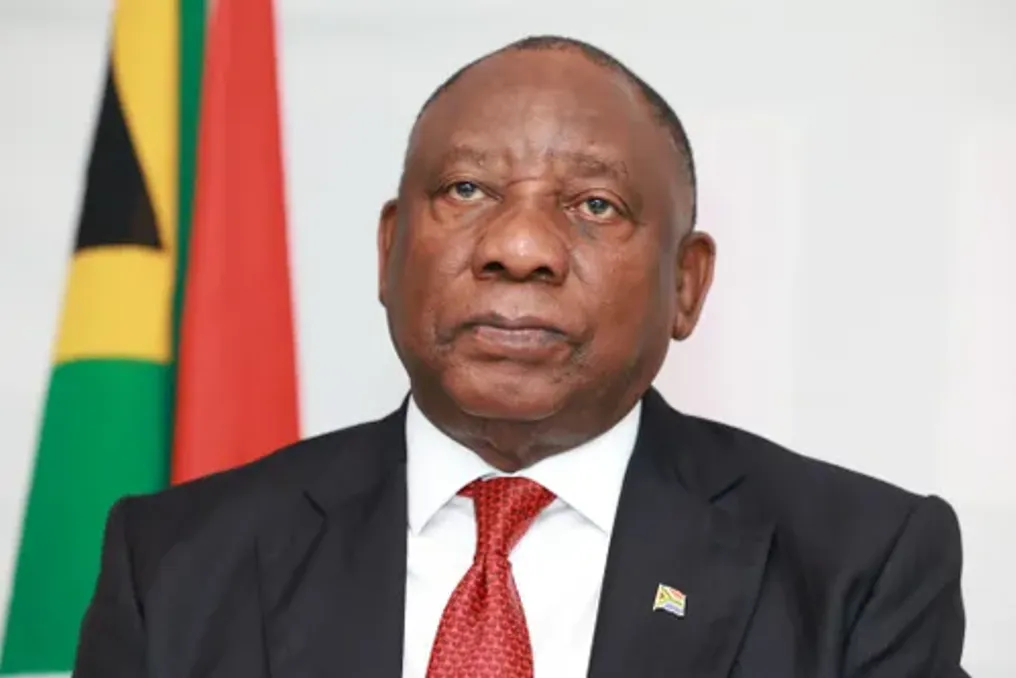
President Cyril Ramaphosa announced that the government plans to transfer approximately 2.5 million hectares of state land to Black farmers. This measure is accompanied by the provision of title deeds and is part of efforts to form a new generation of commercial farmers.

In his weekly address to the nation, Ramaphosa emphasized that expanding access to land, financing, and agricultural training is critical for transforming the sector, creating jobs, and strengthening South Africa's food security. He noted that the first step toward creating a new wave of South African farmers is ensuring their legal right to land ownership.

Under the Proactive Land Acquisition Strategy, the government is distributing land in various regions of the country among Black farmers. However, Ramaphosa stressed that access to land must be accompanied by financial support, skills development, mentorship, and technology adoption to help emerging farmers conduct successful commercial operations.

He pointed out that nascent farmers too often remain at subsistence levels due to an inability to secure necessary funding for purchasing seed material, building infrastructure, and acquiring additional land parcels. As a success story, Ramaphosa cited Redlands Farm in Sterkfontein, Eastern Cape, which is owned and managed by young Black farmers. The success of this farm demonstrated how effective partnership can stimulate the rural economy and create jobs.

Redlands Farm expanded its operations with the Land Bank, becoming a beneficiary of its Mixed Finance Scheme, which combines government grants and credit financing. The President called on more creditors and agribusinesses to participate in the process and develop additional financing tools for farmers.

Ramaphosa reported that South Africa's agricultural sector has more than doubled since 1994, reaching a record export value of 270 billion rand in 2025, making the country the 32nd largest global exporter of agricultural products. The country exports goods such as grapes, maize, beef, wine, citrus fruits, sugar, and wool. Nearly half of these exports go to other African countries, while the remainder goes to markets in the European Union, Asia, the Middle East, and the Americas.

Nevertheless, the growth of the sector has not benefited all communities equally. Ramaphosa noted the existence of 'two types of agriculture': most commercial production comes from farms predominantly owned by white people, while Black farmers account for only about 10% of the total volume.

The President warned that dependence on a relatively small segment of the population to meet the country's food needs is unsustainable given population growth and increasing demand for food. He stressed the need for transformation both to address historical inequality and to meet future food requirements.

Agriculture provides employment for approximately 944,000 people, plus another 200,000 workers in the broader value chain. The work of a 2025 University of Pretoria study was also mentioned, establishing a strong link between agricultural investment and poverty reduction.

Ramaphosa clarified that mere land ownership is insufficient for success; farmers require practical experience and knowledge of crops, weather conditions, and animal diseases. He highlighted the role of industry organizations such as Citrus Growers’ Association, Grain South Africa, National Wool Growers’ Association, Potatoes South Africa, Red Meat Industry Services, Milk Producers’ Organisation, and Fruit South Africa in supporting a more inclusive agricultural economy.

The President stated that the government is actively working to expand and diversify agricultural export markets. Furthermore, engagement is ongoing with agribusinesses and farmers on issues such as new breeding methods and advancements in agricultural biotechnology.

Ramaphosa concluded that stronger collaboration between the government, farmers, businesses, creditors, traditional leaders, and communities will help develop the sector and create jobs. He expressed hope that through joint efforts, they can increase cultivated areas, form a new generation of Black commercial farmers, and ensure sufficient production not only for domestic consumption but also for sale on global markets.
Popular