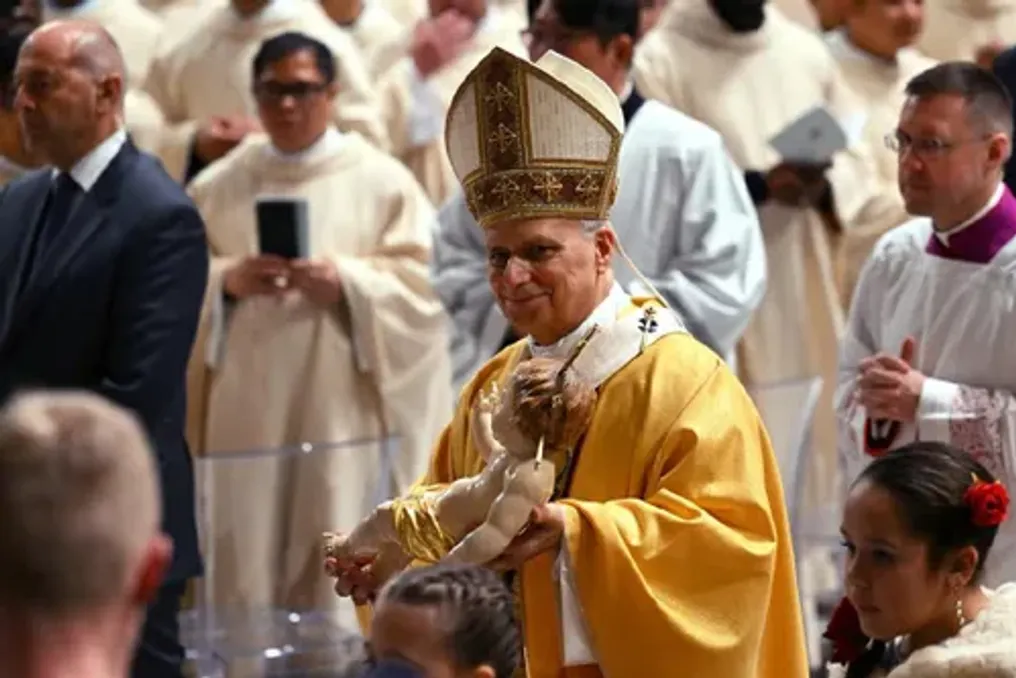
Pope Leo XIV underwent surgery on Tuesday, during which a malignant tumor was removed from his right lung. The Vatican reported that the 90-minute operation was 'successful.' Medical experts provided AFP with detailed information about the diagnosis and the procedure.
What is lung adenocarcinoma?
Dr. Juanita Mora, a medical representative for the American Lung Association, explained that lung adenocarcinoma, the type of tumor removed from the Pope, usually arises from 'primary cancer.' She emphasized that this is a positive point because it means the tumor is a consequence of lung cancer, not the spread of another type of cancer.
There are two main types of lung cancer: 'small cell' cancers, which spread aggressively and account for about 10–15% of all cases, and 'non-small cell' cancers, which are much more common. David Spiegel, an oncologist specializing in lung cancer research at the Sarah Cannon Research Institute in Nashville, told AFP that adenocarcinoma is the most common type of non-small cell lung cancer.
Promising prognosis
David Carbone, director of the University of Ohio Cancer Center, noted that although smoking remains the most well-known risk factor for lung cancer, 'most lung cancers we diagnose today are found in people who never smoked or quit many years ago.'
According to the World Health Organization (WHO), lung cancer is the leading cause of cancer death worldwide; however, the prognosis can vary greatly depending on the type of cancer and the stage at which it was detected. Mora stated that for localized adenocarcinoma, the five-year survival rate is approximately 63–67 percent. With early detection, this figure increases to 80–98%, especially after surgical removal.
Spiegel added that in such a case, the patient 'will achieve complete recovery and will no longer be at risk of cancer.'
Standard procedure
Pope Leo XIV announced the presence of a nodule in his lung on Sunday, specifying that it was 'discovered at a very early stage' and was localized. The Vatican reported that during Tuesday's operation, a lower lobe lesion of the right lung was removed to eliminate this mass.
Carbone told AFP that 'a part of the right lung was removed, which is standard procedure.' He also noted that there is significant reserve left in the lungs, and people can undergo total lung resection and lead a normal life. He expressed hope that the Pope will soon return to full activity.
What next?
The question now is whether additional treatment, such as chemotherapy or radiation therapy, is necessary for Pope Leo XIV. According to experts polled by AFP, the answer will depend on several factors, including the size of the removed tumor, its aggressiveness, genetic characteristics, and the presence of metastases.
A source in the Vatican reported that further tests are being conducted. For Carbone, the mere fact that the Pope has already undergone surgery is encouraging. He explained that if the tumor had spread, for example, to lymph nodes in the chest, he would have required pre-operative treatment, which did not happen. He suggested that this indicates a very early stage of the tumor with a rather good prognosis.
Carbone stressed that lung cancer treatment has improved significantly in recent decades, and the prognosis is better than ever. Therefore, he expressed hope for a full recovery.