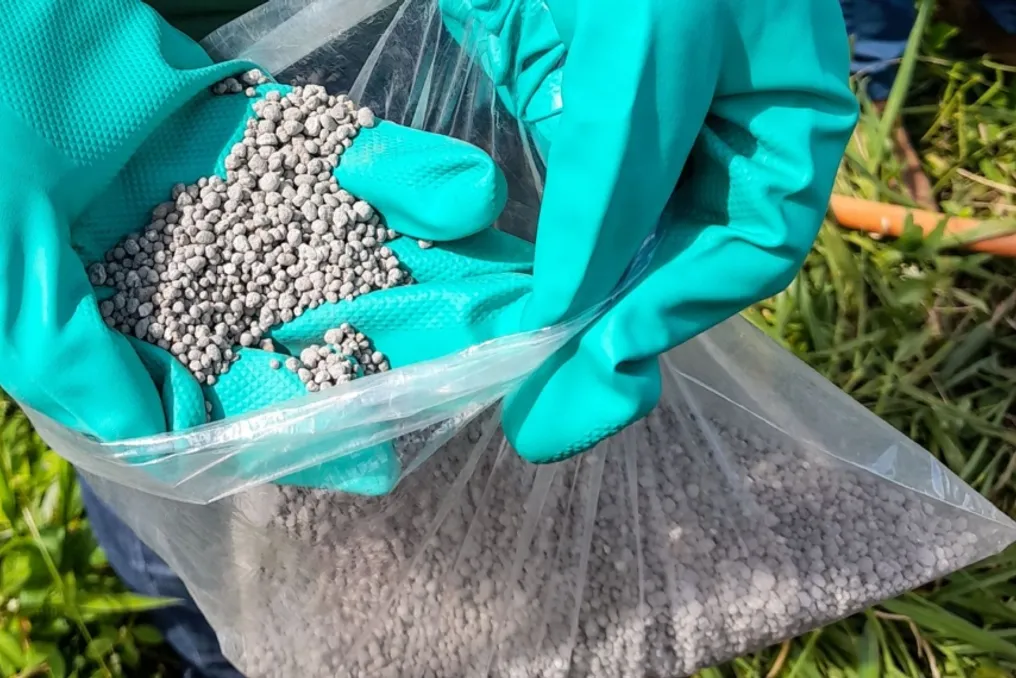
Farmers in South Africa are calling for the adoption of the sanitation economy concept, recycling treated human waste into low-cost organic fertilizer and irrigation water. This will help offset rising resource costs, improve soil health, and stimulate local business.
During a presentation to grain producers and agricultural industry leaders in Bredasdorp, Western Cape, Deputy Minister of Water Resources and Sanitation Dr. Jack Bloom highlighted a dual problem: declining regional rainfall and sharply increasing agricultural expenses.
Given that rainfall in the Swartland has decreased by an average of 79%, wheat planting areas are at a 97-year level, and ammonia prices in the Middle East have doubled in a year, Bloom presented safe human waste recycling as a viable, locally produced solution for ensuring accessible nutrients and water.
He stated: 'Right now, we view what comes out of these toilets purely as a cost. I want us to transform this chain of costs into a value creation chain: collection, treatment, recovery, production, sale, use. That is sanitation economy, and agriculture is right at its center because you are the largest potential consumer of what we recover.'
Explaining supply limitations, Bloom specified that safely processed human waste contains nitrogen, phosphorus, and potassium—the main components of commercial synthetic fertilizers. Since these products are produced domestically, they provide natural protection against severe fluctuations in global prices and energy shocks.
In addition to solid fertilizer, wastewater treatment offers another benefit: clean effluent for crop irrigation. Bloom emphasized decentralized wastewater treatment systems—a chemically independent process using anaerobic digesters, microbial filters, and reed wetlands for waste treatment.
South Africa currently faces a growing volume of municipal sludge, which produces nearly 640,000 dry tons annually at large municipal treatment plants, plus an additional 378,000–567,000 dry tons from smaller facilities and pits. Bloom stressed that this is not just a landfill, but a raw material equivalent to a fertilizer factory that, instead of going to fields, ends up in the ground every year.
As the agricultural sector explored the potential of the sanitation economy, environmental experts stressed the importance of strict technical standards, site selection, and quality management when applying recycled effluent and sludge.
Environmental consultant Dr. Anthony Turton noted that the use of wastewater has established historical roots in South Africa. He mentioned the Percy Stuart plant as an early example but pointed out that past operational models provided important lessons regarding long-term discharge and soil management.
Turton cited the old AECI dump in Modderfontein, noting that it is now a source of nitrates and phosphates for the Hartbeespoort dam, making it a bad idea. He also mentioned the case at the Ruival treatment works where a farmer is suing the state over the contamination of his land with sewage effluent.
Turton listed several key technical points that must be controlled to protect agricultural soils. He pointed out that the main risk is heavy metal contamination, primarily from corroding copper and lead pipes, which exceed safe levels and ultimately destroy the soil. Another risk is salinization, as the effluent contains salts. Although salt removal is technically possible, brine disposal remains an unresolved issue. The technology at the Thiefontein plant near Ogiisa uses advanced techniques to concentrate brine, but it has not solved the disposal problem, negating the economic viability.