The mention of Kashmir traditionally evokes associations with apple orchards, saffron fields, and snow-capped mountains. However, another product is now preparing to take its place in this valley's business world—Rainbow Trout. This fish has the potential to open a new path to income and job creation for Kashmir, as it grows in cold water.
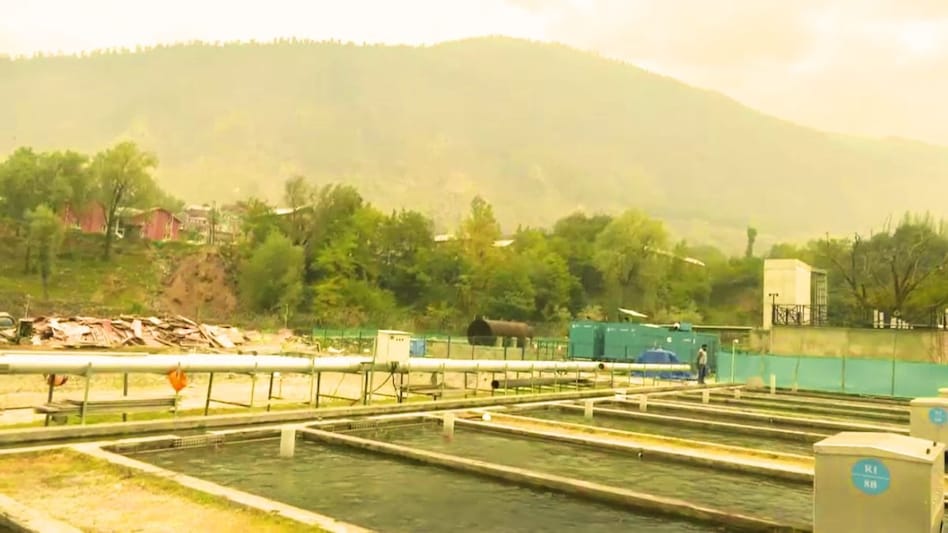
In the village of Kangan, which belongs to the Ganderbal district in central Kashmir, a large-scale trout farming complex was launched on the banks of the Sindh River. The goal of this project is not only to increase fish production volumes but also to ensure that the trout produced in Kashmir can move beyond local markets and reach other regions of the country. This should stimulate business development and provide new employment opportunities for local residents.
It is important to understand what exactly distinguishes trout and why the climate of Kashmir is considered ideal for its cultivation. Trout is a type of fish that cannot simply be released into any pond; it requires clean, oxygen-rich, cold water. Rivers originating from the snowy peaks of Kashmir, along with the cool climate, create optimal conditions for it.
Because of this, the potential for aquaculture in the valley has existed for a long time. Previously, the development of this sector proceeded mainly through state-owned fish farms and corresponding programs. Now, private investors are also showing interest in the industry. The large-scale fish farm in Kangan, located on the banks of the Sindh River, testifies to this shift. Efforts are being made here to move trout breeding from limited production to the level of a large commercial enterprise. Project Director Yunus Trambu stated that preparations are underway to study the prospects of trout farming and ensure market access.
Opportunities for the local population extend beyond simply earning income from fish sales. If the volume of trout production in a certain area increases, there will be a need for workers to care for the fish. A fish farm must operate for their breeding and care. Furthermore, feed resources for the fish will be required, followed by establishing processes for processing, packaging, storage, and transportation after production.
Thus, jobs may appear not only at the fish farm itself but also in related sectors: local residents can work in aquaculture, technical maintenance, and logistics chains. Farmers and small entrepreneurs can also find areas for growth here.
The most serious challenge of this business begins with the issue of delivery. Raising fish is one thing; delivering it in good condition hundreds or thousands of kilometers from the consumer is quite another. For preserving the freshness of trout, cold chain systems, refrigeration equipment, quality processing, and improved transport are critically important.
If these infrastructural solutions are strengthened, products grown in Kashmir can find buyers outside the valley. This gives producers a chance to reach a wider audience. However, the presence of a large market does not guarantee high profits. Business success will depend on transportation costs, the willingness of buyers to pay a certain price, and competition from other producers.
Attracting private investment in any sector opens up opportunities to increase production volumes, implement new technologies, and gain direct market access. The trout farming sector shows similar potential. The fish farm in Kangan can serve as an incentive for other entrepreneurs to invest in this field. If successful, this will allow the scope of business related to aquaculture in the valley to expand.
Nevertheless, based solely on the size of the project, one cannot make assumptions about employment or production figures. It is necessary to ascertain the actual production capacity of the farm, how many people have found jobs, and what the projected market demand will be in the future. Since trout requires clean and cool water, besides increasing production, it is crucial to ensure sustainable use of water resources. Attention must also be paid to controlling diseases among the fish, water quality, and using good feed.
Currently, the fish farm in Kangan represents a significant initiative in this direction. It is called the largest fish farm in Asia. If natural conditions align with technology, investment, and proper market interaction, trout farming can indeed become a new source of employment for the valley.