Hello Inc.'s Robotaxi Unit Releases HelloWorld — A World Model for On-Demand Driving Scenario Generation
Read more
Pandaily
pandaily.com

Hello Inc.'s Robotaxi Unit Releases HelloWorld — A World Model for On-Demand Driving Scenario Generation

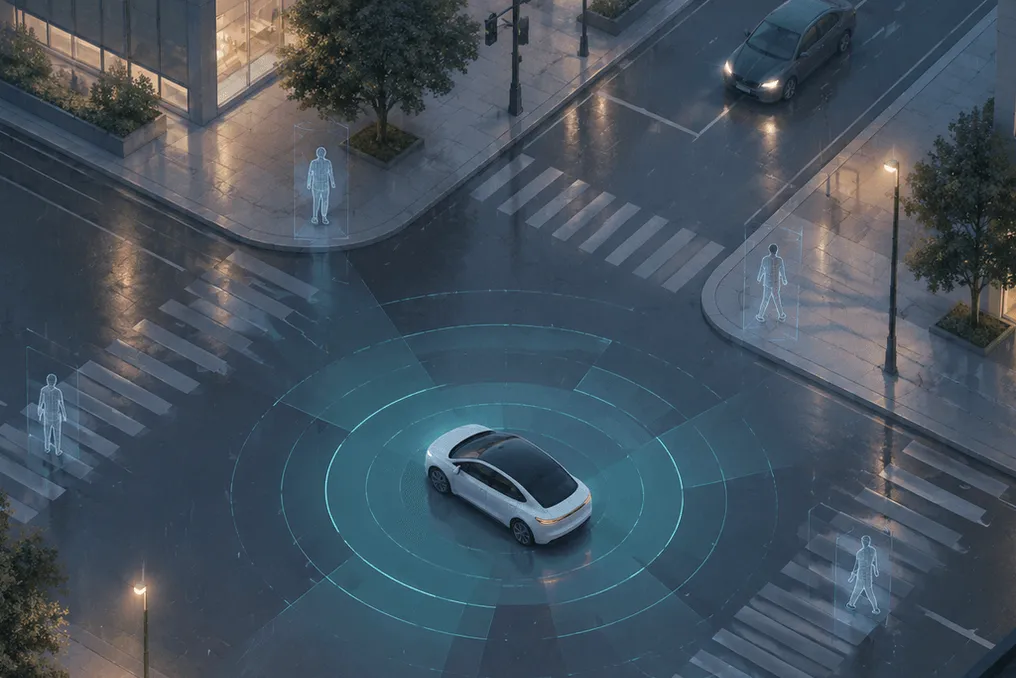
The robotaxi division of Hello Inc. has introduced HelloWorld, a generative world model for driving. This model is designed to create on-demand driving data and facilitate interactive testing of vehicle control policies.

The team announced the model on October 12th and published the corresponding scientific paper on arXiv, as well as a project page. HelloWorld integrates scene control, continuous generation, multi-sensor observation, and efficient data output.

Engineers can directly edit vehicles, pedestrians, and their trajectories, after which the model generates corresponding videos from multiple cameras along with lidar data. Examples of such edits include adding a pedestrian crossing the road, changing the route of a leading vehicle, or altering weather conditions—for instance, transitioning from rain to snow, or from day to night.

The model also accepts simple language descriptions of situations as a second method for building scenes. The user describes the desired scenario, and a specialized application pipeline converts this description into the conditions required for the model to operate. Elements such as construction sites, heavy traffic, pedestrians crossing the road, fog, and various lighting conditions can be used to guide the generation process.

The primary goal of the development is to fill gaps in real-world collected data. Long-tail scenarios, such as rare hazards or unusual combinations of weather and movement, are difficult to collect in sufficient quantity solely by gathering road data. The ability to generate such scenarios on demand allows developers to create targeted training data and conduct counterfactual tests: reproducing the same moment while changing one element to assess the reaction of a driving policy.

According to the presented scientific paper, HelloWorld contains approximately 2 billion parameters, generates views for seven cameras with conditional lidar output, and utilizes multi-step causal generation. This architecture is intended to ensure sufficient output speed for repeated interactive simulation, not just for generating individual clips.

World models have become a common tool in autonomous driving and embodied artificial intelligence, where teams use them to reduce the costs of collecting and labeling edge cases. HelloWorld is the first public research publication of this kind from this company's robotaxi team. However, the company has not yet announced when or how the model will be integrated into its vehicle testing programs.
Similar stories

Meta introduces new AI model Muse Wonder to compete with OpenAI and Anthropic
Read more
olhardigital.com.br

Meta introduces new AI model Muse Wonder to compete with OpenAI and Anthropic

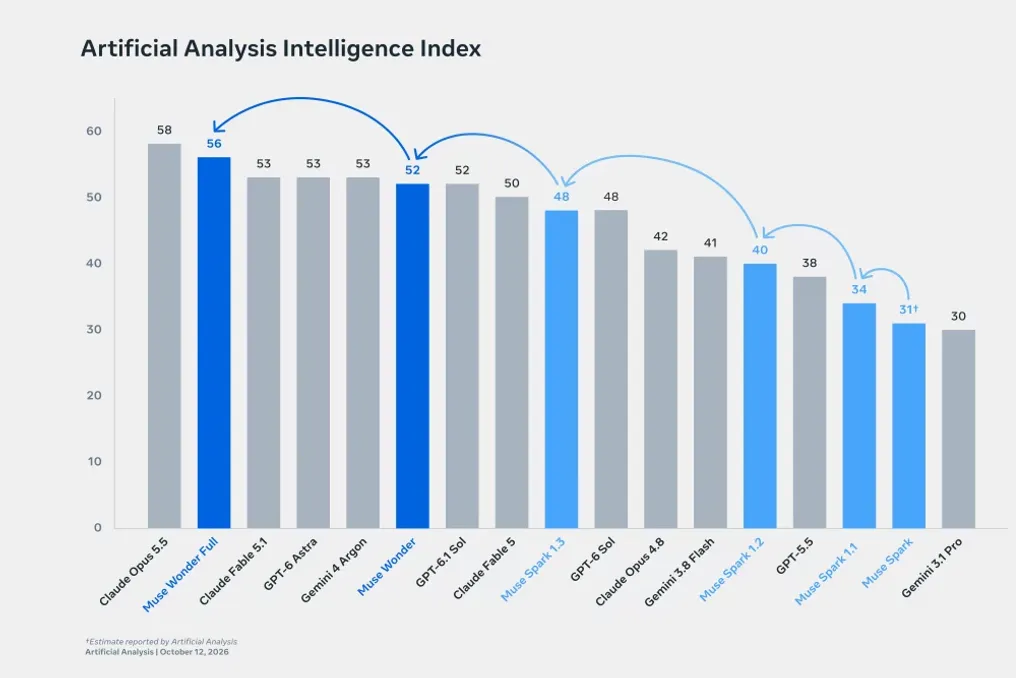
Meta introduced two new artificial intelligence (AI) tools—Muse Wonder and Muse Wonder Full—on Tuesday (the 12th). These models are intended to expand the company's presence in the advanced systems market. Meta states that in tests for programming, writing, and reasoning, these models demonstrate results comparable to the most advanced developments from Anthropic.

This release is part of Mark Zuckerberg's efforts to strengthen the AI division and find new revenue streams beyond online advertising. Access to the new features will be integrated into Meta's products, including the Muse personal agents application and the Muse Code coding tool, with access provided through various subscription plans.

The development of Muse Wonder began after Meta hired Alexander Wang, founder of the startup Scale AI, as Chief AI Officer in June 2025. This new line of models is the second series released by the division under Wang's leadership and the first explicitly positioned by the company as a competitor to so-called frontier models.

These AI systems are among the most advanced and typically require significant computational power to operate. According to Meta, Muse Wonder has also made substantial progress in programming compared to previous versions from the company.

Functionality and Application

The model was created to improve the performance of both personal and professional agents that perform tasks on behalf of users. In an interview with CNBC, Alexander Wang stated that the training process was aimed at preparing the system to find alternative solutions when obstacles arise, rather than stopping work and requesting instructions from the user. Examples mentioned by the executive include everyday tasks such as restaurant reservations or checking seat availability. The goal is for agents to handle unforeseen circumstances more effectively while performing these actions.

Muse Wonder will be integrated into parts of the Muse application, which was released last month. Although the application has a free version, using the new model will require a monthly subscription of $20 or $100.

Furthermore, the model will be available to developers via the Meta Model API. Wang noted that this option will cost more than standard subscriptions because it represents a larger and more advanced system. Nevertheless, he said the cost will remain significantly lower than that charged by leading OpenAI and Anthropic models.

Full Version and Security

Muse Wonder Full will be the most powerful version of this new series. Access to it will be limited to developers subscribed to Muse Code—an AI tool focused on software development. The subscription plans mentioned by CNBC are $50 or $200 per month.

The launch comes amid concerns regarding the behavior of advanced AI models and agents. In a Meta blog post, the company stated that the new model possesses the most robust cybersecurity protections against misuse to date. These measures are currently only available in the paid version.

Wang's team is also monitoring incidents and issues related to the use of Muse. Some users have complained on social media that the agent accessed private messages without permission, but the company denies this claim. According to Wang, Meta informs users about the application's operation and the permissions they grant during communication. He added that some people might have previously granted certain types of communication permissions and subsequently forgotten about that consent.

During the development of Muse Wonder, Meta encountered delays. In July, the company paused the pre-training phase, pushing the model release to October, according to information previously published by The New York Times. These models, internally codenamed Watermelon, represent another step in Meta's strategy to expand its presence in the AI market. The company also aims to increase sales of AI services to other corporations in a segment where OpenAI and Anthropic already hold significant positions.

Striding AI unveiled H1 and C1 robots for 24/7 stores, plans service launch in 2027
Read more
pandaily.com

Striding AI unveiled H1 and C1 robots for 24/7 stores, plans service launch in 2027

Striding AI, a physical artificial intelligence startup from Beijing, has introduced a robot system designed for 24-hour retail stores. The presentation took place on October 8th at the 22nd Asia-Pacific Retail Conference (APRCE 2026), according to a company announcement distributed via QbitAI.

The system consists of three main components. The H1 robot is a bipedal humanoid designed for areas where customers move. It can speak over 20 languages, display 45 different facial expressions and 36 gestures, and provides an open API for custom development.

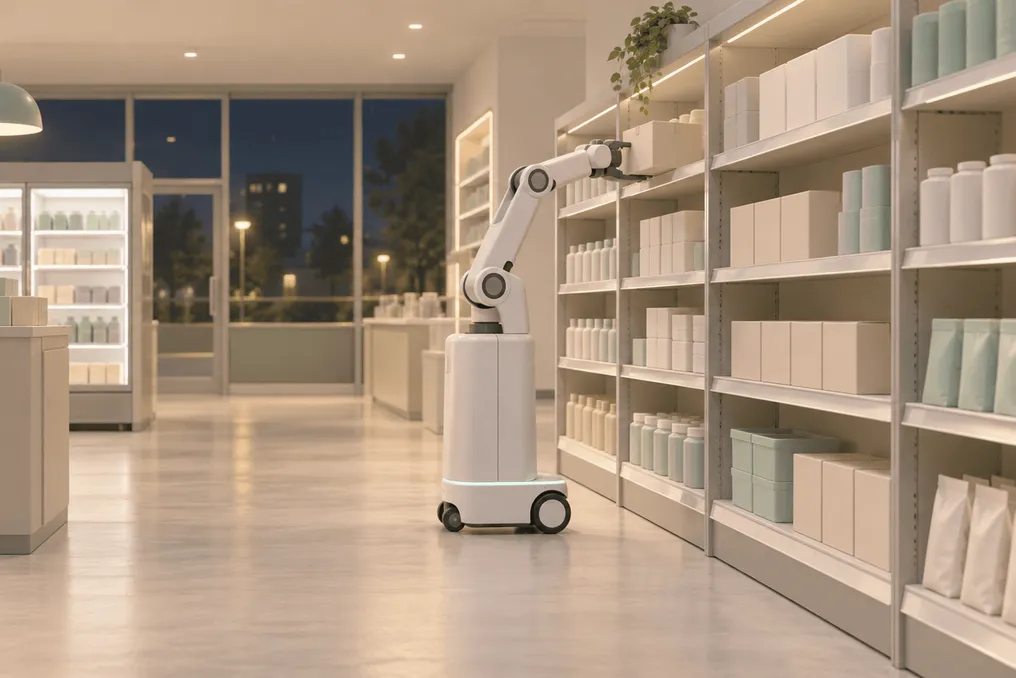
The C1 robot is a wheeled apparatus with manipulators, suitable for narrow aisles. It operates on a slim omnidirectional base, has a height ranging from approximately 100 mm to over 1750 mm, and performs tasks such as moving goods, restocking shelves, and loading. Striding AI claims that C1 uses combined sensors to detect nearby customers, stops within 10 cm of an obstacle in emergencies, and is equipped with front and rear depth cameras, as well as 360-degree vision.

The M1 control platform is responsible for task distribution, status tracking, and personnel intervention capabilities. The company emphasizes that this setup requires no modifications to the store's shelf or aisle structure, which it calls zero retrofit. The goal of deploying these robots is to delegate routine and nighttime tasks, such as inventory checks, inspections, and patrolling, allowing staff to focus more on customers. The company states that the robots autonomously complete 99% of tasks, although details of this figure are not disclosed.

The foundation for the robots' operation is Striding AI's so-called 'embodied brain.' The lightweight SLM-0.5 world action model demonstrated an average task success rate of 98.6% in the LIBERO benchmark and, according to the company, performs calculations 24 times faster than standard approaches. The STEAM system, based on the open-source RLinf framework and functioning as a post-training reinforcement learning system, achieved 95% success in the shelf restocking task. The Rpent agent layer, developed in collaboration with Tsinghua University and Infinigence AI, breaks down a request, such as filling a row of shelves, into sequential steps, calls navigation and grasping modules, and replans actions when failures occur.

Striding AI was co-founded by serial entrepreneur Song Yao, Yan Yuxin, Tsinghua researcher Yu Chao, and the Charoen Pokphand group. The company plans to test the system in a major global retail chain and commence commercial operation in 2027. Sales may be conducted as a one-time purchase or through a Robotics-as-a-Service subscription, which includes hardware, software, and maintenance. More powerful versions and an A1 robot for checkout and packaging are also planned, though their release timelines have not been specified.

Popular