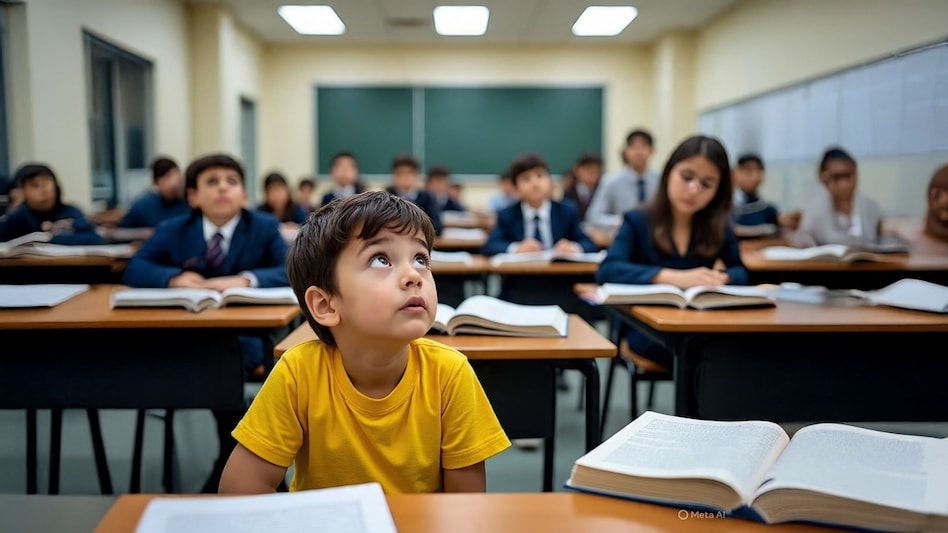
In the era of rapid development of artificial intelligence (AI), one of the prestigious schools in Great Britain has decided to abandon the use of digital screens in classrooms, restoring the traditional method of learning with paper and pen.
Previously, there was a public desire for children to study in digital classrooms, and the costs of digital education became part of parents' budgets. The belief spread that having laptops and tablets with children would make them highly technological.
However, against the backdrop of rapid progress in the field of AI, it was reported in an article in 'The Telegraph UK' that 'Winchester College', one of the most expensive and famous boarding schools in Great Britain (with an annual fee of about £62,100, or over 68 lakh rupees), has practically stopped using laptops in classrooms. This school, whose alumni include figures such as Rishi Sunak and John Keats, has returned to traditional teaching methods.
The first female headmistress of Winchester College, Elizabeth Stone, stated that laptops in the classroom brought more distractions than help in studying. She emphasized that a laptop cannot be considered the 'default' preferred tool. Now, it is necessary to prove that using a laptop brings tangible and significant benefit to the student; if the task can be solved without a screen, then a screen is not required.
The school administration found that during the first lessons, there was a surge in checking email and messages instead of attending classes. Children watched YouTube while doing homework, were engrossed in football videos, or chatted with each other. After the ban on screens, noticeable positive changes occurred: students began paying more attention to lessons and completing homework faster.
After finishing homework, children had time for sports like swimming and football, as well as for socializing. The headmistress noted that old games have returned to the students' lives. As a result of this restriction, 95 percent of students achieved top grades (from 7 to 9) in the 2026 GCSE exam, compared to 93 percent in the previous year.
Nevertheless, computers will be used at the school for students with special needs or for specific technologies such as AI and 3D modeling. Traditional paper and pen will remain for core learning. The UK Shadow Secretary of State for Education, Laura Trott, stated that state schools should 'wake up' because private schools are abandoning screens to protect children's minds.
This case reflects that no matter how far technology advances, the fundamental way of developing the human mind—reading, thinking, and writing by hand—remains indispensable. The wheel of development has turned. The question remains whether the rest of the world will learn this lesson or remain absorbed by the temptations of screens.