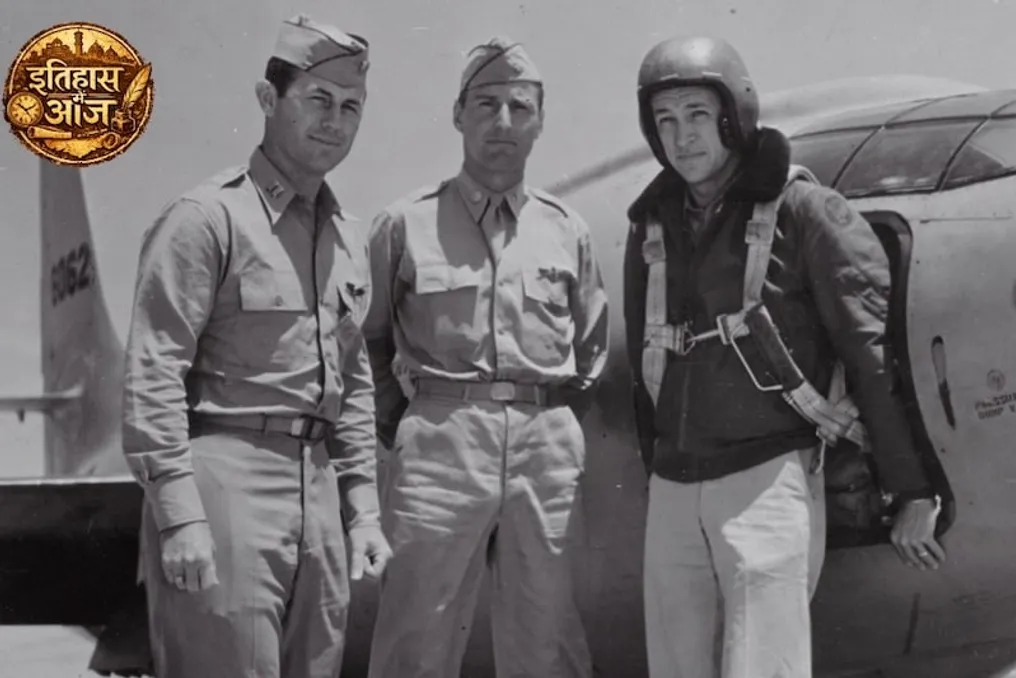
The first flight of an aircraft exceeding the speed of sound took place on October 14, 1947. The first pilot to achieve this speed was Captain Charles E. Chuck Yeager of the U.S. Air Force. Yeager was assigned as a test pilot for the X-1 program.
Captain Chuck Yeager from Marysville, West Virginia, was born in 1923 and previously served as a fighter pilot during World War II. He participated in 64 missions over Europe and shot down 13 German aircraft. Although his own plane was shot down over France, he avoided capture.
After the war, he became one of the volunteers selected for a test flight of the experimental X-1 rocket plane to study the capabilities of supersonic speed. Prior to this, many pilots believed that humans were incapable of flying faster than the speed of sound, proposing the theory that the increase in transonic drag would tear any aircraft to pieces.
Everything changed on October 14, 1947, when Yeager piloted the X-1 over Rogers Dry Lake in Southern California. The X-1 aircraft was lifted by a B-29 bomber to an altitude of 25,000 feet and then released from the bomb bay, reaching an altitude of 40,000 feet and a speed of over 662 miles per hour.
This rocket plane was named 'Glamorous Glennis' after Yeager's wife and was built based on the model of a .50 caliber bullet. Although the flight report leaked to the press in December 1947, official confirmation of Yeager's achievement was only made in June 1948 due to the project's secrecy.
Yeager continued to work as a test pilot and in 1953 flew the X-1A rocket plane at a speed of 1650 miles per hour. He retired from the U.S. Air Force in 1975 with the rank of Brigadier General. Charles E. Chuck Yeager died on December 7, 2020, at the age of 97.