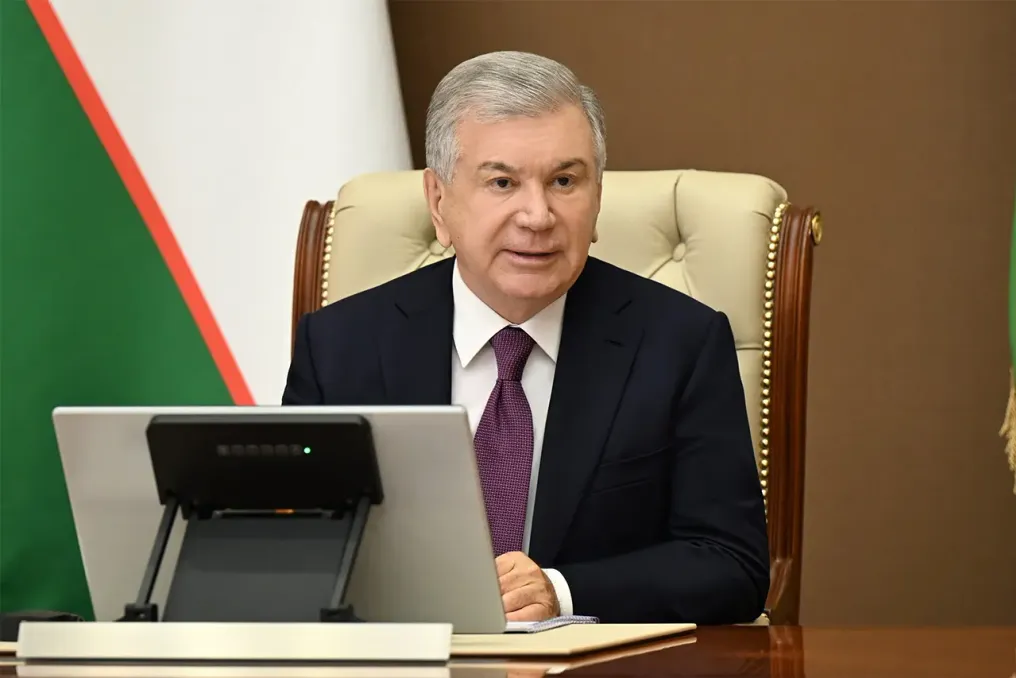
The President of Uzbekistan, Shavkat Mirziyoyev, reviewed a presentation dedicated to pasture restoration, improving water supply systems, and increasing the efficiency of land resource utilization. The total area of pastures in the country is 21.255 million hectares, but only 40% of this territory is used for economic activities.
After reviewing the materials, officials were instructed to implement the recently signed decree on the effective use of pastures. It is planned to restore 620,000 hectares by the end of the current year, and another 3.7 million hectares next year to increase productivity.
Regional governors, together with the Agency for Livestock Development and Pasture Management, were ordered to approve comprehensive programs within a month. These programs must ensure a reduction in the area of degraded lands by 10% this year and by 20% next year.
A key focus is expanding access to water resources. In Navoi region, the Kengsoy pumping station was restored using 30 billion soums from the local budget, which allowed for the development of 20,000 hectares of pastures. Eleven entrepreneurs have begun constructing water bodies and implementing sprinkler irrigation systems in these areas. This initiative is expected to provide an annual production of 250,000 tons of feed for 60,000 head of livestock.
In Nishan district of Kashkadarya region, an irrigation system with centrifugal sprinklers was implemented over an area of 1,332 hectares, and sowing of fodder crops adapted to local conditions has begun. Officials were tasked with disseminating this experience to Mubarek and Dekhanabad districts. Additionally, the creation of 9,400 hectares of seed production plots is planned within the year.
To improve pasture water supply, additional wells will be drilled. Income from pasture leases will remain with local pasture management structures, which will use these funds to drill 448 wells, improving the water supply for 1.5 million hectares next year. Furthermore, the repair of 1,600 wells is planned by the end of this year.
Moreover, the construction of 161 hydraulic irrigation structure is planned for this year using a budget of 100 billion soums. An additional 81 facilities are planned to be built annually until 2027 and 2028. In total, it is expected that 323 such structures will support the restoration of 969,000 hectares of pastures.
Special attention was paid to legalizing property rights for herders who have used pasture lands for many years. The term of office for the commission responsible for registering 623,000 hectares in the names of actual users has been extended until the end of the year. Currently, about 260,000 head of livestock graze on these lands.
Communal pastures will be created for residents of remote areas who keep livestock in households. By the end of the year, 627,000 hectares are planned to be transferred to 470 mahallas for free use for a period of 49 years, and these lands will be exempt from taxes.
The new procedure will also allow for the construction of livestock complexes without changing the pasture category. The initial cost of plots and land tax will be calculated according to rules applicable to agricultural land. In Navoi, Samarkand, and Surkhandarya regions, 15 livestock complexes totaling 130 hectares are planned, designed for over 55,000 head of livestock.
Authorities also intend to expand the use of pastures beyond traditional animal husbandry. Leases will be offered for ecotourism, beekeeping, hunting, sericulture, as well as for growing medicinal plants and seedlings. Such projects must comply with the requirements for preserving natural ecosystems and ensuring pasture restoration.
Following the presentation, officials were instructed to take measures to restore lands, strengthen water and feed resources, and utilize new opportunities for the population and business.