Dozens arrested in Baku amid hijab ban that led to school closures
Read more
Tehran Times
www.tehrantimes.com

Dozens arrested in Baku amid hijab ban that led to school closures

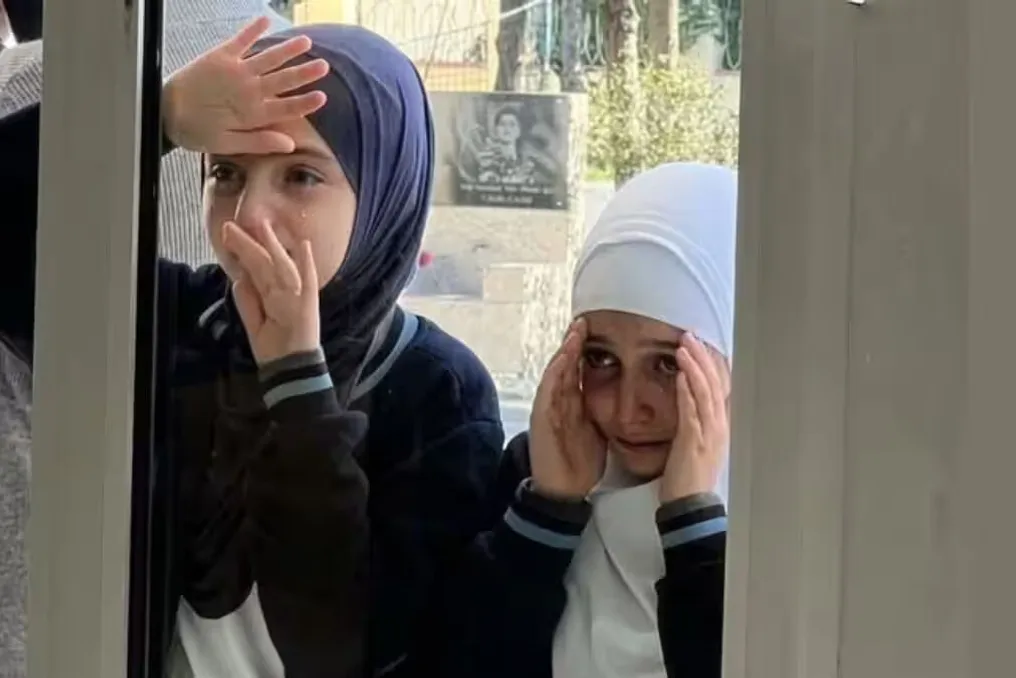
A reaction to the new rules was observed in Tehran: one student cried at the school gate, asking why she had to renounce her religion because her academic performance did not allow her to receive a good grade. Officials standing before her took no action. The video of this dialogue quickly spread across Azerbaijan, after which many users encountered problems with Instagram and TikTok.

On September 21, the Cabinet of Ministers adopted Decree No. 309, which prohibits school uniforms that violate uniformity or contradict the 'principle of secularism.' However, the text of the decree does not explicitly mention the hijab. On October 6, the same requirement was extended to teachers, and by the second week of the month, directors in Baku and the provinces began stopping girls at the gates.

Approximately 96 percent of Azerbaijan's residents identify as Muslims. For a girl who wears a head covering, this decree presents two options: remove the scarf or stay home.

Classes are emptying, parents are standing at the gates

Many families refused both options. At School No. 69 in the Balakhani district of Baku, students left when they were forbidden from attending classes and displayed a banner stating that the hijab is not an obstacle to education. The same thing was done by students of School No. 322 in the capital. This trend was repeated in Masaly, Jalilabad, and the village of Khokmeli. Boys also joined the boycotts. In one district of Baku, parents stated that they would keep their sons home until the girls were allowed back. Recordings showed students hugging teachers and weeping near closed doors.

Women in leadership positions received a similar ultimatum. Zahra Hasanova, a teacher, was ordered to remove her scarf at work. She told Al Jazeera: 'It hurts me. The hijab is a personal choice, and if I ever want to take it off, that must also be my choice.'

Arrests and non-updating feeds

Baku deployed the police. On October 12, the Ministry of Internal Affairs reported 37 arrests in the capital, accusing the detainees of clashing with school staff, property damage, and disturbing public order. Criminal cases were initiated under Article 233, which provides for up to three years in prison. Local activists claim that the number of detainees exceeds 200 people.

The ministry also mentioned incidents of violence: the arson of a school principal's car in the Garadag district and an attempt to burn down a school building, although no one was injured. However, the ministry did not name the perpetrators, and there is no connection between the organizers of the school protests and these incidents.

Internet disruption occurred around the same time. Instagram and TikTok stopped updating for most users, and X also showed degraded performance. Many people could only access these platforms via VPN. Officials did not acknowledge the blockade, and independent observers could not confirm it. This sudden network slowdown coincided with viral footage of detained students and empty classrooms, which allowed the suppression of real-time organization and the concealment of state repression. By restricting digital channels, Baku seeks to curb unrest and ensure compliance with the rules.

Precedent and beneficiaries

The Constitution of Azerbaijan guarantees freedom of religion, but in practice, the situation has developed differently for a long time. Restrictions on head coverings in schools in 2010 and 2012 provoked street protests, which the police dispersed with arrests. In November 2015, the armed forces of the Baku government attacked the historically religious Shiite city of Nardaran, launching a deadly operation that resulted in the death of several local believers.

Following these repressions, Taleh Bagirzadeh, head of the Muslim Unity Movement, was subjected to severe torture and received a politically motivated 20-year sentence for organizing civil resistance against the state's anti-Islamic decrees. Unauthorized gatherings are brutally dispersed, and independent media operates under constant pressure.

This time, dissent reached prison. Polad Aslanov, a journalist already serving a long sentence for 'treason,' began a hunger strike on October 8. In a statement published through his family, he said he was using the only remaining tool to defend the constitutional rights of girls and teachers.

Protesters also gathered near the Azerbaijani embassy in Istanbul. President Ilham Aliyev, speaking at a party conference, advised critics not to 'interfere in our way of life.' Some observers interpreted this remark as directed at Turkey. Observers note that this wave of repression aligns with both Baku's foreign policy priorities and its internal goals. Aliyev has maintained a controversial partnership with Israel for two decades, which purchases a significant share of Azerbaijan's oil and sells drones and other weapons to Baku, while maintaining working relations with Washington. Baku has long viewed its devout Shiite population as a security threat. Applying the hijab ban within the framework of secularism allows the government to act in accordance with suspicions welcomed by its partners, and none of these capitals have expressed a desire to object. These laws are paid for by Muslim families in a Muslim-majority country, who are told that a girl's education now depends on what she wears.
Similar stories

Uzbekistan plans to allocate over 1 million soums to needy families for the heating season
Read more
gazeta.uz

Uzbekistan plans to allocate over 1 million soums to needy families for the heating season

The possibility of providing one-time financial assistance of 1 million soums to over one million needy families in November is being considered in Uzbekistan. Additionally, it is planned to expand the compensation system for electricity, gas, and coal consumption, as well as increase the basic electricity consumption norm for residents of areas without gas supply.

These measures are provided for a draft presidential decree, which was published by the National Agency for Social Protection under the President for public discussion. According to official clarifications, the one-time support is calculated for more than 1 million 17 thousand families. A total of 1.9 trillion soums is planned to be allocated for all additional social support measures in 2026.

Who is eligible to receive 1 million soums

The draft provides for the payment of one-time material assistance of 1 million soums in November 2026 to support families during the 2026/2027 heating season. Eligible recipients can be families listed in the Social Register, as well as those not included in it but meeting the established need criteria determined by the 'mahalla seven'. Assistance is also offered to elderly people living alone and persons with disabilities requiring constant care and included in the relevant register, as well as families with orphans or children left without parental care.

For families not registered in the Social Register, the key condition is that the average monthly income per person must not exceed twice the minimum consumer expenses, i.e., 1.43 million soums. However, special conditions apply to families living in apartment buildings with centralized heating. In Karakalpakstan and other regions, the average income per member of such a family must not exceed 1.43 million soums, while in Tashkent, a higher threshold of 2.145 million soums is set, corresponding to three times the minimum consumer expenses. The higher threshold for Tashkent is justified by differences in income and expenditure of the population on centralized heating.

According to preliminary estimates, the material assistance will cover every fourth family living in apartment buildings with centralized heating. Furthermore, the draft allows for consideration of individual needy families whose income is above the established limits; such exceptions will be decided by district and city headquarters responsible for job creation and increasing the population's income level.

Mechanism for forming recipient lists

The formation of additional recipient lists will be carried out by the 'mahalla seven' based on data from state bodies' information systems. When compiling lists, priority is given to families who have lost a breadwinner, families with people with Group I and II disabilities raising children with disabilities, as well as families where there are people requiring long-term treatment or constant care. Households whose members are engaged in labor migration, groups where three or more families live together, and residents of apartment buildings not equipped with gas or centralized heating will also be taken into account.

For additional lists formed based on income criteria, a limitation is set: their number must not exceed half the number of families included in the Social Register of that district or city. The lists must be ready by November 1st. Payments are planned to be transferred by November 30, 2026, to the recipients' bank or social cards through the National Bank and Aloqabank.

Gas and electricity compensations will be extended until April 2028. The draft also provides for expanding the range of families entitled to compensation for electricity and natural gas expenses. For families not in the Social Register, the permissible average per capita income for receiving compensation is increased from 1.5 to 2 times the minimum consumer expenses, which amounts to up to 1.43 million soums. According to government calculations, this will allow support to an additional 166 thousand families.

In addition, the existing mechanism for compensating the difference between tariffs within the basic norm of electricity and gas consumption and tariffs for exceeding this norm will be extended until April 1, 2028, instead of the previous deadline of April 1, 2027. This extension will ensure the continuation of compensations for another year for 470 thousand families, requiring additional funding of 150 billion soums. Regarding coal, it is proposed to expand the circle of recipients of material assistance for partial coverage of expenses by increasing the income threshold for families not included in the Social Register from one to two times the minimum consumer expenses. The provision of such support is scheduled until January 1, 2029.

Separately, for residents of territories where gas supply is absent or natural gas supply is difficult, it is planned to increase the basic electricity consumption norm during the heating season from 200 to 350 kWh per month.

In Ceuta, over 3,000 foreign minors are in government-supervised reception centers
Read more
noticiasaominuto.com

In Ceuta, over 3,000 foreign minors are in government-supervised reception centers

The Spanish Government reported that at the end of July, more than 3,000 foreign minors who entered Ceuta without adult accompaniment are currently in the autonomous city's reception centers and under the supervision of authorities.

Currently, there are 3,019 minors housed in Ceuta. Additionally, 89 of these minors have been reunited with family members residing in Spain, and another 173 have been relocated to reception centers located in other regions of the country, according to updated data provided by the Government's spokesperson, Elma Saiz, during a press conference held in Madrid.

Regarding adults, 4,432 individuals have been registered so far in temporary reception centers, awaiting repatriation procedures or asylum grants. The minister mentioned that the total capacity of these centers is 7,477 adults, but did not specify how many occupy these spaces at the moment.

The Spanish Government also did not disclose the number of people who illegally entered Ceuta on July 30 and 31 and who might remain in the city outside the reception centers, without official registration by the authorities.

After a period exceeding two months, the Government concluded, last weekend, the process of dismantling all illegal camps located in the city, including beach areas and other points near the coast. Despite this, reports and images of groups of migrants circulating through streets, forest areas, or more distant neighborhoods are still observed.

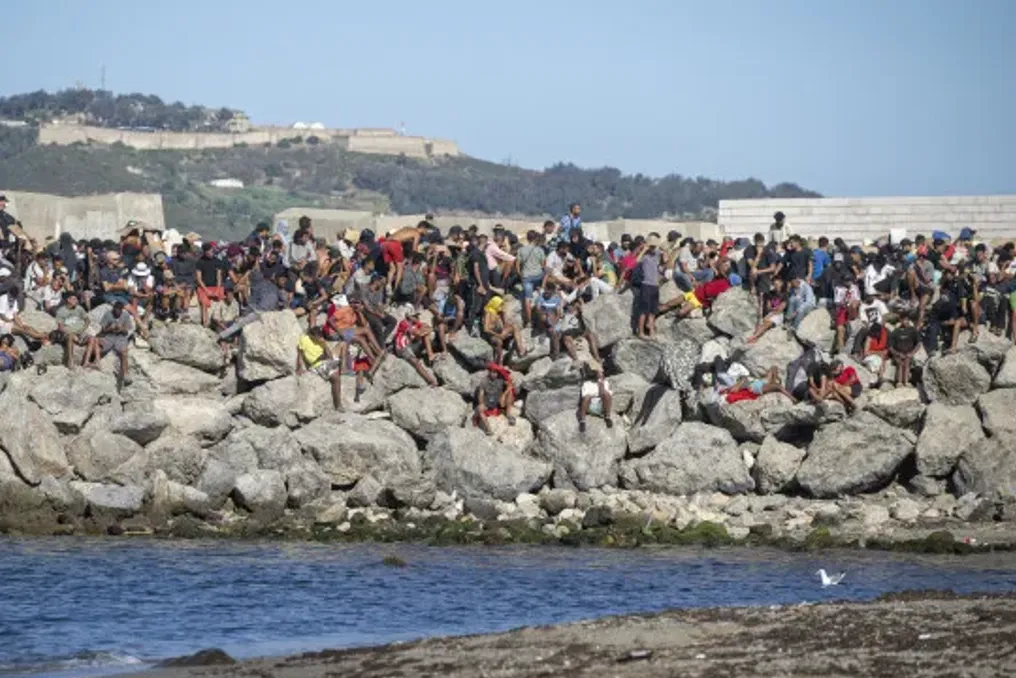
Government estimates indicate that more than 70,000 people illegally entered Ceuta in a single day at the end of July. Most of these people returned to Morocco, the neighboring country and border with this Spanish enclave in North Africa, in the subsequent days and hours.

Subsequently, there has been a continuous voluntary departure from the Spanish autonomous city, totaling 11,661 adults since August 10, according to the executive branch. In parallel, 525 people who were illegally in the city were deported due to criminal offenses.

The executive justifies the increase in voluntary departures in recent weeks by the growing understanding among migrants that the vast majority of processes involving Moroccan citizens will result in judicial and police expulsion orders, which is why they prefer to avoid maintaining such a record in Spain.

Popular