The human nasal structure and its evolutionary importance for speech capacity
Read more
Super Abril
super.abril.com.br

The human nasal structure and its evolutionary importance for speech capacity

The full professor of the Department of Animal Biology at the University of Malaga, Spain, discusses the relationship between nasal anatomy and human vocal capacity. A report from the Spanish Society of Plastic, Reconstructive and Aesthetic Surgery (SECPRE) indicates that rhinoplasty is the fifth most performed surgery globally, partly motivated by aesthetic reasons.

Nasal remodeling surgeries account for about 10% of cosmetic procedures performed in Europe and the United States, with Spain ranking among the leading countries in this list. More than 1.08 million nasal remodeling procedures were performed in 2024, highlighting the aesthetic preference for smaller and more pointed noses.

However, the nasal appendage has vital functions that go beyond appearance. It is crucial for conditioning air in terms of temperature and humidity before it reaches the nasopharynx. Without this function, respiratory passages could dry out in arid climates or freeze in polar regions, leading to oxygen diffusion impairment.

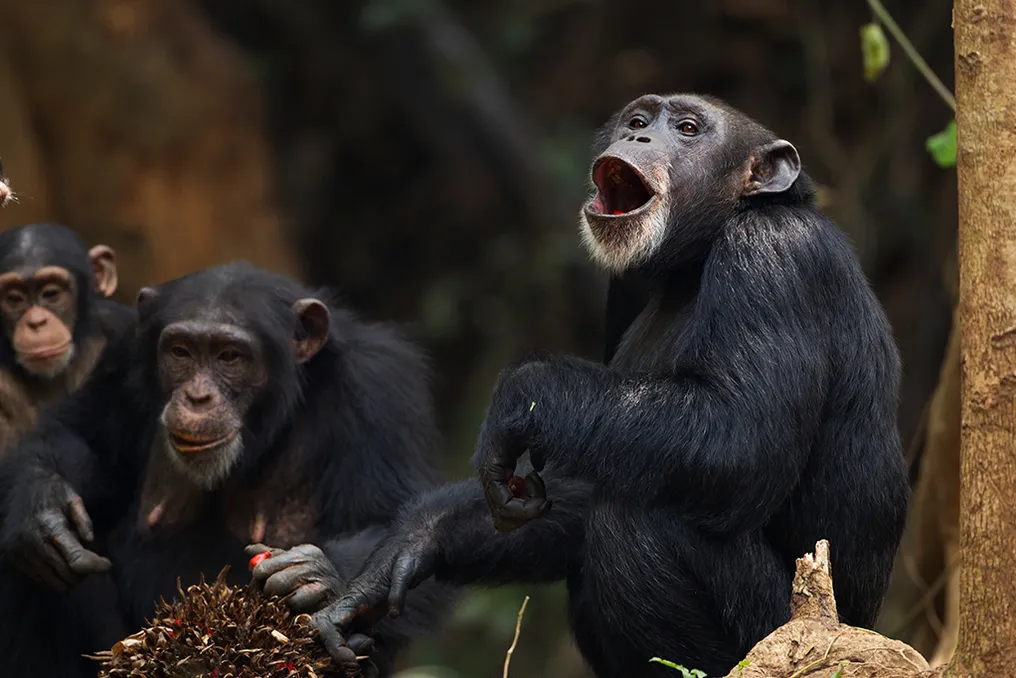
The evolution of the human nose brought even more significant changes when compared to primates. While primates, such as bonobos, chimpanzees, and gorillas, generally have flatter noses, the difference lies in the prognathic snout of these animals, where a large part of the nasal structure is integrated into the facial plane.

Human evolutionary trajectory involved a revolution in the morphological integration between various parts of the ancestral skull, including the nasal region, maxilla, premaxilla, cranial base, and lower jaw. This integration resulted in the recession of the maxilla and the positioning of the nasal opening in a more anterior area of the face, allowing the nose to assume a prominent role in physiognomy.

The human nose developed additional functionalities beyond warming, humidifying, and filtering air, and supporting the olfactory epithelium. A recent study points to a notable functional separation between the nose and the larynx in humans, resulting from two anatomical changes. The nasal cavity became more verticalized, increasing the complexity of the upper airway, while the nasopharynx expanded and shortened, creating a distinction between the airway and oral passages, something unfeasible in chimpanzees or gorillas.

This new nasal configuration makes the tract more complex than that of simians, enabling a more efficient airflow for filtration and conditioning, in addition to allowing greater control over resonances and acoustic stability in sound emission. In summary, this evolutionary sequence allowed for the development of clearly differentiated vowels.

Additionally, the autonomy of the nose contributed to vocal resonance and modulation, making the human voice clearer and deeper. Therefore, despite science fiction, the reality is that primates such as orangutans, chimpanzees, gorillas, and bonobos could never articulate sounds of a complex language like humans, because their nose is linked to a facial system adapted for mastication, not acoustic optimization.

It is concluded that human speech is not merely the result of the evolutionary displacement of the larynx, but rather of a complete reorganization of the skull that modified the anatomical relationships between the nasal tract, mouth, and pharynx, creating a highly modifiable acoustic system, with the nose being a fundamental innovation in this vocal physiological acquisition.

Similar stories

Study reveals that dogs recognize consonant patterns in human speech, similar to humans
Read more
super.abril.com.br

Study reveals that dogs recognize consonant patterns in human speech, similar to humans

Anyone who has exposed a dog to the phonemes /pa.si.ˈaɾ/ notices that the canine brain has the capacity to process part of human speech. Although it is not complete processing, it is enough for the animal to identify specific sequences of noises within a sentence and understand them as distinct words.

It is possible that this ability was acquired by dogs through interaction with humans. A new study, published in the journal Science, conducted by scientists from Eötvös Loránd University in Hungary, demonstrated that dogs segment words in a way previously seen exclusively in humans: using consonants as a basis.

To establish a comparison between word processing in humans and dogs, researchers applied electrodes to the heads of volunteers from both species and reproduced recordings of seemingly meaningless words. By analyzing the brainwave records, the study, released at the end of September, pointed to similarities in the cerebral preference for certain sounds.

Human speech is essentially a succession of noises, which are categorized as vowels or consonants. The brain uses this division to separate and organize the continuous sound of speech into smaller units, i.e., words. To aid in this delimitation process, the brain predominantly focuses on consonants.

According to neuroscientist Attila Andics, coordinator of the study, although vowels are more audible and perceptible, consonants constitute the fundamental structure of words. He explained that in an uninterrupted flow of speech, it becomes simpler to distinguish individual words by focusing on consonants, something the human brain tends to do from childhood.

This phenomenon, known as the consonant bias, is observed in humans from early childhood. It is why abbreviations used in text messages, such as 'vc' or 'pq', usually omit only vowels, because, for humans, consonants convey more information.

Previously, it was believed that this bias was exclusive to the human species, given that language is an intrinsically human and extremely complex trait, requiring very specific brain adaptations for its mastery.

However, for the scientists, it remained uncertain whether the consonantal bias stemmed solely from complex human linguistic capabilities or if such a characteristic could manifest in less linguistically developed species. The researchers considered that the best way to verify this was to observe dogs.

Based on previous behavioral and neuroscientific studies, it was already known that dogs processed speech effectively, possessing a limited vocabulary and the aptitude to recognize a specific word in the middle of a sentence. Additionally, by living with humans, dogs are constantly exposed to language, unlike, for example, laboratory rats.

The experiment compared the brainwaves of twenty adults and twenty dogs while listening to continuous speech composed of three-syllable words without defined meaning (simply a mixture of syllables expected from a The Sims character). These words followed vowel or consonant patterns, or did not follow any specific pattern.

By analyzing the brain data, the scientists used the concept of neural synchronization, which occurs when the brain adjusts its activity rhythm to the sounds heard during a conversation. The better the brain detects a sound pattern, the more evident the rhythm of brain activity becomes. Thus, if dogs had a preference for consonants, their brains would also show a more pronounced rhythm when identifying these consonants in words.

Kinga G. Tóth, psychologist and co-author of the study, stated in a note that, in speech flows structured by consonants, the brains of dogs, like humans, successfully synchronized with the rhythm of the words. She emphasized that this synchronization was more intense in both species in consonant-structured flows and control flows. This finding represents the first proof that a consonantal bias can arise in the brain of a non-human species.

The cerebral response time of dogs mirrored that of humans: after the start of a consonant-structured word, both species showed an alteration in electrical brain impulses in approximately 400 milliseconds.

These characteristics were noted even in dogs that spent their first months of life in shelters, meaning with little exposure to human language. The researchers interpret this as an indication that this bias can be acquired even after the animal's first months of development, suggesting that the consonantal bias can be learned.

It is important to note that humans and dogs do not process speech in identical ways. The study observed that, although both groups could identify words based on consonants, only humans could also identify those constructed from vowels, albeit with less efficacy. Furthermore, the human brain demonstrated the ability to align with distinct rhythms from consonants, perceiving each sound of speech simultaneously as a separate unit.

Popular