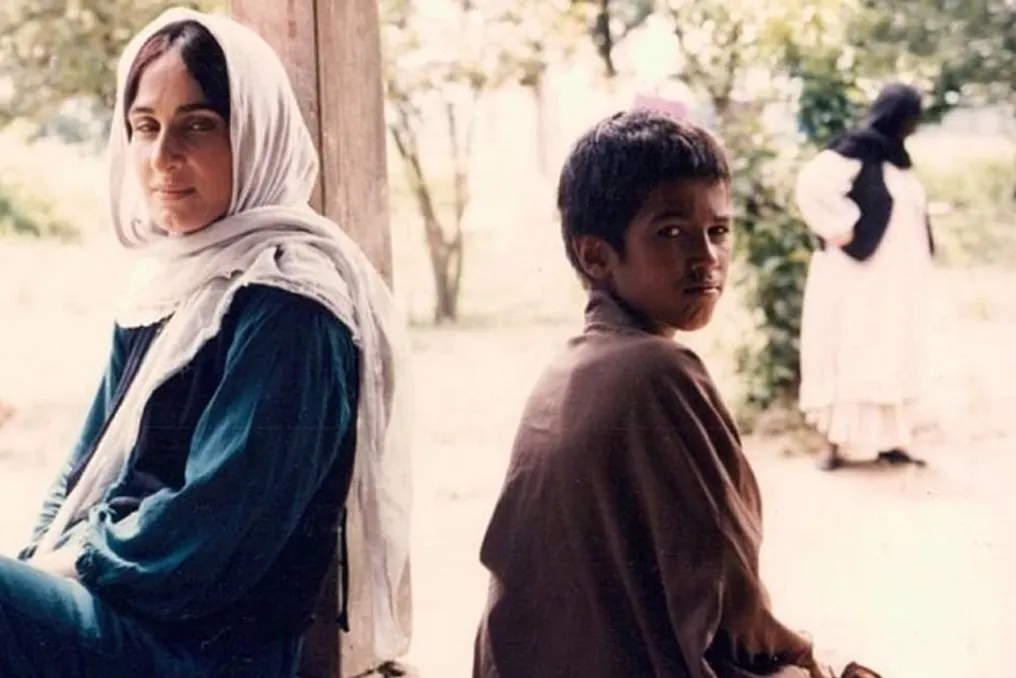
In Montreal, Canada, the restored version of the iconic Iranian director Bahram Beyzai's film 'Bashu, Stranger' is scheduled to be screened at the Cinéma Moderne theater. This film will be presented in 4K format on Wednesday evening at 8:30 PM local time with English subtitles.
This screening offers viewers an opportunity to reacquaint themselves with one of the significant works of Iranian cinema, which explores the human consequences of war, population displacement, and cultural differences.
According to information provided by the Public Relations and International Affairs Department of the Institute for Intellectual Development of Children and Youth (Kanun), the restored version of the film was prepared with the support of this institute in the Roshana studio to showcase the work to the public in improved visual quality.
The film, released in 1989, tells the story of a young boy from southern Iran who loses his home and family during the Iran-Iraq War. Fleeing bombings, he finds refuge in a village in northern Iran, where he encounters an unfamiliar environment, a different language, and cultural traditions.
There, he meets Nai, a village woman who gradually forms an emotional bond with the displaced person, despite the barriers between them. Their relationship forms the basis of the film, illustrating how compassion and human connection can overcome differences in language, origin, and experience.
This touching and acclaimed drama also carries subtle hints of human emotions such as love, acceptance, loneliness, and unfamiliarity. Through Bashu's journey, Beyzai analyzes the impact of war on children and civilians, touching upon broader themes of displacement, identity, mutual understanding, and acceptance of others.
The film depicts the child's struggle to find safety and belonging after violence, placing human relationships at the center of its narrative. 'Bashu, Stranger' is widely recognized as an iconic piece of Iranian cinema, as well as an important work in the country's cinema dedicated to children and youth. Its focus on the experience of a child affected by war gives the film a perspective that goes beyond the battlefield, highlighting the long-term personal and social consequences of conflict.
In 1999, 'Bashu, Stranger' was recognized as the best Iranian film of all time based on a survey of 150 film experts.
Bahram Beyzai, born in Tehran in 1938, was a renowned Iranian playwright, filmmaker, and scholar whose work combined Persian mythology, epic literature, particularly Ferdowsi's Shahnameh, and contemporary social issues.
Before moving into film in the 1970s, he established himself as a leading playwright and historian. Often called the Shakespeare of Iran, he was valued for his mastery of the Persian language and his exploration of Iranian history and cultural identity through drama.
Among his known works are 'Ballad of Tara' (1979), 'Death of Yazjerd' (1982), and 'Murder of Mad Dogs' (2001).
After moving to the United States in 2010, Beyzai continued his cultural and academic activities at Stanford University, teaching and conducting research on Persian theatre, cinema, and mythology. His unwavering creative dedication was also reflected in the manuscript 'Dash Aqol according to Marjan', completed five years before his death.
The screening in Montreal is part of efforts to present Iranian cinematic works to an international audience and bring restored versions of significant films to a new generation of viewers. The 4K presentation is expected to give viewers the chance to see Beyzai's work in enhanced image quality decades after its initial creation.
The screening also revives interest in a film whose themes of forced migration, cultural diversity, and solidarity remain relevant to modern discussions about the human cost of war.