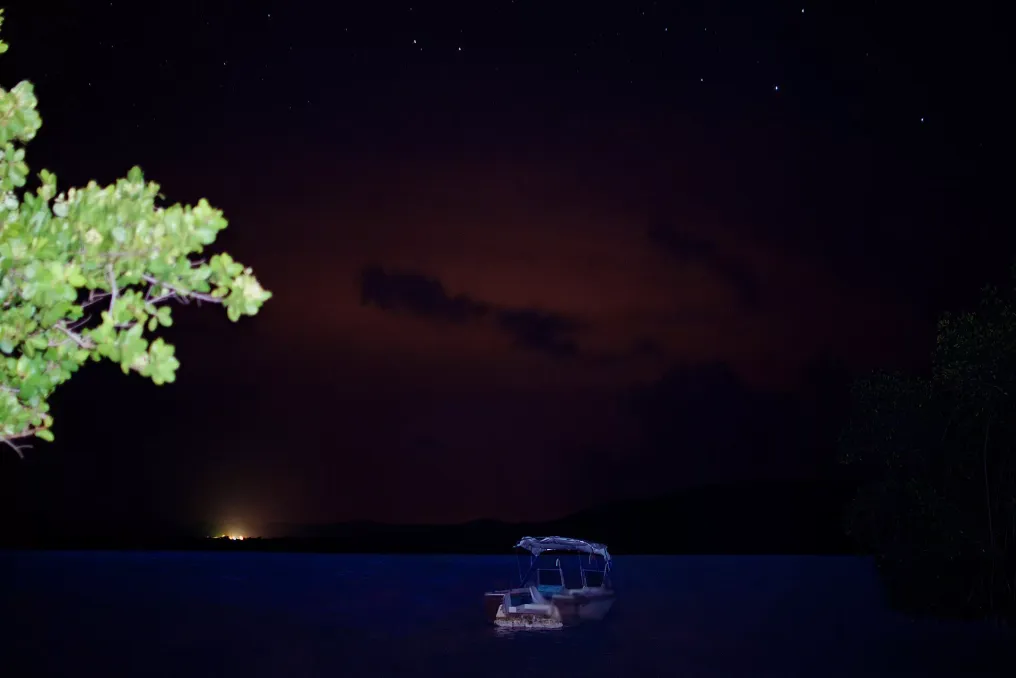
Beneath the surface of Mosquito Bay in Puerto Rico, microscopic organisms transform an ordinary nighttime water excursion into something exceptional. Located on Vieques Island, Mosquito Bay is recognized by the Guinness Book of Records as the brightest bioluminescent bay in the world.
When the water here is disturbed, it flashes with blue-green light, creating the impression of stars scattered beneath the water's surface. This spectacle looks almost otherworldly, yet its origin has a clear scientific basis.
The light is generated by microscopic marine organisms called dinoflagellates. In Mosquito Bay, the responsible species is Pyrodinium bahamense, which produces light through a chemical reaction when the water moves.
Even slight movement, whether from a kayak paddle, a swimming fish, or a hand touching the surface, can trigger tiny bursts of blue-green light. This effect is known as bioluminescence—a natural ability possessed by various marine life.
The exceptional brightness of Mosquito Bay is linked to the high concentration of these organisms and the environmental conditions that sustain them. The protected waters and surrounding mangrove forests contribute to the preservation of this ecosystem. The decomposition of mangrove leaves releases nutrients into the environment, supporting a wider food chain. The result is a natural light show that requires no artificial lighting, only the movement of water.
Vieques is located off the eastern coast of Puerto Rico, which is renowned for its beaches, protected landscapes, and slower pace of life. Mosquito Bay is one of three major bioluminescent bays in Puerto Rico, alongside Laguna Grande in Fajardo and La Parguera in Lajas.
The bay's reputation is based on the intensity of its glow. In 2008, the Guinness Book of Records officially recognized Mosquito Bay as the brightest bioluminescent bay in the world. Visitors typically witness this phenomenon during kayaking or boat tours after sunset. When paddlers disturb the water, glowing trails appear and disappear within seconds; even minimal movements can reveal flashes beneath the surface.
Darkness is necessary for a full experience. Without bright light competing with the glow, the flashes become more noticeable, turning the bay into a living night sky. Although the bay can glow year-round, its brightness depends on the state of the environment and the abundance of dinoflagellates, so the impressive sight is not guaranteed.
Moonlight also affects visibility. Trips during the new moon, when the sky is darker, can make the glow more apparent. Weather and water conditions can also influence the experience. The best way to plan a visit and learn about current conditions is to book a tour with an authorized local operator. Tourists should also manage their expectations: photographs may exaggerate the intensity of the bioluminescence, and the real experience depends on what the ecosystem produces that night.
The beauty of Mosquito Bay relies on a delicate natural balance. Mangrove forests, seagrass beds, and surrounding coral reefs contribute to the health of the coastal environment, while changes in water quality and habitat can negatively affect the organisms responsible for the glow. In 2017, Hurricane Maria damaged habitats throughout Puerto Rico, including areas around Vieques. Since then, restoration efforts have focused on reviving mangrove forests, seagrasses, and nearby coral reefs, with scientists and local communities working to strengthen the ecosystem.
Visitors also play a role in protecting this place. Swimming in Mosquito Bay is prohibited to preserve its sensitive environment. Adhering to tour rules, limiting artificial lighting, and avoiding unnecessary disturbances help maintain the conditions that make the bay so unique. Observing an entire patch of water light up due to organisms too small to be seen with the naked eye is an outstanding phenomenon where science meets a spectacle lasting only a few seconds but leaving an indelible impression.