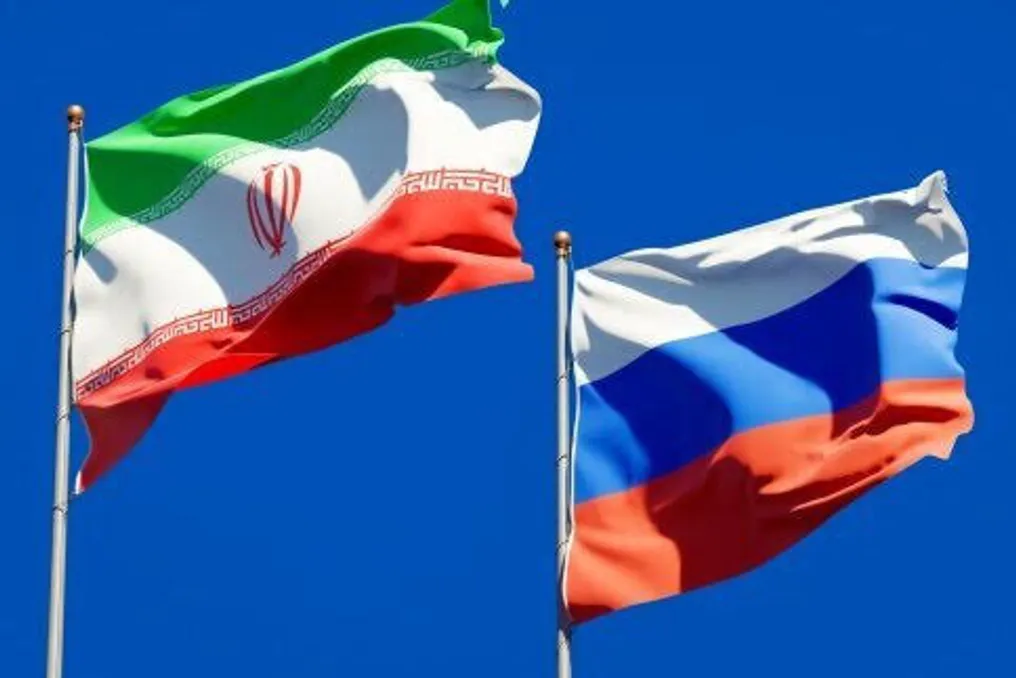
Mohammad Ali Dehghan Dehnavi, head of the Iranian Promotion of Trade Organization (TPO), in response to a question about the organization's measures to facilitate financial exchanges between Iranian traders and member countries of the Eurasian Economic Union (EAEU), especially Russia, noted that one of the important aspects of trade development is preferential and free trade agreements, which are actively developing recently.
According to ISNA, Dehghan Dehnavi stated at a press conference during the ceremony of the 30th National Export Day, dedicated to awarding exemplary national exporters, which will take place on October 21, about the process of implementing the free trade agreement with the EAEU. He emphasized that this agreement has shown positive results despite some negative decline in the country's overall export volume due to emerging problems, which indicates the potential for trade development in this market. The agreement eliminates tariff barriers: under the deal with the Eurasian Union, customs duties on 87 percent of goods have been reduced to zero, meaning there are no tariff obstacles for the export of this group of goods.
Speaking about non-tariff barriers, the Head of TPO noted that although the agreement provides for their elimination, this is not the main problem they are solving during trade negotiations. Among the non-tariff barriers between Iran and the EAEU member countries are payment systems and foreign currency transfers. Issues related to banking systems and alternatives to the banking system are within the competence of the Central Bank, and the Central Bank's colleagues have taken good measures in this area.
Regarding establishing financial ties with Russia, Dehghan Dehnavi stated that the possibility of conducting settlements and money transfers in national currencies has been ensured. Acknowledging that the conditions are not ideal due to sanctions creating difficulties, especially since banks and financial institutions on the other side are not ready for full cooperation due to the consequences of sanctions, he added that the conditions for financial operations with Russia are more suitable compared to many other countries, and this is not the main concern in economic relations with the EAEU.
The Head of TPO named standards and customs issues as some of the most significant remaining non-tariff barriers in trade with the EAEU. He reported that the National Standards Organization and Customs of the Islamic Republic of Iran are working to reduce these barriers. It was also announced that joint committee meetings between Iran and the EAEU will be held. According to Dehghan Dehnavi, the Minister of Trade of the EAEU will visit Iran in the coming days. Responsibility for the joint committee on the agreement between Iran and the EAEU lies with the Iranian side, namely the Minister of Industry, Mining, and Trade, and with the EAEU side, the Minister of Trade of the EAEU.
On October 6, an official representative who stated the need to increase Iran's share in the Russian market noted that the country imports about $300 billion annually from various countries around the world, and despite the progress made, Iran's share in this large market remains insignificant.
At the First Iran-Russia Trade Development Summit, held in the Gilan Free Zone and covering the provinces of Gilan and Astrakhan, Dehghan Dehnavi emphasized that developing economic and trade cooperation with Russia is one of the priority programs of recent years, and the implementation of the Free Trade Agreement between Iran and the Eurasian Economic Union has become one of the most important steps on this path. He specified that this agreement has been in effect since April 2025, and based on it, customs duties on 87 percent of goods in Iran's trade with five EAEU member countries, including Russia as the largest, have been reduced to zero.
The Deputy Minister of Industry, Mining, and Trade continued that the zeroing out of tariffs has created a competitive advantage and strength for Iranian traders, allowing exporters to use this opportunity to surpass competitors in the markets of EAEU member countries. He stressed that economic and trade convergence with the EAEU member states must continue, and this opportunity must be maximized so that all economic entities and existing national capabilities work towards increasing Iran's share in the Russian market.
The Head of TPO, speaking about existing opportunities to increase exports to Russia, reported that according to studies conducted, over $50 billion of Russian imports match goods that Iran is capable of exporting. Activating this potential could increase Iran's exports to this country from the current $1–2 billion to $10 or even $20 billion. Dehghan Dehnavi added that besides this potential, new opportunities need to be created, and activating them requires planning and establishing direct contact between the economic entities of the two countries.
Highlighting the special position of Gilan province in trade with Russia, the Head of TPO noted that in addition to production capacity and export products, this province can serve as a logistics hub and a trade gateway for the country. He explained that the province is connected to Russia, as well as Kazakhstan, Azerbaijan, and Turkmenistan, by sea, land, and rail routes, providing additional opportunities for trade development. He also mentioned that part of the railway project is being completed, and rail connections are currently being established at the border; moreover, some goods arriving from China to the region arrive at the Port of Anzali via Kazakhstan and Aktau, from where they are distributed throughout the country. The Head of TPO concluded that these opportunities show that Gilan can become a major commercial center of the country, in addition to developing its own trade. To achieve this goal, it is necessary to complete the required infrastructure and define new areas of activity for the private sector.
Dehghan Dehnavi emphasized the importance of sending trade delegations to develop economic relations. He believes that holding this summit and subsequent planning for sending delegations will be effective in developing trade between the two states. He added that every trade interaction, conversation, exchange of business cards, and negotiations between economic entities lays the foundation for a new contract, export or import, joint cooperation, and investment. He recalled the long-standing ties between Gilan and Astrakhan provinces, noting that these relations should develop in the field of investment, and both sides can make joint investments in each other's potential to strengthen trade.
The Head of TPO also pointed out that some problems are caused by sanctions and external restrictions, while others are related to internal issues, including numerous laws and regulations, systems, regulatory instability, and administrative bureaucracy. Their efforts are aimed at facilitating the trade route, at least regarding internal obstacles under government control, and good measures have been taken and are being taken in this regard.
Dehghan Dehnavi announced the development of an export support package by the Ministry of Industry, Mining, and Trade. This package was presented to the government and will be introduced next week, and it includes various support measures to strengthen exports. He also mentioned measures being taken in the Government Economic Committee jointly with the Ministry of Industry, Mining, and Trade, the Central Bank, and the Ministry of Economy and Finance. It was noted that regulations in the field of trade are being developed, and upon their approval, some trade barriers will be eliminated. Dehghan Dehnavi cited one such case as the reform of the order registration process, proposing to return order registration to its original function—declaring a trade plan—and to exclude controls that can be carried out at the customs clearance stage from the order registration stage.
Emphasizing that existing obstacles should not prevent the utilization of the country's trade potential, the Head of TPO stated that the private sector of Iran has demonstrated the ability to open trade routes through initiative and effort, despite restrictions. He considered the holding of the First Iran-Russia Trade Development Summit in Gilan as a measure to strengthen economic ties and expressed hope that its results will become evident in the coming months and years in the form of increased exports from Gilan to Russia and other countries. Dehghan Dehnavi also announced the appointment of a new trade mission to Gilan in connection with one of the provinces of China, expecting that this province, with proper planning, will utilize new opportunities for trade development.
The First Iran-Russia Trade Development Summit took place in the Ebtehaj Hall of the Anzali Free Zone. The summit, focused on the provinces of Gilan and Astrakhan, was attended by Mohammad Ali Dehghan Dehnavi, Head of TPO; Teymur Purkhaydari, Head of Iran's Export Development in Astrakhan and CEO of Gilan's Industry, Mining, and Trade; Sergey Vladimirovich Azarov, Consul of the General Representation of the Russian Federation in Rasht; Ahmad Heidarian, Consul of the General Representation of the Islamic Republic of Iran in the Russian Federation; Hadi Haqshenas, Governor of Gilan; and Mostafa Taati Mohammad, CEO of the Anzali Free Zone. The purpose of the summit was to study the opportunities, advantages, problems, and challenges of trade between Iran and Russia, especially Gilan and Astrakhan as entry points for trade between the two countries. The summit included two specialized sessions: reviewing problems and obstacles to the development of non-resource trade between Iran and Russia through the gates of Astrakhan, and from problems to solutions—the role of executive bodies in promoting Iran-Russia trade and studying ways to access Russian and Eurasian markets through the gates of Astrakhan.