Step-by-step guide to making traditional Roka for Navaratri festival
Read more
IOL
iol.co.za

Step-by-step guide to making traditional Roka for Navaratri festival

Kinan Blake presents a step-by-step instruction on how to make traditional Roka, which is a religious dish associated with the celebration of Navaratri.

The following ingredients are required to prepare this dessert: 5 cups of flour, 2 cups of sugar, ¾ cup of ghee, 2 tablespoons of cardamom powder, and ghee for frying.

The cooking process involves mixing all listed components until a homogeneous mass is obtained. Then, enough milk must be added to form a soft dough, and it should be kneaded until smooth.

The dough should be left to rest for 15 minutes. After that, small balls should be formed from it, then flattened into discs, and fried in ghee heated to medium or low heat until golden brown.

Similar stories

Durga Puja pandal in Ranchi to feature theme using golgappe and jhalmuri
Read more
www.aajtak.in

Durga Puja pandal in Ranchi to feature theme using golgappe and jhalmuri

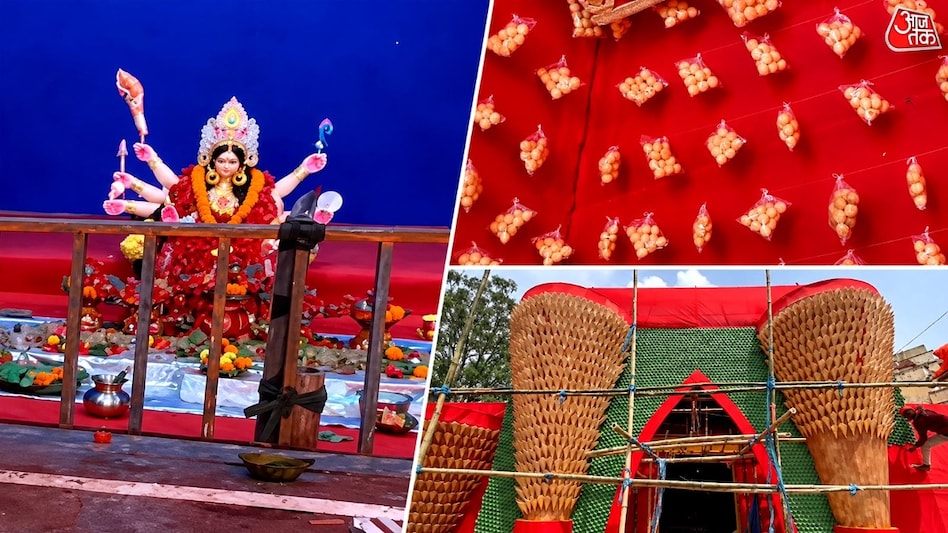
Attractive pandals are created annually during the Durga Puja celebration in Ranchi. This year, the celebration committee decided to deviate from traditions and apply a new concept. The pavilion dedicated to worshipping Goddess Durga will be decorated with a theme of golgappe and jhalmuri, which promises to be a special spectacle for visitors. Special attention will be paid to the interior decoration of the pavilion, made from golgappe, which, according to organizers, is expected to attract public attention.

Organizers believe that golgappe and jhalmuri are not just food items; they are used to reflect life experiences. It is noted that life has both bitter and sweet moments, and the taste of golgappe evokes similar sensations. Meanwhile, jhalmuri is known for its spicy and tangy flavor. Thus, the pavilion's theme represents different facets of life through tastes.

According to Kundan Singh, an organizer of the committee, the meeting took place in Shukla Colony, Hinu. The discussion focused on what could be done in the pavilion after changing venues to make it a center of attraction for people. It was after this that the idea of decorating the pavilion with a golgappe and jhalmuri theme arose. Artisans from Bengal are also participating in the preparation and decoration.

Jhalmuri is a popular food item in Bengal, and it recently also garnered attention during the Bengal elections. In Ranchi, references to Bengali culture and traditions have always been displayed during Durga Puja. This time, an attempt was made to give this kinship a new resonance through the theme of jhalmuri and golgappe.

Committee member Shambu expresses hope that the pavilion will appeal to devotees this year. The golgappe and jhalmuri theme may interest people of all ages. The committee is confident that the unusual decoration will attract people not only for worshiping Goddess Durga but also to visit the pavilion itself. Ranchi is known for its grand events and beautiful pandals during Durga Puja. The new theme with golgappe and jhalmuri has generated heightened interest. Now it remains to see how much visitors will like this combination of taste and culture.

A Deep Lesson of Navaratri: Devotion Must Lead to Personal Transformation
Read more
iol.co.za

A Deep Lesson of Navaratri: Devotion Must Lead to Personal Transformation

The festival of Navaratri poses a fundamental question to people: what must change within us on the tenth day after nine nights of fasting and devotion? It is easy to observe the festival, but much harder to achieve inner transformation. Performing the ritual, offering prayers, and participating in traditions passed down through generations are simple. The true test of devotion manifests later: in our interactions, the decisions we make, our patience, our ability to overcome mistakes, and the compassion we show others.

For this reason, Navaratri goes far beyond the nine nights of religious rites; its core is a call for inner transformation. From October 11th to 19th, millions of Hindus will worship various manifestations of the Divine Mother. During this time, homes will be purified, altars decorated, temples filled, and communities gathered for celebration. However, beneath all the colors, music, dances, and rituals lies a deeper purpose—to awaken the qualities embodied by this festival within ourselves.

The nine nights can be seen as a journey from weakness to strength, from ignorance to wisdom, from fear to courage, and from selfishness to compassion. The divine forms we worship embody qualities that expect not just admiration from us, but active cultivation. Their battle against evil prompts us to confront our own internal enemies—anger, arrogance, envy, greed, especially selfishness, impatience, and indifference. This is where the meaning of Navaratri becomes personal.

One can perform all the rituals while remaining unchanged. One can pray for hours while continuing to speak rudely to loved ones. One can fast for purification while harboring resentment. One can revere Shakti, the divine feminine power, yet fail to show respect and dignity to women in one's own life. If devotion does not affect behavior, something important has been lost.

Thus, Navaratri calls for taking spirituality beyond the temple. Fasting can teach self-control. Prayer can foster humility. Stories can inspire courage. Worship reminds us that power carries responsibility. And the presence of family and community reminds us that our spiritual life ultimately reflects how we treat other people. Above all, Navaratri must deepen compassion.

What good is worshipping the Divine in a certain form if we cannot recognize dignity in the person standing before us? What does devotion mean if it does not make us more patient with children, more caring towards the elderly, more generous to the vulnerable, and more respectful to those who think or worship differently?

Our traditions have provided us with powerful stories and enduring symbols. But their purpose is not merely to preserve the past; they are intended to shape the present. Otherwise, religion risks becoming a ritual without reflection, and celebration—a transformation without change.

Perhaps this Navaratri we should ask ourselves some simple yet uncomfortable questions: Am I becoming more truthful? More disciplined? Less angry? More compassionate? Less judgmental? Bolder in defending what is right? More willing to serve? And ultimately, am I becoming a better person?

These questions are important because our children watch us. They learn about Hinduism far more from our lifestyle than from the number of rituals we perform. They absorb dharma from our choices when no one is watching. They understand compassion when they see it practiced. This is the legacy worth passing on—not just the ability to perform a ritual, but the ability to live its meaning.

When the ninth night ends, the lamps will be extinguished, decorations removed, and ordinary life will resume. But the festival's purpose should not end with it. Discipline must remain. Courage must remain. Compassion must remain. The resolve to overcome our lower selves must persist.

The greatest tribute we can pay to the Divine Mother is not simply bowing before her, but becoming worthy of what she represents. May Navaratri become not just nine nights of worship, but nine nights that change our way of life for the remaining 356 days. Because the highest victory celebrated during Navaratri is not only the triumph of the Divine over evil in ancient history, but also the triumph of good within us over our inner weaknesses. And this victory must be renewed every day.

How to make Kuttu Atta at home for the Navratri fast: a simple recipe
Read more
www.aajtak.in

How to make Kuttu Atta at home for the Navratri fast: a simple recipe

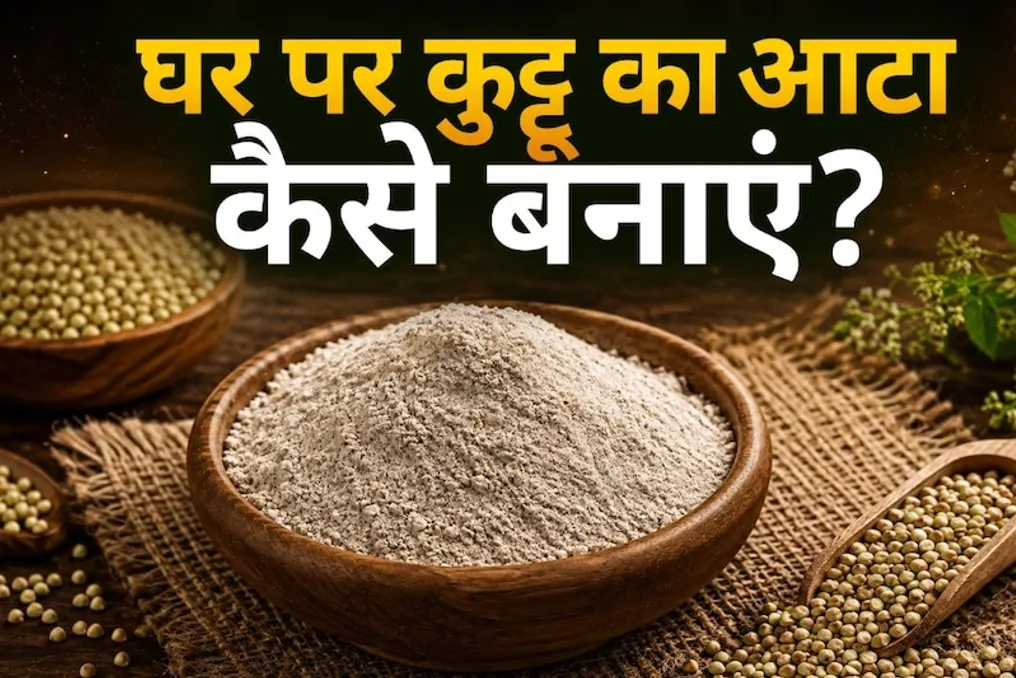
During the Navratri fast, various dishes are made from Kuttu flour. If you prefer to make fresh Kuttu flour at home instead of buying it in the store, you can easily prepare it from whole grains. This article presents a simple way to make Kuttu flour at home.

During the Navratri fast, people enjoy consuming bread, puri, paratha, and pakora made from Kuttu flour along with vegetarian food. Most people buy Kuttu flour from stores. However, sometimes the quality of the flour is low, or there is suspicion of impurities. In such cases, you can make fresh flour using whole Kuttu grains at home. Dishes made from it turn out tastier, and this process does not require many ingredients. Below is a simple method for making Kuttu flour for the Navratri fast.

What is needed to make Kuttu flour?

To make Kuttu flour, you will need 1 cup of whole Kuttu grains (bulgur), or you can increase the amount as needed. First, you must thoroughly clean the whole Kuttu grains of any stones or other impurities. If the grains need washing, wash them in a small amount of water, and then dry them completely. It is important that no moisture remains in the grains, otherwise, it can cause problems during grinding and storage of the flour.

Next, place them on a dry pan and heat the Kuttu grains lightly over medium heat for 3–5 minutes, stirring constantly so they do not burn. Over-roasting can negatively affect the taste of the flour. If you want to make flour from unroasted Kuttu grains, you can skip this step. The main thing is that the grains are completely dry.

After this, let the grains cool down. Then, grind them in a blender or meat grinder until they reach a fine powder consistency. The finished powder must be sifted through a fine sieve. If large particles remain in the sieve, they should be ground and sifted again. Thus, your fresh Kuttu flour will be ready.

Kuttu flour should be stored in a clean, completely dry, airtight container in a cool and dry place. When preparing Kuttu flour, several points should be considered:

  • Before grinding the grains, they must be thoroughly cleaned and completely dried.
  • Do not put too many grains into the grinder at once.
  • When roasting the grains, maintain medium heat and do not overheat them.
  • The flour should only be used after thorough sifting.
  • The flour should be protected from moisture and its freshness checked before long-term storage.

Thanks to this method, you can easily make Kuttu flour for the Navratri fast, using it to prepare bread, puri, paratha, and pakora to your liking.

Popular