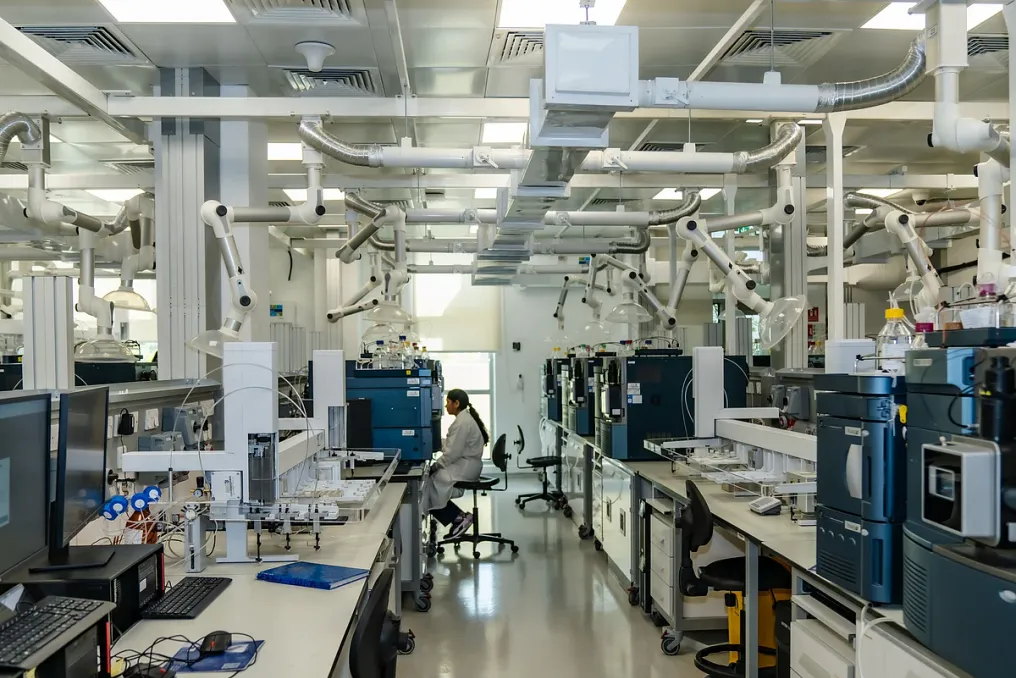
A laboratory in Abu Dhabi, in collaboration with an artificial intelligence partner, has achieved a scientific breakthrough by discovering a rare species of fungus in the emirate's wastewater.
This strain was identified as part of an early surveillance system by the Department of Intelligence for Monitoring and Oversight (Rasid) at the Central Testing Laboratory of the Abu Dhabi Council for Quality and Conformity, in cooperation with M42.
The teams successfully detected and isolated the recently identified and rare genetic cluster of Candida auris—a pathogenic fungus resistant to antifungal agents—using Abu Dhabi's early wastewater monitoring system.
Candida auris has attracted global attention due to its ability to develop resistance to multiple antifungal agents and the complexities associated with controlling this pathogen in certain medical institutions. The World Health Organization has classified it in the Critical Priority Group among fungal pathogens.
The study, published in Communications Medicine, part of Nature Portfolio, reported the first known regional detection of the Candida auris Cluster VI through environmental wastewater monitoring, based on data available to researchers at the time of the study. These results deepen the scientific understanding of the pathogen's genetic diversity and aid in assessing emerging health risks.
The findings underscore the significance of wastewater monitoring as an additional and complementary source of information alongside clinical and medical surveillance. This method is capable of tracking indicators of pathogens and antimicrobial resistance, including antifungal resistance, thereby enhancing preparedness and ensuring a proactive response.
The research was based on a systematic analysis of over 23,000 wastewater samples. Researchers successfully isolated the fungus directly from the wastewater and confirmed its identity in the laboratory, rather than merely detecting its genetic traces.
The scientific methodology included isolate identification, whole-genome sequencing (WGS), genomic and phylogenetic analysis to determine clade classification, antifungal susceptibility testing, and the study of genetic markers associated with resistance.
The analyses allowed for the identification of various genetic clades of the fungus, including Cluster VI, and also revealed genetic markers and different patterns associated with resistance to specific antifungal drugs.
Samara Bin Salem, Director of Rasid, noted that the scientific value of this achievement lies in the ability of environmental monitoring to capture emerging health indicators and patterns of drug resistance, transforming them into actionable information for study and assessment.
She explained that the combination of laboratory isolation, whole-genome sequencing, and antifungal susceptibility testing allowed for the identification of Cluster VI and provided a more precise understanding of its genomic characteristics and resistance patterns.
Bin Salem added that Rasid aims to develop a scientific sensor system that goes beyond simply detecting the presence of something in samples, aiming instead to understand population-level changes, emerging risks, and indicators that may require early preparedness.
Dr. Bhuvanesh Shanmugam, one of the lead researchers involved in the study, and Senior Microbiologist and Laboratory Manager at M42, stated that the identification of Cluster VI contributes to scientific knowledge regarding the genetic diversity of Candida auris and its presence outside clinical settings.
He also noted that integrating genomic data with antifungal susceptibility testing provides a deeper understanding of resistance factors and supports the monitoring of emerging patterns or genomic changes of potential future significance.
Dr. Grzegorz Brudecki, a researcher involved in the study and Deputy Director for Environmental Sciences at M42, emphasized that continuous monitoring helps identify changes, trends, and unusual signals over time, distinguishing expected patterns from indicators requiring further analysis.
He noted that combining regular observation with advanced genomic analysis enhances the scientific value of environmental data and allows for the study of changes in pathogens, genomic patterns, and resistance indicators.
Sumaya Al Mansouri, one of the lead researchers involved in the study, said that the integration of sample collection, continuous monitoring, fungal isolation, whole-genome sequencing, and antifungal susceptibility testing allowed for a more accurate characterization and genomic classification of isolates and their resistance patterns.
She added that the results demonstrate the potential of wastewater monitoring to provide information on genetic diversity, antimicrobial resistance indicators, and emerging risks, supporting more proactive approaches to environmental surveillance.