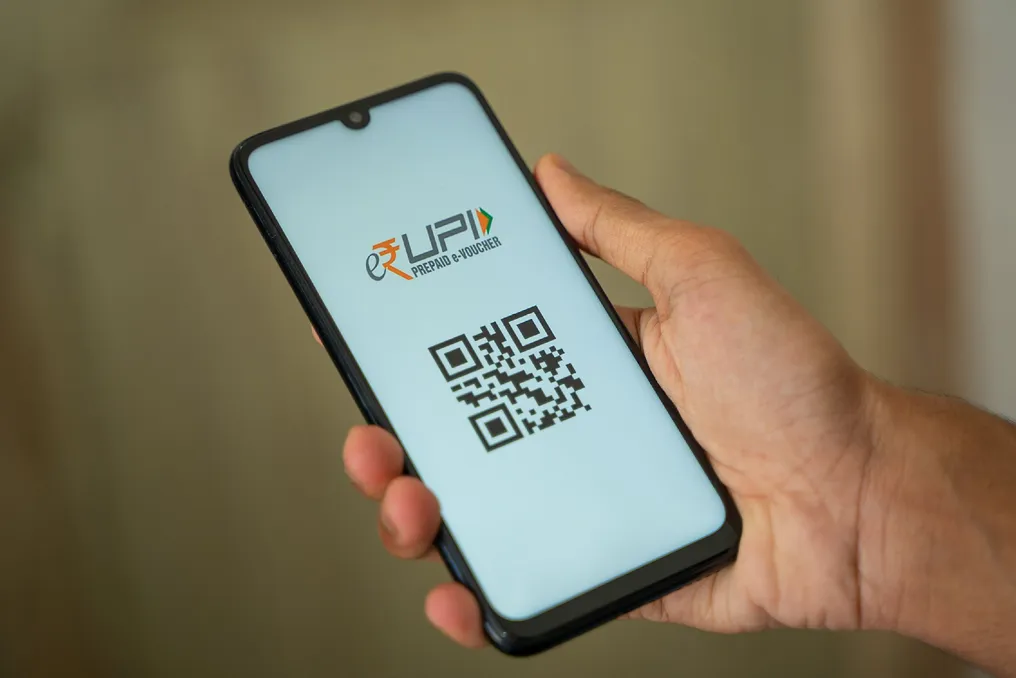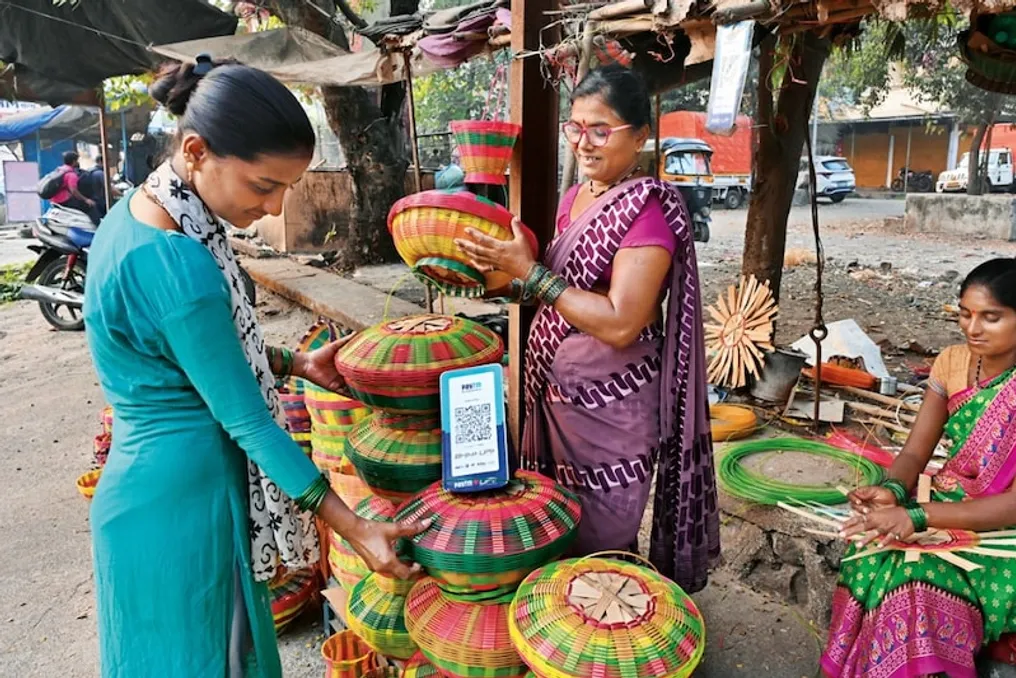
Government postpones introduction of MDR commission for UPI transactions until after Diwali
Read more
Aaj Tak
www.aajtak.in

Government postpones introduction of MDR commission for UPI transactions until after Diwali

The government has made an important decision regarding the Merchant Discount Rate (MDR) for UPI transactions, which were set to come into effect in two days. The commission will no longer be charged on certain transactions starting October 15th, and its introduction has been postponed until after the Diwali festival.

The central government had previously set the MDR rate at 0.40% for UPI transactions exceeding 2000 rupees, which was scheduled to begin on October 15th. Prior to this, the government had already announced significant support for certain transactions during the festive season.

Determination of New Date After Diwali

The UPI Services Management Committee has decided, considering the upcoming festive season, that the MDR for specific 'person-to-merchant' (P2M) transactions will be introduced after Diwali. Further details regarding the exact date of this commission's implementation will be communicated later.

This is good news for traders during the holidays, as Diwali, Dussehra, Navratri, and other festivals are periods of peak market activity. The Confederation of Trade and Industry (CTI) had previously urged a postponement of this decision, citing potential serious damage to trade.

Thus, the UPI Services Management Committee of the National Payments Corporation of India (NPCI) has decided to delay the application of MDR for selected merchants until after Diwali, providing relief to traders across the country, including Delhi.

Conditions for Applying MDR

Previously, a document was published on September 14, 2026, within the UPI MDR framework, and in subsequent days, NPCI released a full circular defining the new MDR structure for UPI payments. According to the established structure, the MDR is set at zero for transactions under 2000 rupees, while an MDR of 0.4% applies to UPI payments above this threshold for person-to-merchant transactions.

The government's circular also clarified that different charges will apply to transactions in the range of 5 to 300 rupees depending on the category.

The government provided MDR concessions not only for specific sectors but also for small entrepreneurs. Specifically, sellers who receive up to 100,000 rupees monthly via their shop's QR code have been included in the zero MDR category.

Fixed MDR Rate Model

Furthermore, according to the circular issued by NPCI, five categories of UPI payments have been included in the Fixed MDR Rate Model. This means that a uniform fee will be applied regardless of the payment amount. The government has set a preferential rate of 5 rupees per transaction. Consequently, even if a UPI payment exceeds 2000 rupees, 10,000 rupees, or more, the MDR will only be 5 rupees.

These categories include payments at petrol pumps, UPI railway transactions, insurance premium payments via UPI, telecommunication service payments, and utility payments such as water and electricity.

Similar stories

NPCI postpones MDR collection on some UPI transactions until after Diwali
Read more
business-standard.com

NPCI postpones MDR collection on some UPI transactions until after Diwali

The National Payments Corporation of India (NPCI) has decided to postpone the introduction of the Merchant Discount Rate (MDR) charge on certain UPI transactions until after the Diwali festival. This decision was made just two days before the originally planned effective date, while the structure of the proposed commission remains unchanged.

The delay provides sellers with a respite during the busy festive season. The MDR was initially scheduled to begin on October 15th. According to an NPCI statement, the UPI and Services Management Committee has decided that MDR for selected 'person-to-merchant' (P2M) type transactions will be introduced immediately after Diwali, and a new date will be communicated separately.

It has been confirmed that the MDR structure itself will not change. MDR is a fee paid by the merchant to the bank and payment company processing the digital transaction.

What is the proposed UPI MDR structure?

This charge will apply to UPI transactions made by merchants exceeding 2000 Indian Rupees. The MDR rate is set at 0.40 percent, but has a ceiling of 300 rupees. Additionally, a fixed fee of 5 rupees will be charged for certain categories of merchant transactions, such as bill payments, fuel, and education.

Before the October 15th deadline, there was discussion about postponing the implementation date to January 1st. However, clarification from NPCI indicates that the charge will come into effect shortly after Diwali. Previously, retail trade associations had demanded a 'UPI-free day' on October 2nd in protest against the proposed commission, but they withdrew their protest after meeting with Union Finance Minister Nirmala Sitharaman.

In September, UPI reached a record average of 802 million transactions per day, with the average daily transaction value amounting to 97,913 crore rupees. Transaction volume grew by 22.6 percent compared to the previous year, reaching 24.07 billion, up from 19.63 billion the year before. The total transaction value increased by 18 percent to 29.37 trillion rupees from 24.89 trillion.

Month-on-month transaction volume decreased by 1.8 percent compared to August (24.51 billion), partly because September had 30 days while August had 31. Transaction value decreased by 1.5 percent to 29.37 trillion rupees from 29.82 trillion.

IIT Bombay study suggests reducing UPI MDR commission from 0.40% to 0.08%
Read more
www.aajtak.in

IIT Bombay study suggests reducing UPI MDR commission from 0.40% to 0.08%

According to a study conducted by IIT Bombay, several measures are proposed to optimize the UPI payment system. These proposals include lowering the discount commission rate for merchants (MDR), eliminating the share of banks in this commission, and introducing a digital payment fee for large commercial enterprises.

UPI has transformed payment methods—from small stalls to large shopping centers and online stores, allowing payments via QR code scanning. However, the question arises as to who will cover the costs of services, payment applications, banks, and other service providers. The IIT Bombay study, conducted by Professor Ashish Das and former RBI employee Pragna Das under the work 'UPI at a Crossroads: Reintroducing the MDR', aimed to answer this question.

Proposal to reduce MDR to 0.08%

The study recommends reducing the MDR rate for certain UPI transactions from the current 0.40% to 0.08%. Furthermore, it proposed reviewing the distribution of shares among various companies and banks in the payment system. According to the study's main recommendations, third-party applications such as PhonePe and Google Pay should set the MDR at 0.06%, while payment service providers, mainly banks, should be allocated a share of 0.02%. It was also suggested to exclude the bank's share from the funds received from MDR.

The UPI system should function based on the interest margin received by banks from Current Account and Savings Account (CASA) balances. The report indicates that in the 2025-26 financial year, the net interest margin of banks from CASA deposits exceeded 4.85 lakh crore rupees. The study's argument is that banks should contribute to maintaining and improving the UPI system specifically from this source.

What proposals were put forward?

The IIT Bombay study suggests using about 3% of funds related to CASA deposits, which amounts to approximately 15,000 crore rupees, to support the UPI system. A recommendation was also made to make UPI an essential service for the banking business. It is proposed to define the responsibility of banks for maintaining and expanding the digital payment system. Moreover, the study suggests increasing the role of large commercial enterprises in covering the operating costs of the UPI system. To achieve this, it is proposed to mandate that enterprises with an annual turnover of 50 crore rupees or more accept UPI payments. A corresponding digital payment fee can then be charged to these enterprises upon receiving online payments.

Other recommendations from the IIT Bombay study include setting a commission for UPI proportional to the transaction amount (ad-valorem), with a maximum limit of 40 rupees per transaction. It is also proposed to consider reducing the MDR for credit cards to narrow the gap in commissions between different digital payment methods. The study also raises the issue of re-examining the established limit for free cash withdrawals at ATMs. Additionally, the need to continue the Payment Infrastructure Development Fund to assist new businesses in connecting to the digital payment system is mentioned. Thus, the IIT Bombay study continues the discussion on the distribution of income and expenses in the digital payment system, with the final decision resting with the government and relevant regulators. The main task for ordinary citizens is to ensure the sustainable functioning of UPI's convenience.

How will this affect ordinary people?

The most important question is whether ordinary people will have to pay for UPI payments. The goal of the study is to ensure sustainable coverage of the digital payment system's costs, and it does not contain recommendations for directly charging ordinary users for daily payments. According to the government scheme announced on September 15, 2026, an MDR rate of 0.40% was set for certain sellers. However, this commission will apply to sellers, not be passed on to customers. Furthermore, peer-to-peer payments and categories with established discounts are excluded from this rule.

Discount available from October 15!

Fintech companies and commercial enterprises demand that the implementation date of this system be postponed to January 2027. Many industry organizations believe that implementing the rules will be difficult without their full clarification. The main problem for the industry is that different rules apply to different types of transactions. This is because the UPI system is considered more complex compared to card payments, as there are separate rules for utility payments, a separate system for loan repayments, and a separate category for capital market transactions. Companies associated with the stock market point out that they do not receive direct profit from the money clients add to their brokerage accounts, thus questioning the imposition of MDR on these operations. In this regard, the industry has raised this issue before the regulators. The payment industry argues that there are many transactions that cannot be conducted using credit cards; previously, such payments were made through internet banking, IMPS, NEFT, and RTGS. Therefore, before applying MDR to UPI, clear rules are necessary for each category. Consequently, there is a demand not to implement this during the festive season. Banks and aggregators...

RBI Governor Sanjay Malhotra states that small MDR commission will not significantly affect UPI transaction volumes
Read more
yourstory.com

RBI Governor Sanjay Malhotra states that small MDR commission will not significantly affect UPI transaction volumes

Reserve Bank of India (RBI) Governor Sanjay Malhotra reported on Wednesday that the introduction of a 'small commission' in the form of a Merchant Discount Rate (MDR) will not have a 'significant impact' on UPI transaction volumes.

Speaking to journalists at the central bank's headquarters, he noted: 'Currently, we are not observing a decline in volumes. And I personally do not think that a small commission will have a significant impact on volumes.'

It is worth noting that last month the government permitted the collection of MDR, under which transactions exceeding 2000 rupees are subject to a 0.4% commission.

Speaking to journalists several hours after the rate hike announcement and emphasizing that a rate reduction is ruled out, Malhotra stated that bank credit growth will remain strong in the future and continue to contribute to overall economic activity.

He acknowledged that the RBI is aware of the potential negative impact on asset quality for non-bank lenders amid liquidity surplus, but clarified that the central bank does not expect such a development.

Furthermore, he added that systemic liquidity will not remain in such a high surplus as in recent weeks for a very long time.

The career bureaucrat who became a central banker pointed to the FCNR(B) scheme, through which banks attracted nearly $133 billion in deposits from the diaspora under a preferential swap mechanism, as an example of the strength of the country's macroeconomic fundamentals. He also expressed confidence that banks will use the attracted funds wisely.

Malhotra mentioned that external difficulties have led to a decrease in flows and added that pressure on the current account is a temporary phenomenon. He radiated confidence in the swift return of the balance of payments to surplus, citing several supporting factors.

Malhotra declined to comment on the issue of RBI rejecting Tata Sons' request to revoke the NBFC license and asking the largest business conglomerate to bring its operations into compliance with top-tier NBFC norms, which is at the center of a protracted dispute between major owners and the holding company's management.

Popular