Since 2022, forecasts have regularly warned that cascading military and political upheavals—including the war in Ukraine, the Middle East conflict, accelerating trade wars, the militarization of sanctions, and energy supply disruptions—will ultimately exceed the global economy's capacity to absorb shocks. However, the most devastating scenarios have not yet materialized.
As IMF Director Kristalina Georgieva noted last year when presenting the World Economic Outlook, the world economy has 'generally withstood significant pressures from various shocks.' Nevertheless, a closer examination reveals that this resilience is a more fragile and debatable achievement than it appears at first glance.
The adaptation mechanisms underpinning this stability are observable and measurable: trade flows are being rerouted instead of collapsing, energy corridors are diversifying, and reserve managers have quietly been restructuring the architecture of the international monetary system over the past three years.
According to a survey by the World Gold Council Central Bank for 2026, which included 76 institutions—the highest figure in nine years—89 percent of central banks expect growth in global gold reserves next year, with a record proportion planning to replenish their reserves.
As a result, gold surpassed US Treasury bonds as the largest component of central bank global reserves for the first time since the mid-1990s.
Reasons for the shift in reserves
Analysts tracking this shift directly link it to one event: reserve managers were alarmed by the confiscation of the Central Bank of Russia's reserves by Washington at the start of the war in Ukraine and have since actively reduced the share of the dollar in their portfolios.
Debt of this magnitude narrows the fiscal space available to absorb the next shock, whether military or otherwise, which is precisely what makes today's stability difficult to forecast for the future. This clearly demonstrates that the economic system is not collapsing under political pressure but is adapting to it—flexibly and, critically, without breaking the links that ensure the functioning of global trade and finance.
In other words, central banks accumulating gold are not leaving the system; they are simply hedging risks within it. However, adaptability comes at a cost, and this cost is rising.
Global debt—government, household, corporate, and financial combined—exceeded $365 trillion in the first half of 2026, according to the Institute of International Finance's Global Debt Monitor, marking the sixth consecutive quarterly record. Only the debt of emerging markets increased by $6.5 trillion during the same period, surpassing $110 trillion. Georgieva spoke directly about the trajectory: speaking at annual meetings of the IMF and the World Bank, she warned that global public debt is projected to reach 110 percent of global GDP by 2029.
There is a clear unwillingness to address what is not a crisis in the balance sheet of any single state, but rather a structural shift that all major economies seem aware of, yet no one is willing to correct unilaterally.
In this context, there is also the 'mother of all ticking bombs'—the nuclear threat: the US federal debt of $40 trillion, which US Treasury Secretary Scott Bessent is desperately trying to control.
The third aspect—the onslaught of punitive political measures aimed against market principles—is best illustrated by the fate of the frozen reserves of the Central Bank of Russia. Approximately $300 billion in Russian state assets have been frozen globally since 2022, with about 210 billion euros ($235 billion) held in the European Union.
Erosion of neutrality
Instead of remaining in a legal vacuum, these reserves have become a financial engine for a specific political outcome: the EU's proposed loan of 140 billion euros ($157 billion) to Ukraine, structured so that Ukraine will repay it only after Russia itself pays its war losses—which effectively turns the sanction freeze into a grant.
The Central Bank of Russia filed a lawsuit against the Brussels-based custodian Euroclear, which holds most of these assets, calling the measure illegal. Regardless of one's view on the conflict itself, economists are increasingly pointing to the precedent: the first large-scale use of frozen state reserves as collateral for a geopolitical objective changes the calculations for every state holding reserves that observes the Western bloc.
This is another indicator confirming the trend of gold accumulation described above and a vivid example of how political tools aimed at one adversary can undermine the perceived neutrality of the system itself.
A parallel erosion is occurring in trade management. The WTO Appellate Body (which should resolve trade disputes between countries) has not functioned since December 2019 after the United States blocked the appointment of new judges, and negotiations for its revival or replacement remain deadlocked. More than 30 appeals are currently unresolved, and the workaround mechanism created to fill the gap—the Multilateral Interim Appeal Arbitration Arrangement—has resolved only one case. The institution designed to prevent trade disputes from becoming a pure function of relative power has been quietly sidelined for seven years.
In this situation, the question arises: do the Global West and the Global East see the same picture? Data suggests convergence in diagnosis but divergence in meaning. Both sides acknowledge that debt is unsustainable and that institutions are under strain. However, while Western politicians tend to view sanctions, frozen assets, and trade paralysis as a defensive reaction to external aggression, voices from the Global East increasingly interpret the same tools as confirmation that the system was never as neutral as advertised.
Indian Foreign Minister S. Jaishankar highlighted this rift in 2022, telling European counterparts that Europe must 'shed the mentality' that its problems are everyone's problems, whereas the reverse is untrue.
Selective status
This is what many governments in the Global East thought but did not openly say: that the post-war order's claim to universality has always been more selective in practice than it seemed.
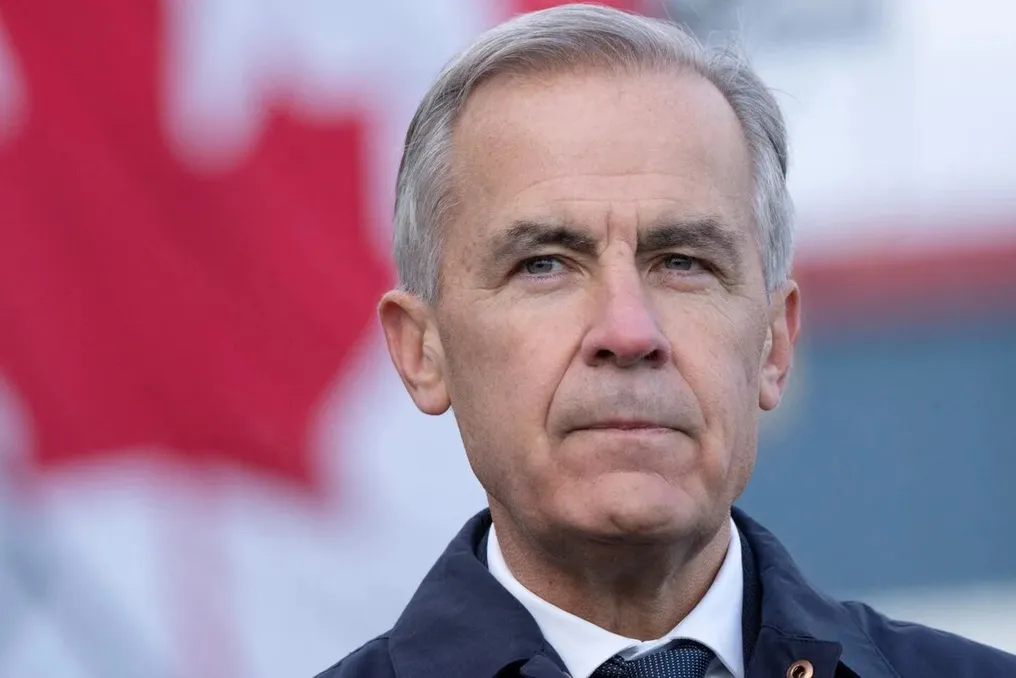
The most honest and candid Western leader to admit such an unfair situation was Canadian Prime Minister Mark Carney at Davos earlier this year. None of this means the system is about to collapse. The world economy proved to be more elastic than feared, absorbing shocks that could have triggered a real crisis ten years ago. But elasticity and durability are not the same thing.
The true test of this 'economy of resistance' is not whether it will survive the next military-political storm—it has survived them repeatedly. It lies in whether record debt, paralyzed trade dispute resolution architecture, and the normalization of state asset confiscation as a political tool will turn quiet short-term adjustments into long-term fragility, especially when the Global East and the Global West can no longer agree on what the system is truly meant to be.
[