EON Space Labs develops optical systems for satellites, drones, and ground platforms, aiming to reduce India's dependence on imported visualization technologies. The Hyderabad-based startup reached a significant milestone: its flagship Earth observation payload, named Mira, was successfully launched into orbit aboard SpaceX's Falcon 9 Transporter-18 mission on October 2, 2026. The company expects to receive the first images within the next ten days.
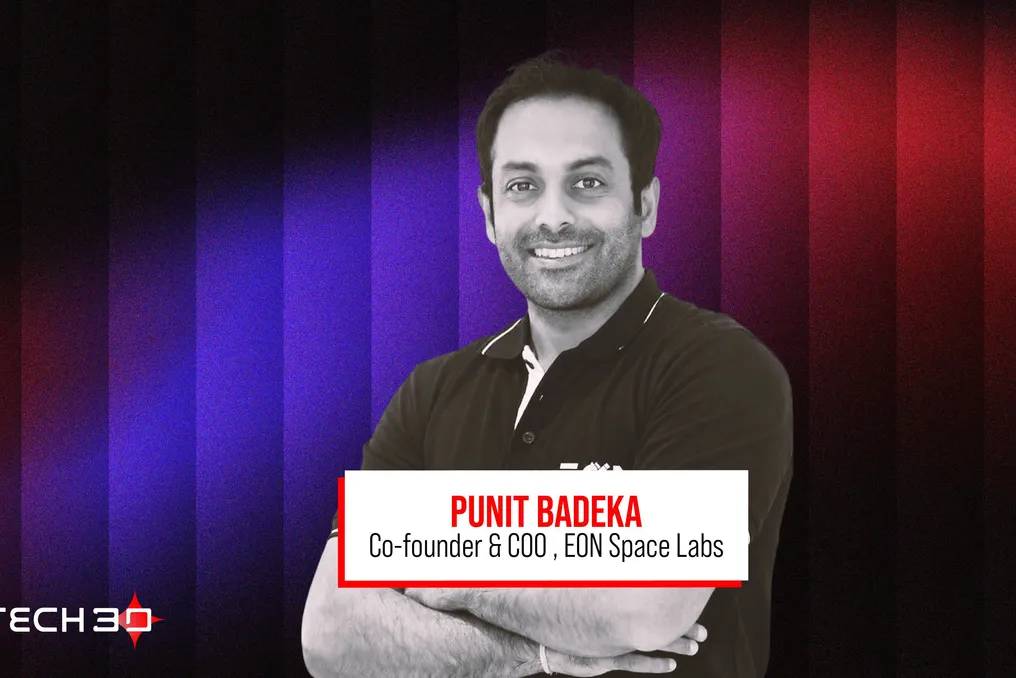
For Puneet Badeki, co-founder and COO of EON Space Labs, this mission is important not only from a technological standpoint but also in terms of establishing indigenous national capability. He emphasized that this proves the possibility of product localization, stating: 'We are proving that the product is designed and manufactured here, in India.'
The company has also obtained an Indian patent for Mira. EON's portfolio covers three areas: space, aerial, and ground. It includes Earth observation payloads, electro-optical/infrared (EONIR) systems for drones, and surveillance systems for ground applications.
Badeki reported that the startup actively collaborates with over seven companies in the space segment. In the aerial business, about 120 Indian companies show interest in EONIR payloads. Regarding the ground segment, the company works with approximately 12 organizations interested in perimeter surveillance, drone countermeasures, and airport monitoring systems.
One significant achievement is the development of a portable visualization system via iDEX. This system integrates short-wave infrared (SWIR), long-wave infrared (LWIR), and standard daylight cameras. The LWIR system uses germanium-free lenses, replacing a material that faced supply issues.
The COO noted that these germanium-free lenses are designed, developed, and manufactured from synthetically grown materials in India. Their availability and low cost reduce production time from six months to six weeks. This system has been tested on Indian Navy ships, where EON was able to detect vessels at a distance of about 30 km, even in low visibility conditions.
Additionally, a DIY telescopic setup has been developed for schoolchildren, allowing children to assemble the instrument and observe lunar craters. Future versions will be equipped with motorized tracking and artificial intelligence features.
Badeki stressed that the company's tripartite positioning is intentional. He stated that there is no company in the country that designs, develops, and manufactures such optical payloads as EON does.
EON's long-term goal is to control a large part of the optical manufacturing process. The COO expressed a desire to launch its own payloads to control the acquired imagery and use this data to improve optics. The company intends to leverage the experience from these flights to enhance optical quality by improving surface cleanliness and ultra-precision processing. Badeki noted that only a few machines in the country are capable of performing such high-precision optical processing, and EON has applied for government support to create this capability.
Currently, EON's optics are produced by the strategic investor Hind High Vacuum (HHV). The startup plans to eventually install its own ultra-precision machines in Hyderabad and transfer its design solutions there.
EON has received payload orders from Indian space technology companies, including Orbited Labs and Kepler Aerospace. Orbited Labs will use EON's payload in its SSLV mission, and Kepler Aerospace placed an order worth about 6–7 crore rupees for the iDEX program. Badeki added that for Kepler Aerospace, this will be a large constellation, and the company will ensure the use of its own optical systems and electronic readers during the optics production.
EON is currently preparing to raise about 40 crore rupees in a planned Series A1 round. These funds will be used for international commercialization of the Lumira aerial products, launching proprietary payloads, research and development, and establishing a cleanroom for precision optics work. EON Space Labs is part of the Tech30 cohort from YourStory—a showcase of India's most promising startups of 2026, presented at the TechSparks Bengaluru event.