Cement production is a significant source of carbon emissions in the construction industry; however, replacing it on a large scale without compromising performance remains a complex challenge. Although developers are ready to use eco-friendly alternatives, their offerings must match traditional materials in quality, cost, and availability.
Ecopath, based in Bangalore, aims to solve this problem with EcoConcrete—a cement-free building material made from steel mill slag.
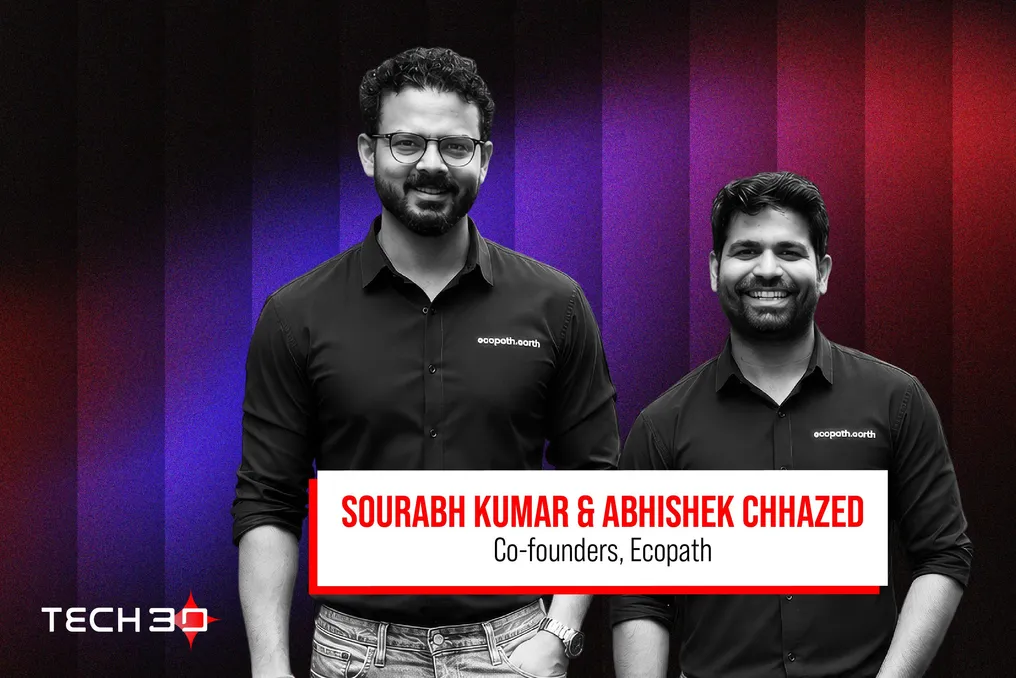
The startup was founded in 2024 by Sourav Kumar and Abhishek Chhazde, who leverage their experience in real estate and infrastructure. They noticed the growing demand for sustainable building materials but faced limited supply in industrial volumes.
Kumar notes that people were willing to use such materials, but no one offered products that were both absolutely high-quality and accessible in mass production. Ecopath's goal is to make low-carbon building materials commercially viable, rather than positioning sustainability as a premium offering.
By utilizing industrial waste as a substitute for cement, the company also seeks to reduce emissions from traditional construction and find applications for steel industry byproducts. Ecopath uses Ground Granulated Blast-furnace Slag (GGBS), a byproduct of steel production, combined with proprietary binders to mimic cement properties.
According to the company website, EcoConcrete can be used to manufacture paving tiles, curb stones, blocks, and ready-mix concrete. Kumar emphasizes that the production process eliminates the need for water-cementation, which reduces water consumption and lowers the carbon footprint associated with cement.
He adds: 'In our case, water is not required for cementation, so we save a lot of water and eliminate the associated footprint. We are able to provide materials that far surpass in quality and eliminate a significant carbon footprint from the ecosystem.'
The company has filed six patent applications, with five more currently pending. Kumar reported that clients were initially skeptical about the ability of the cementitious material to function like traditional cement products. However, their attitude improved after seeing the product itself.
'Initially, our clients were a bit apprehensive. They doubted how EcoConcrete could function as cement while being something else. But the moment they see the product, they are extremely satisfied, and this gives our clients more confidence,' he shares.
Ecopath has moved from the product development stage to commercial implementation. According to Kumar, the company has already achieved cumulative revenue of nearly 12 crore rupees and expects to exceed 50 crore rupees by the end of the current fiscal year. The startup has a team of 20 people and currently operates in Bangalore, Pune, Mumbai, and Hyderabad.
Expansion is planned to at least 20 cities across India, and inquiries are also being studied from the Middle East and Africa. Kumar believes that the sustainable construction industry should focus more on material quality rather than marketing claims. He warns: 'There is a lot of greenwashing happening, which definitely needs to stop. If your material is good, we have enough buyers in the market. But if we lose focus on the material and start concentrating only on marketing, it will harm the entire ecosystem.'
As it expands into new markets, the company focuses on maintaining product quality, building a distribution network, and ensuring the commercial viability of low-carbon building materials. Kumar concludes: 'Our speed and distribution set us apart, alongside the quality of the materials we produce.'