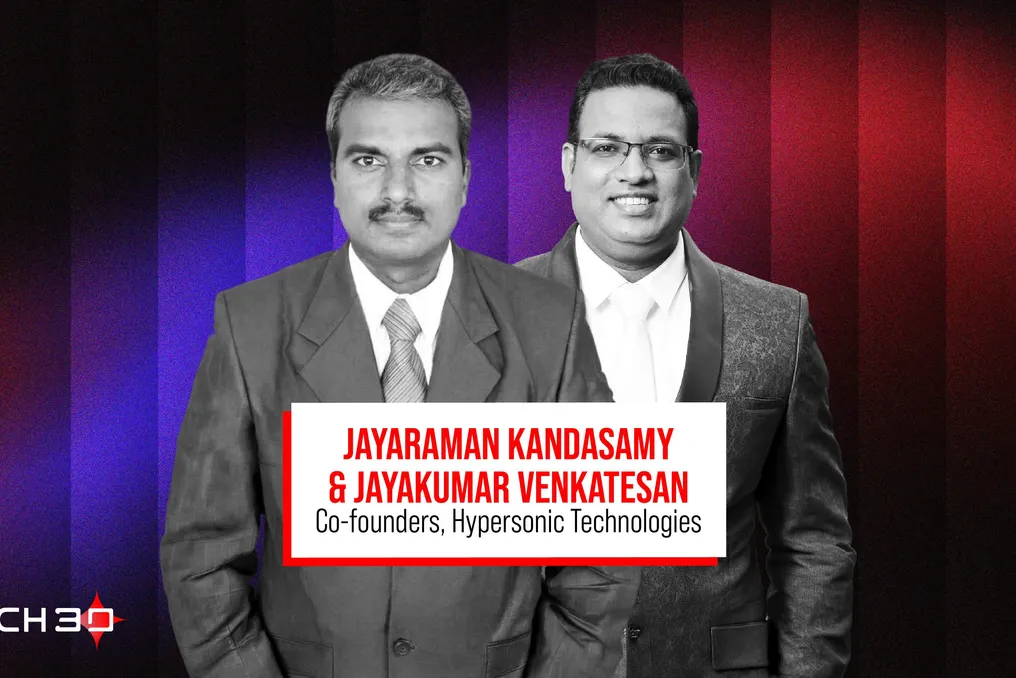
Hypersonic Technologies, based in Chennai, is developing an alternative method for hydrogen production that allows it to be obtained simultaneously with soot—a commercially valuable material used in the production of tires, rubber, and pigments. This process aims to help industries reduce greenhouse gas emissions.
The startup, founded in 2023 by Jayaraman Kandasan and Jayakumar Venkatesan, applies staged plasma pyrolysis technology to convert methane and biomethane into hydrogen and solid carbon. By obtaining two products simultaneously, the company seeks to help industrial clients offset production costs and reduce their environmental footprint.
Kandasan has over ten years of experience in Europe, where he worked on developing plasma technologies for the aerospace industry and researched ways to convert biomass into fuel and hydrogen-rich gaseous compounds. After returning to India, he founded Hypersonic Technologies to apply his expertise in industrial decarbonization.
He stated that the company's main goal is to use staged plasma pyrolysis technology to convert methane and biomethane into hydrogen and soot. The objective is to decarbonize industries such as refineries, metallurgy, cement and fertilizer production, while the soot is produced within the same process.
Plasma pyrolysis uses high temperatures to break down hydrocarbons into hydrogen and solid carbon. Hypersonic Technologies combines dielectric plasma with microwave plasma in two stages. According to Kandasan, this improves efficiency and increases process stability compared to single-stage systems.
The technology is aimed at solving emission problems associated with traditional hydrogen production. Kandasan notes that the widely used steam reforming of methane can emit about 10 kg of carbon dioxide for every kilogram of hydrogen produced. Furthermore, soot production also generates emissions.
He emphasized that both methods must transition to cleaner, climate-focused solutions, making this technology important. The company proposes using methane, which is sometimes simply burned, as feedstock for producing hydrogen and solid carbon.
The company's prototype has reached Technology Readiness Level (TRL) 5, meaning it has been validated in a relevant environment. According to Kandasan, the laboratory setup at IIT Madras produces approximately 500 grams of hydrogen per hour. The technology has been patented, and the startup has also reported validation through the government-supported NRDC-NETRA program.
The resulting soot is intended for industrial uses, including pigments, and the company is exploring the possibility of creating higher-quality grades. Kandasan mentioned that Hypersonic has held discussions with existing soot producers regarding potential collaboration, although the technology is still in its early stages.
He added that the advantage is that both hydrogen and soot can be monetized, not just the revenue from hydrogen.
Hypersonic Technologies targets refineries, steel producers, cement companies, and fertilizer manufacturers. The company is also considering various business models, which may include equipment sales, operational partnerships, and output-based payments.
The immediate task for the company is scaling up the prototype. Kandasan reported that transitioning from TRL 5 to TRL 7 requires about 50 million rupees, with plans to build a larger pilot reactor after securing funding. The startup is also seeking government support and has received the Carbon Zero Challenge grant.
He noted that as deep technology hardware startups, they require funding to advance the technology to the next level. Once a plant producing five kilograms of hydrogen per hour is built and the necessary validation stage is reached, the company will be able to take orders from refineries and steel companies.
Kandasan believes that the industry's adoption of the technology will largely depend on cost, as large producers cannot easily replace existing infrastructure. He sees the creation of new facilities as a more immediate opportunity than modernizing existing ones.
For Hypersonic Technologies, the next step is to demonstrate that their process can reliably and economically produce hydrogen and soot at a larger scale. The company is part of the Tech30 cohort from YourStory, representing India's most promising startups of 2026, featured at the TechSparks Bengaluru event.