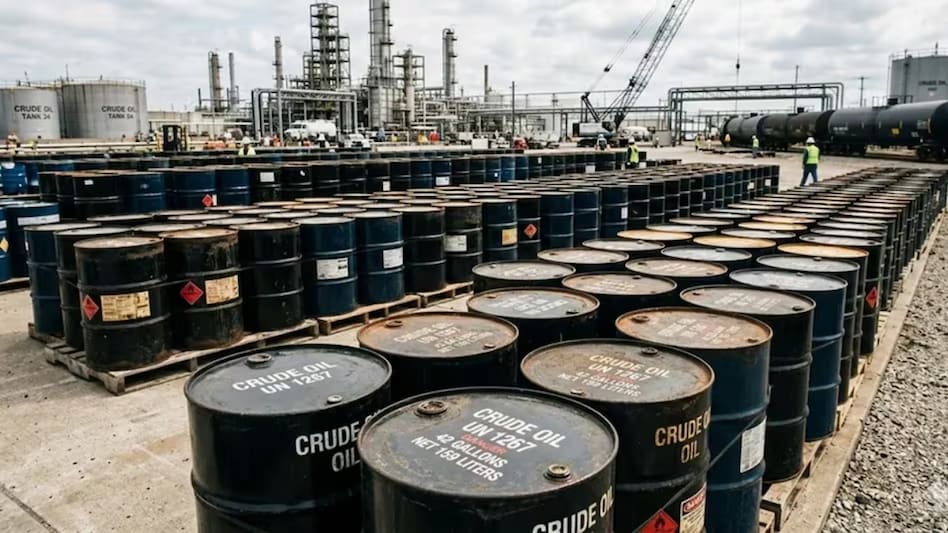
India has received a serious warning related to events in West Asia. The SBI research center released a report indicating that crude oil could once again pose problems for the country's economy. According to forecasts, the price of crude oil on the international market may reach $110 per barrel within the next ten days.
Experts believe this will be a source of concern for India, as the cost of imported goods could rise to $130. The SBI Research report presents a three-stage analysis of crude oil prices based on geopolitical events and the recovery of global supplies.
SBI Research notes that a sharp drop in global crude oil prices is unlikely in the near future. Instead, the price of Brent Crude is expected to jump to $110 per barrel within the next 10 trading days. If this occurs, the Indian crude basket could reach $130.
The ICORep report, published on Monday, states that due to geopolitical tensions and growing supply risks, if the price of Brent exceeds the forecast of $110 per barrel, the cost of the Indian basket over 10 trading days will increase from approximately $127 to $130 per barrel. Experts emphasize that these significant risks exert constant pressure on oil prices, complicating efforts to stabilize the Indian rupee.
They note that the recurrent neural network forecast for both Dated Brent and the Indian Basket shows an upward trend, indicating a low probability of a sharp decline in oil prices, with a possible fall only in the long term.
This outlook on crude oil prices comes as the Reserve Bank of India implemented several measures to support the Indian currency. These measures have already taken effect, and the Indian rupee has risen by 1% against the US dollar. Among the measures taken are special dollar supply windows for Indian Oil Corporation (IOCL), Hindustan Petroleum Corporation (HPCL), and Bharat Petroleum Corporation (BPCL). This system is designed to redistribute the monthly demand for dollars of about $10-12 billion from the open foreign exchange market. Unlike previous exchange rate interventions, the new scheme includes direct sales of dollars from India's reserves.
However, the research report also highlights complex liquidity conditions requiring an increase in the minimum daily cash reserve ratio for banks from 90% to 99%, and it also provides for the planned sale of government securities worth 250 billion rupees. It is estimated that thanks to these measures, the RBI can withdraw more than 100 billion rupees from the banking system over time, meaning that only RBI intervention can provide limited support to the rupee.
SBI Research predicts that the Brent Crude price will remain in a relatively narrow range until November 3rd, with a possibility of a slight decrease. This could bring some relief due to diplomatic efforts and emergency reserve releases, although this will take time. Despite all these pressure factors, experts assert that India's foreign exchange reserves are sufficient to cover unforeseen circumstances, although the balance of payments deficit is projected to decrease to $55-60 billion in the 2027 fiscal year. They conclude that India's foreign exchange reserves are more than adequate to overcome any emergencies even in the toughest circumstances.