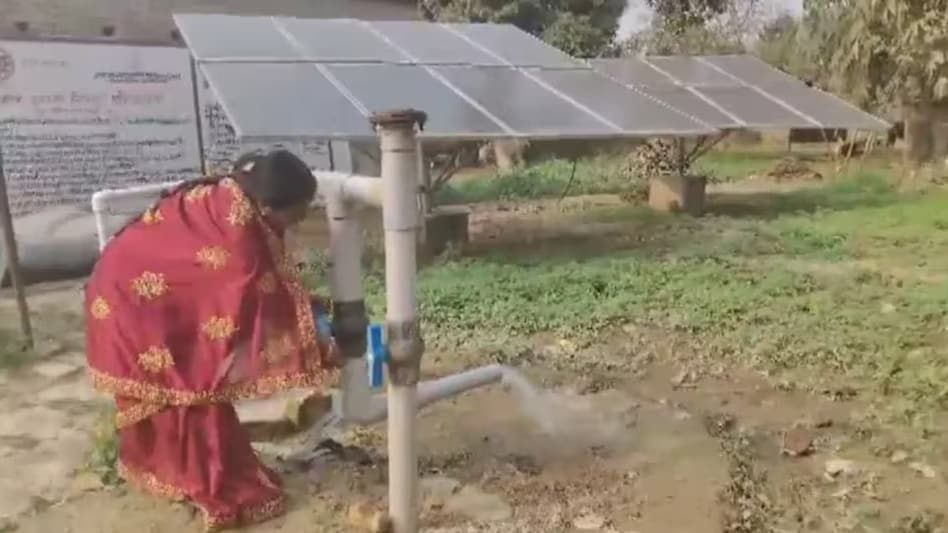
For promoting rooftop solar energy, financial support and technical capabilities alone are not enough; it is crucial to convey accurate information about the program to the public, as well as explain the application and installation process. The 'Solar Didi' initiative is aimed precisely at this goal, uniting women from Self-Help Groups (SHGs) to raise awareness about solar energy.
In the state of Uttar Pradesh, this initiative is linked to the implementation of the 'Pradhan Mantri Surya Ghar: Muft Bijli' scheme, launched by the central government on February 13, 2024. The objective of this program is to help one million households across the country install solar installations on their roofs by March 2027. According to established rules, eligible families receive central financial assistance for installing rooftop solar panels.
Under the 'Solar Didi' program, women belonging to self-help groups undergo training to disseminate information about rooftop solar panels and clarify the implementation process for families. According to the Ministry of New and Renewable Energy, the training is conducted for women from self-help groups associated with the Deendayal Antyodaya Yojana - National Urban Livelihoods Mission (DAY-NULM).
The functions of these women include providing information on the benefits of solar energy, explaining the eligibility criteria and application process, and offering consultation on various stages of setting up a rooftop solar power plant. They can also facilitate contact between families and agencies responsible for implementing the program.
This role is significant because before installing solar panels, families may require information regarding technical specifications, supplier selection, application procedures, and available financial aid.
In Uttar Pradesh, the nodal agency for solar energy initiatives is the Uttar Pradesh New and Renewable Energy Development Agency (UPNEDA). The Uttar Pradesh Solar Policy 2022 encourages the installation of solar power plants on residential buildings, and this policy plays a key role in the state's energy policy.
The 'Solar Didi' initiative can help bring these efforts to local communities. The network of urban self-help groups provides women with opportunities to participate in awareness campaigns and local networking. Furthermore, this initiative gives women a chance to gain knowledge about solar energy and join the clean energy sector. However, aspects such as the duration of training, women's responsibilities, and the size of incentives may vary depending on relevant guidelines and the local level of implementation.
The goal of the 'Pradhan Mantri Surya Ghar' program is to simplify the transition of domestic consumers to rooftop solar panels through financial support and a national application portal. The 'Solar Didi' initiative adds an additional channel for community awareness to this.
By combining women's participation with solar energy awareness, this initiative helps families make informed decisions about adopting rooftop solar panels. Simultaneously, it opens up opportunities for women in the clean energy sector. It is important to understand that 'Solar Didi' should be viewed as an awareness and training initiative supporting rooftop solar panel adoption, rather than a standalone electricity subsidy program. Subsidy terms and eligibility are determined according to the guidelines of the respective rooftop solar energy program.