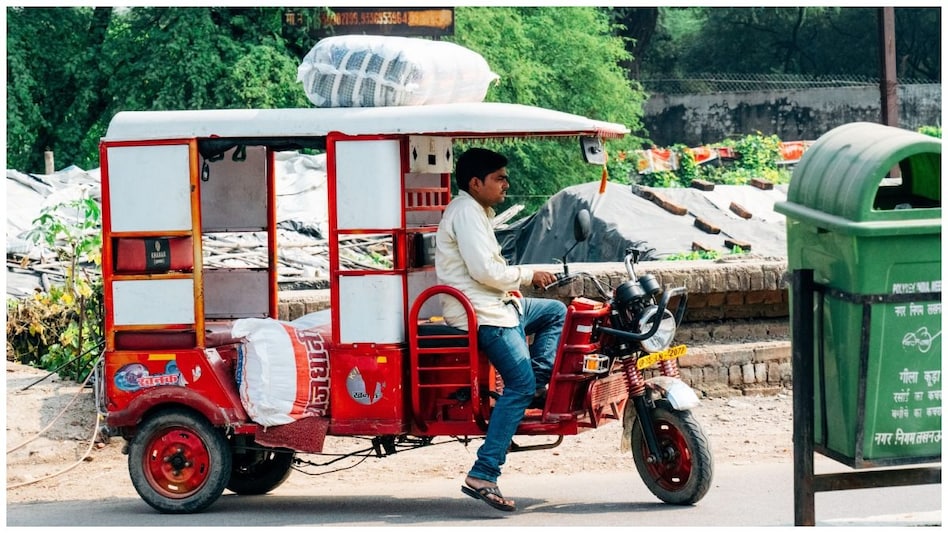
E-rickshaws are a common sight in any city in India, although these vehicles often do not adhere to prescribed rules. It is observed that many rickshaws carry four to six people in the back, while two or three people, including the driver, are seen in the front. In this context, it is necessary to understand some basic rules associated with e-rickshaws.
Regarding passenger capacity, according to the rules, only one driver can sit in the front of an e-rickshaw. Generally, one or two passengers with the driver are acceptable; if the e-rickshaw driver carries one or two extra passengers in the front, it is considered legally incorrect and action may be taken against it. The maximum limit for passengers sitting in the back is set at four people, and carrying more than four people for earning purposes is illegal.
Additionally, the rules also provide clarity on the weight of goods that can be carried in an e-rickshaw. It is stated that a total of up to 40 kilograms of goods can be kept in the rickshaw, even if the reality is different.
The speed limit for e-rickshaws has also been set by the government. Although it is common to see them moving fast on the roads, according to the government definition, their maximum speed is 25 kilometers per hour. Under the central definition, the maximum motor power is set at 2,000 watts, meaning that changing the vehicle's capacity by installing a higher-power motor is not a simple modification.
There are also regulations for three-wheeled vehicles regarding items such as headlights, rear lamps, lights illuminating the number plate, and reflectors. Furthermore, using a loud horn, installing LED lights, changing the controller, or altering the body of an e-rickshaw is prohibited.